Ultra-Rare Blood Donor Mina Stoddart-Stones Honoured to Aid NHS Patients
Ultra-Rare Blood Donor Honoured to Aid NHS Patients

VIP Donor with Ultra-Rare Blood Feels 'Honoured' to Support NHS Patients

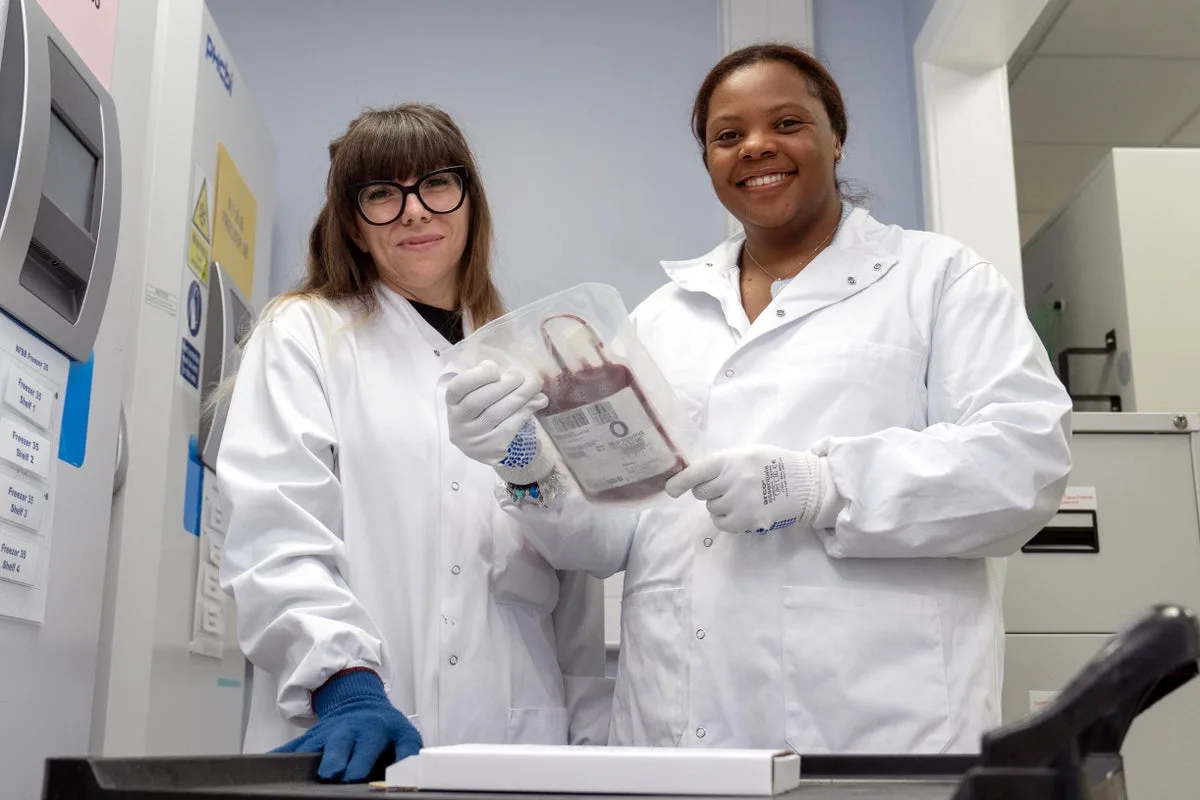
Staff at the NHS Blood and Transplant frozen blood bank in Liverpool have described meeting donor Mina Stoddart-Stones as akin to "meeting royalty." The 26-year-old from Bridgwater, Somerset, possesses blood so exceptionally rare that it can be frozen for up to three decades following each donation, making her a vital asset to the national healthcare system.

A Truly Unique Blood Profile

Miss Stoddart-Stones, who works in education, is one of merely nine donors in the United Kingdom with her specific blood composition. Her blood is classified as U negative and N negative, meaning she lacks antigens—proteins on red blood cell surfaces that act as markers—found in nearly 100% of the British population. Additionally, her blood is RO, a rare and crucial subtype frequently present in individuals of Black African or Caribbean heritage.

"It is cool," she told the Press Association. "It's nice to know that it's so rare and that it can help people. It makes me feel very special and honoured, actually, that I could help someone that is really poorly."

Critical Role in Medical Treatments

Her donations are instrumental in preventing fatal reactions during pregnancy and treating patients with inherited blood disorders like sickle cell disease. The blood can also be stored for her own potential future needs, should she ever require a transfusion. As part of NHSBT's UK rare donor panel—comprising approximately 0.01% of the 800,000 blood donors nationwide—she receives priority appointments and has been specifically called upon to donate for certain patients.

Joanne Mathews, manager of the National Frozen Blood Bank in Liverpool, emphasised the significance of donors like Miss Stoddart-Stones. "You see these names regularly, and you have a connection to them," she said. "And when I met Mina, I said, 'it's like I'm meeting royalty.' Every time she donates, which is every time she can, we look for it and we freeze it."

Specialised Storage and Lifesaving Applications

Units designated for the frozen blood bank are typically frozen within five days of donation, with a cryoprotectant added to prevent damage. This process allows blood to be preserved for up to 30 years. The facility, the only one of its kind in the UK, currently stores 12 units of Miss Stoddart-Stones' blood among over 1,000 units of rare blood overall.

Ms Mathews explained that these rare donations are thawed for planned surgeries or urgent requests, with the team available around the clock. "Mina's blood is RO which is vital for our sickle cell disease patients," she noted. "Where Mina's blood has been issued to hospitals, it is probably to help those sickle cell patients who need regular transfusions."

Addressing Rising Demand and Personal Motivation

The demand for RO blood is increasing by 10-15% annually, highlighting the need for more donors. Miss Stoddart-Stones, who was born in the US and adopted as a baby, was unaware of her blood's rarity until contacted by NHSBT. She now donates motivated by a desire to give back, citing her own childhood illnesses and her father's cancer treatment.

"It's just that sense of giving back," she reflected. "How can I give back to the NHS when they're going through hard times, especially at the moment, and during Covid as well? That little bit that I can do helping them as much as they've helped my family."

She also encourages others to donate, stating, "I think it is really important to support the NHS, even if it is that half an hour. It doesn't really take much out of our day and we get a biscuit at the end of it."