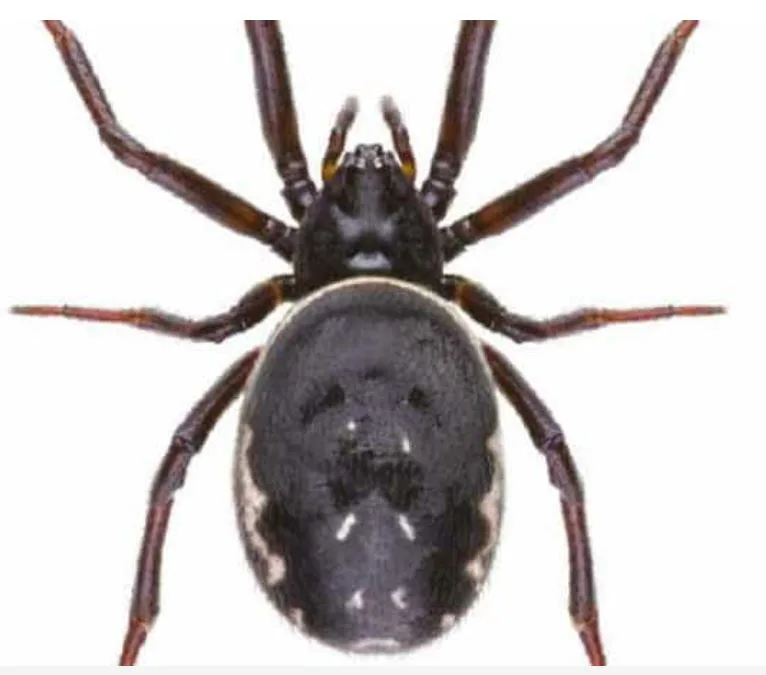
Hospital Admissions Double as UK's 'Most Dangerous Spider' Population Explodes
UK's 'Most Dangerous Spider' Causes Hospital Admissions to Double

Hospital Admissions Double as UK's 'Most Dangerous Spider' Population Explodes

Hospital admissions resulting from spider bites have doubled across England during the last decade, with experts attributing this alarming rise to what they describe as an "explosion" in the population of false widow spiders. Provisional NHS figures, obtained through a freedom of information request by the Press Association, reveal there were 100 admissions due to "contact with or toxic effect of spiders" in 2025. This marks a dramatic increase from the 47 admissions recorded in 2015.

The Noble False Widow: Britain's Most Dangerous Breeding Spider

Academics have directly linked this surge to the expanding population of the noble false widow spider, a species first identified in a 2020 Oxford University paper as "the most dangerous spider breeding in Britain." Originally from Madeira and the Canary Islands, this spider was first reported in southern England in 1879, with its initial recorded sighting occurring in Torquay. It is believed the species arrived as stowaways within banana crates or other fruit cargo shipments.

Clive Hambler, a lecturer in biological and human sciences at Hertford College, Oxford, and the ecologist behind the 2020 study, stated unequivocally to PA: "The days when you could just treat spiders as benign in Britain are over." He elaborated, "I think if you were going back 50 years, then there would have been hardly any consequences from spider bites in Britain. The incidents of severe bites from spiders in Britain will have increased, as this species became hugely more abundant, particularly in the south."

Wide Pickt banner — collaborative shopping lists app for Telegram, phone mockup with grocery list

Rising Hospital Admissions and Serious Health Risks

The NHS data illustrates a clear upward trend. Following 43 admissions in 2021, the figure jumped to 95 in 2022, with 91 admissions recorded in both 2023 and 2024 before reaching 100 in 2025. Notably, of the 100 admissions in 2025, a significant 73 patients entered through Accident and Emergency departments, compared to 38 out of 47 in 2015.

Mr Hambler warns that public contact with false widows is far more common than realised, noting he has personally observed the species in the gardens of Buckingham Palace. While the spider's venom can cause pain and itching, he emphasises that the more severe toxic effects stem from bacteria carried by the spider, which can potentially lead to "amputation, sepsis and death."

He asserts the species is "much more willing to bite than many people are willing to admit" and suspects many bites occur daily. However, he advocates for increased public awareness without inciting panic, stating: "I think spiders are wonderful things and they're very important in ecosystems, but you now need to treat spiders in Britain as you might in many other parts of the world – as something to be very respectful of."

Expert Analysis and Calls for Balanced Perspective

Dr Michel Dugon, a zoologist specialising in venom systems at the University of Galway, described the PA figures as "interesting" but "not surprising." He identified the "most obvious" factor behind the rise as the "explosion in the population of noble false widow." Dr Dugon noted these spiders prefer living in and around houses rather than natural habitats within the UK and Ireland.

He also cautioned that increased media coverage in recent years may lead some people to mistakenly attribute bites to false widows. "Essentially, when you do not see the spider really bite or capture the spider and you say that you haven't felt any pain – then it's most likely not a spider," he explained. "Because a bite by the noble false widow will actually wake you up. The pain is equivalent to a wasp sting or even more than that." Dr Dugon stressed that spiders are not aggressive and 100 cases in England remains a relatively minor number.

Pickt after-article banner — collaborative shopping lists app with family illustration

Echoing a call for calm, Professor Adam Hart of the University of Gloucestershire acknowledged false widows have expanded their range but stated there is "no strong reason for the public to be concerned." He advised, "While they can bite if handled or trapped against the skin, most bites are mild and severe reactions are rare. Basic precautions, such as not handling spiders directly, should ensure the chances of being bitten are minuscule."

Experts suggest multiple factors may contribute to the rising admission statistics, including greater medical awareness of spider bites and Britain's growing population. The consensus underscores a new reality for the UK: while the noble false widow presents a genuine, documented risk requiring respect and caution, widespread alarm is unnecessary provided sensible precautions are taken.




