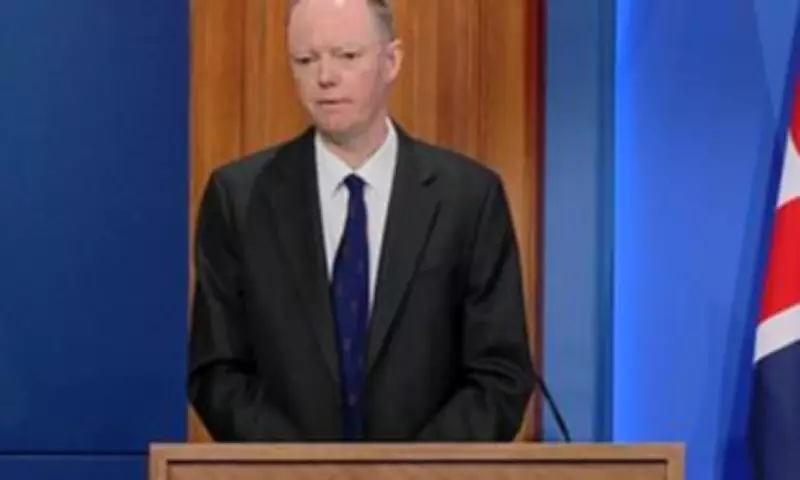
Britain's most senior medical professional has issued a stark warning that weight loss injections are not the solution to the nation's escalating obesity crisis, appearing to diverge from the Government's enthusiastic push to expand access to these blockbuster medications.
Chief Medical Officer's Concerns About Societal Failure
England's Chief Medical Officer Professor Chris Whitty stated unequivocally that it would represent a 'societal failure' if drugs such as Mounjaro and Wegovy became the primary method for addressing rising obesity rates. He emphasized that significant uncertainties remain about the long-term effects of these treatments, which belong to the GLP-1 agonist class of medications.
Professor Whitty articulated his position clearly, saying: 'They are very good drugs but there's a lot we don't know about GLP-1s. Very small numbers of people have very bad reactions to them and a large number of people have unpleasant side effects.'

Transformational But Not a Universal Solution
The Chief Medical Officer acknowledged the transformative potential of these medications for certain individuals, stating: 'For people who need them they are transformational, and some people will always need them, but it should be a small minority. If it's a high proportion of people then I think that is a societal failure.'
He concluded with a firm stance: 'Relying on these drugs seems to me to be the wrong answer.'
Government's Diverging Approach to Weight Loss Medications
Professor Whitty's comments appear to break ranks with the Government's increasingly enthusiastic embrace of these pharmaceutical interventions. Just last week, Health Secretary Wes Streeting – who has previously called the drugs a 'gamechanger' – announced plans to pay GPs additional incentives to accelerate the rollout of slimming injections across the country.
Meanwhile, the former medical director at NHS England, Professor Sir Stephen Powis, has predicted these medications could eventually be prescribed as widely as statins, which currently represent the most commonly used drugs in Britain.
Obesity's Devastating Health Consequences
Speaking at an event in London, Professor Whitty expressed profound concern about obesity's impact on public health: 'I am really worried about obesity. It drives multiple diseases including several cancers, cardiovascular disease and diabetes.'
He emphasized the critical importance of prevention over pharmaceutical intervention: 'Making sure that obesity doesn't happen in the first place is overwhelmingly better than allowing rates to go up in children and young adults and then sticking them on GLP-1 agonists at the age of 18.'
The Scale of Britain's Obesity Challenge
The statistics reveal the magnitude of the problem facing the nation:
- Two out of every three adults in the UK are overweight
- Thirty percent of adults are classified as obese
- An estimated 1.6 million people have tried weight loss drugs in the past year
Targeted Marketing and Societal Choices
Professor Whitty also criticized the aggressive marketing tactics targeting children with unhealthy food products, which he identified as a significant driver of obesity. He warned that this approach leaves the National Health Service 'having to pick up the pieces for the rest of that child's life.'
The Chief Medical Officer highlighted stark geographical disparities in food availability, noting: 'The food available on high streets in places like Wigan or Blackpool was completely different to equivalent towns in France and it was not the fault of people living there when presented with wall to wall junk food.'
He concluded with a call for societal reflection: 'That is a societal choice and is one that I think we should be looking at really, very seriously.'