Somalia's Health System Crumbles as Global Aid Cuts Deepen Crisis
Around 250,000 individuals with injuries and disabilities urgently require assistance or long-term rehabilitation in Somalia, a nation already grappling with severe challenges even before recent funding reductions by major donors like the United States and the United Kingdom. This dire situation is pushing the country's health services to the brink of collapse, as reported by Rachel Hagan on Friday, 27 March 2026.
Fragile Infrastructure and Overwhelming Demand
Somalia, with a population of approximately 18 million people, operates only three physical rehabilitation centres. Between 200,000 and 250,000 people are estimated to need long-term rehabilitation due to landmines, ongoing conflict, and preventable diseases that cause permanent disabilities in children. The system was already stretched to breaking point before the latest round of global aid cuts, and aid workers now report it is beginning to fracture.
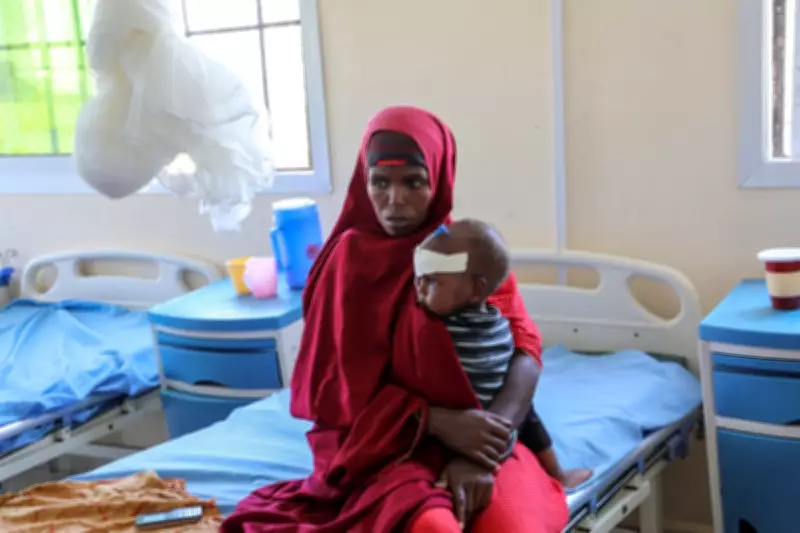
More than 400 health and nutrition facilities have closed across Somalia in the past year, including at least 125 sites offering nutrition services, according to the UN Children's Fund (Unicef). For many relying on these services, there is often no alternative, as travel is impossible for some, and others cannot move at all.

Alexandre Formisano of the International Committee of the Red Cross (ICRC) explains, "If you live in a district and the clinic closes, you are just now forgotten. They can’t compensate by going somewhere else." Those on the ground describe a situation quietly deteriorating, with conflict, climate crises, displacement, and chronic underinvestment converging into a complex emergency harder to manage than any single issue.
Broken Care Chain and Erratic Funding
The impact extends beyond those directly injured in violence. Formisano identifies two broad patient groups: those wounded by conflict and those affected by the absence of basic healthcare. "People who haven’t accessed vaccinations, who haven’t received proper maternal healthcare… that all translates into disability. It’s quite a big chunk of people in Somalia," he says. Additionally, many never reach care due to mobility issues.
Physical rehabilitation sits at the end of a fragile chain of care. A patient injured in Somalia's civil conflict must first be evacuated, treated at a primary health centre, undergo surgery at a regional hospital, and then be referred for rehabilitation. Each step depends on the previous one, and when any link fails, the chain breaks. Aid cuts have weakened this chain significantly, rippling through Somalia's already fragile health system.
While the ICRC was not directly funded by the United States Agency for International Development (USAID), which was effectively shuttered by Donald Trump last year, the withdrawal of that support elsewhere has increased pressure across the system. Funding has not only declined but become erratic, causing programmes to pause, restart, and then be cut again, creating a stop-start system that is nearly impossible to plan around.
Formisano notes, "There hasn’t been an obvious trend… but now it’s so up and down. It’s not good for people. If you live in a district and the clinic closes, you are just now forgotten. They can't compensate by going somewhere else. So much trust is lost." This volatility is particularly damaging for rehabilitation, a long-term process requiring consistent staffing, equipment, and follow-up care.
Critical Shortages and Rising Humanitarian Needs
Somalia has only 15 physiotherapists with bachelor’s degrees, roughly one for every 1.3 million people, all trained abroad, with no domestic physiotherapy schools. The ICRC plans to help establish local training, including partnerships with Somali National University, but funding remains a major obstacle.
At the same time, humanitarian needs are escalating. Unicef is appealing for $121 million (£90m) to meet children's needs in Somalia this year, but less than $20 million has been received so far, leaving nearly two million children at risk of acute malnutrition. Rehabilitation, often seen as less urgent than famine or disease outbreaks, risks slipping further down the priority list, even though it determines whether individuals can work, move, and live independently.

The centres treat not only war-wounded patients, accounting for about 10% of cases, but also children with conditions like cerebral palsy or clubfoot. Formisano emphasises, "We see... the physical advantages they gain. But the dignity… that’s something we don’t always see. The sense of purpose." For those who access the system, transformation can be life-changing, but the system itself is precarious, held together by just three centres, 56 Red Crescent staff, and a donor base whose attention is increasingly diverted.
Ongoing Conflict and Unstable Future
Meanwhile, ongoing conflict continues to generate new patients daily. Formisano states, "We are regularly evacuating weapon-wounded, displaced people every day. Disability is another layer which adds to those situations. It's normal that a person being treated in one of those centres has already been displaced multiple times."
Solutions exist, but they require a different level of commitment than the world has shown so far. Formisano argues, "On one side, there is the need for governments to work on the root causes of conflict and instability in Somalia. This is a conflict that's been going on for decades and doesn't seem to have an exit any time soon." His message to the international donor community is direct: "They need to understand the situation is not improving at all. It's quite unstable. With a convergence of many different elements."
As individuals like Absame, a ten-year-old learning to walk again after polio, depend on this fragile care chain, the system strains under war, disease, and the slow, unpredictable withdrawal of global aid, highlighting an urgent need for sustained support and strategic intervention.