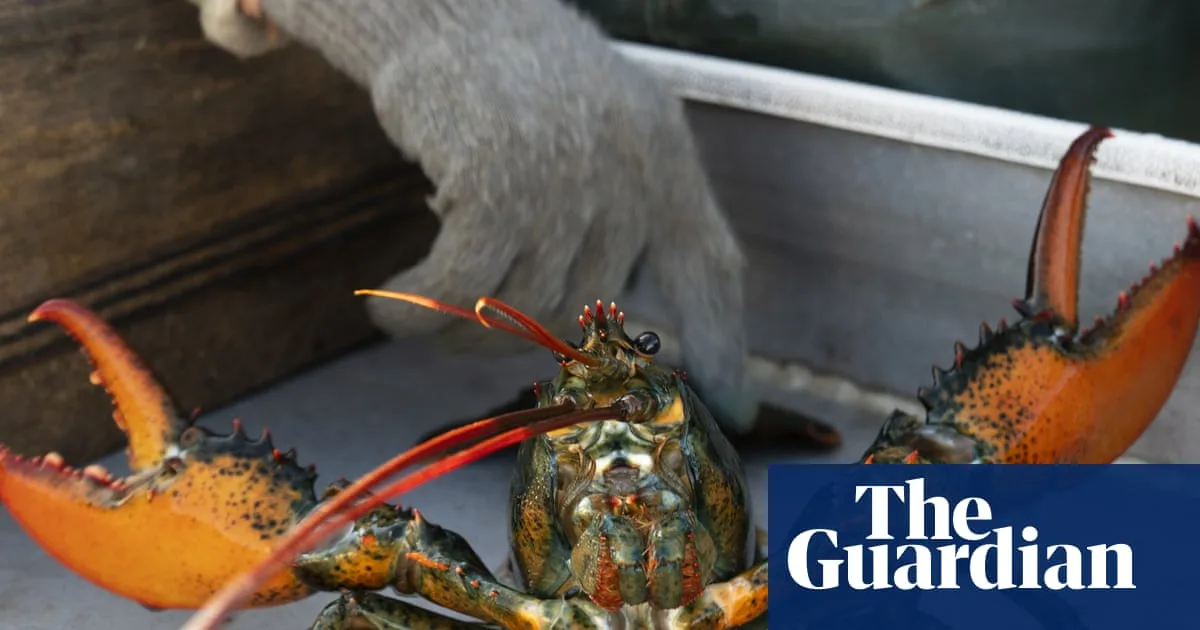
Scientific Study Reveals Lobsters Feel Pain, Demands UK Ban on Boiling Alive
The traditional practice of boiling lobsters alive inflicts extreme pain and must be immediately prohibited under United Kingdom law, according to groundbreaking new scientific research. A comprehensive study has demonstrated that Norway lobsters, which serve as the primary ingredient in scampi, possess the capacity to experience pain in a manner strikingly similar to humans and other mammals.
Painkillers Alter Lobster Behaviour, Proving Sentience
Researchers discovered that administering common analgesics, specifically lidocaine and aspirin, significantly diminished lobsters' defensive reactions to harmful electric shocks. This critical finding strongly indicates that crustaceans genuinely feel pain when injured, rather than merely executing mechanical reflexes. The evidence challenges long-held assumptions about invertebrate sentience.
Boiling lobsters alive is already illegal in several jurisdictions, including Norway, New Zealand, Austria, and multiple Australian states. However, the research team argues their findings necessitate extending this protection to the United Kingdom, where legislation already formally recognises crustaceans as sentient beings capable of suffering.
Expert Calls for Humane Treatment and Legislative Action
Co-author Professor Lynne Sneddon, an esteemed animal behaviour specialist from the University of Gothenburg, provided a stark assessment to the Daily Mail. 'Based on rigorous scientific evidence, boiling crustaceans alive cannot be considered humane. I fully support the concept of instituting a ban on this practice,' she stated. 'We must consistently seek to end animal lives humanely. Society would never tolerate boiling a cow or chicken alive, so it is imperative we reconsider our treatment of these creatures.'
Lead author Eleftherios Kasiouras, a PhD candidate at the same institution, elaborated on the implications. 'The fact that lobsters respond to painkillers during potentially painful procedures demonstrates their experience transcends simple reflex actions,' he explained. 'The cumulative evidence robustly supports that decapod crustaceans experience pain. Given their recognised sentience under UK law, boiling them alive should be prohibited.'
Distinguishing Pain from Reflex: A Scientific Breakthrough
It has long been established that lobsters and related crustaceans react to damaging external stimuli. As ectothermic animals unable to regulate their internal temperature, they naturally exhibit aversion to hot water and seek to avoid heat sources. The central scientific debate has focused on whether this behaviour constitutes genuine pain or is merely nociception—the simple neural process of converting injury signals into protective action.
Professor Sneddon's team addressed this question directly by observing behavioural changes in Norway lobsters under the influence of pain medication. When subjected to electric shocks comparable to those a human would find painful, the lobsters attempted escape through rapid tail-flipping motions. Crucially, this behaviour virtually disappeared when the animals were injected with aspirin or exposed to water containing dissolved lidocaine.
Industry Practices and Alternative Humane Methods
The study advocates for the adoption of established humane killing techniques. For individual lobsters, the recommended method involves:
- Stunning the animal by cooling it in a freezer to approximately 2°C (35°F) to induce a torpor state.
- Using a sharp spike or knife to swiftly destroy the two main nerve centres located beneath the tail and near the head.
- Returning the lobster to the freezer to ensure humane euthanasia is complete.
For larger commercial operations, researchers suggest employing powerful electrical stunning systems. These findings align with a Labour Party animal welfare strategy proposed last December, which included a ban on boiling crustaceans in both domestic and professional kitchens. This proposal builds upon the Conservative government's Animal Welfare (Sentience) Act 2022, which legally acknowledged crustaceans as sentient beings.
Diverging Views on Practical Implementation
Not all experts agree on the universal application of a boiling ban. Professor Henrik Lauridsen of Aarhus University in Denmark acknowledges the likelihood of pain during live boiling but cautions against a blanket prohibition. 'It doesn't automatically mean that live boiling should be banned in all situations,' he told the Daily Mail.
Professor Lauridsen draws a parallel to recreational hunting, where some degree of animal suffering is currently tolerated within legal frameworks. He argues that for larger crustaceans like lobsters and brown crabs—which can be humanely killed via spiking—a ban is practical and sensible. However, for smaller species such as prawns, especially in private recreational fishing contexts, mechanical or electrical killing of hundreds of individuals may be impractical. 'The potential pain during boiling is brief,' he noted, framing the issue as an ethical societal question regarding acceptable levels of suffering in human-animal interactions.
Legal and Advocacy Perspectives
Edie Bowles, Executive Director of The Animal Law Foundation, reinforced the call for legislative change. 'The boiling of crustaceans alive causes unnecessary, prolonged and intense suffering to sentient animals,' she asserted to the Daily Mail, highlighting the legal and moral imperative for reform.
This scientific revelation places significant pressure on UK policymakers to reconcile existing animal sentience legislation with current culinary practices, potentially heralding a major shift in food industry standards and animal welfare law.






