Samara Martínez's Personal Crusade for Euthanasia Rights in Mexico
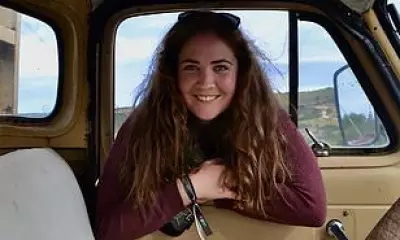
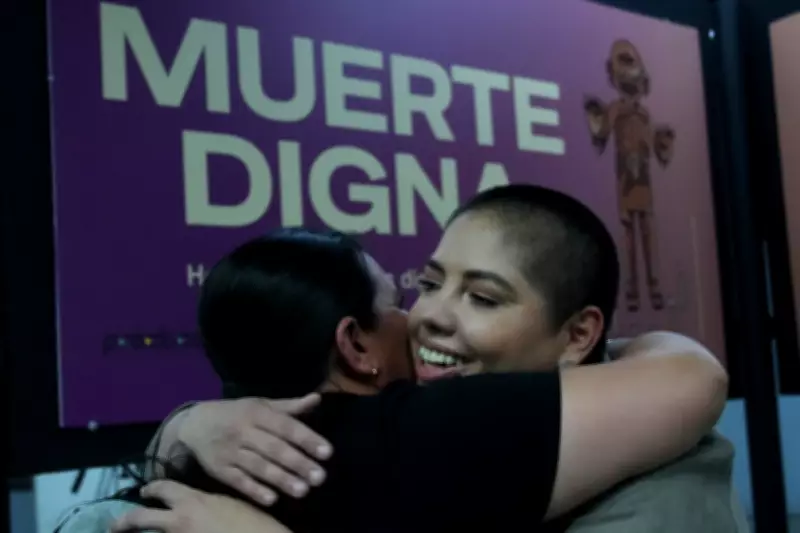
As her kidneys fail and her time grows short, Mexican activist Samara Martínez has transformed her decade-long battle with chronic kidney failure into a powerful campaign to decriminalize euthanasia in her country. At 31 years old, Martínez has emerged as one of the most prominent voices in this deeply personal and political struggle, shifting public conversation as lawmakers consider significant policy changes.
A Life Defined by Illness and Purpose
Martínez first developed signs of chronic kidney failure at age 17. Despite undergoing chemotherapy, receiving two kidney transplants, enduring regular dialysis treatments, and facing frequent hospitalizations, her medical prognosis suggests she has approximately five years remaining to live. Rather than breaking her spirit, these physical challenges have fueled her determination.
"I would not have taken up this fight unless I had to endure what I've had to, so I've found in it my purpose," Martínez explained. She maintains her academic career in her hometown of Chihuahua while meeting with politicians, hosting conferences, and sharing her journey with over half a million social media followers.

The Legal Landscape of Euthanasia in Mexico
While not explicitly addressed in the Mexican Constitution, the General Health Law currently defines euthanasia as "mercy killing" and prohibits it alongside assisted suicide. Federal legislation imposes prison sentences of one to five years for assisting or inducing suicide, with penalties increasing to twelve years if someone directly causes another's death.
This contrasts with other Latin American nations where euthanasia has gained legal recognition. Colombia stands as the only country in the region with fully legalized and regulated euthanasia, while Ecuador decriminalized the practice in 2024, and Uruguay approved legislation in 2025 that awaits implementation.
The Transcendence Law Proposal
The legislation Martínez champions, known as the Transcendence Law, was presented in 2025 by lawmakers from multiple political groups including Morena, the party of President Claudia Sheinbaum. This proposal seeks to remove the explicit ban on euthanasia and redefine it as a legal, voluntary medical procedure.
The legislation frames euthanasia as a right connected to personal dignity and autonomy, arguing that life should not be understood as an obligation to prolong suffering. If approved, the law would permit adults to request the procedure while including conscientious objection provisions for healthcare workers, though public institutions would be required to provide willing staff.
Patricia Mercado, a longtime advocate for women's reproductive and labor rights who supports Martínez's campaign, emphasized: "Samara's emergence — her struggle, her authenticity — brings the possibility of passing legislation closer. A testimony speaks louder than a thousand data points."
Personal Transformation Through Adversity
Martínez frequently revisits letters she has written to her illness, finding catharsis in writing and strength in recognizing how her past self confronted pain. She recalls a particularly difficult moment in 2021 when her doctor presented her with two options: another kidney transplant or reliance on treatments that would take over her kidneys' function.
Initially viewing the latter option as unthinkable, Martínez now undergoes peritoneal dialysis every night, connected for hours to medical equipment about the size of a printer that she must carry with her constantly. "An illness like this isn't for everyone and it's hard to embrace the pain," she acknowledged. "You can stop living and just exist, but I don't want that."
Losses and Resilience
Before her health declined, Martínez enjoyed an active life playing soccer and maintaining careful dietary habits. She met her husband at university in 2013 while studying journalism, and they married five years later despite her health complications including lupus, an autoimmune disease.

By the time their marriage ended in 2024, Martínez had experienced multiple losses beyond her relationship. She lost her dream job at a publishing house after informing her employer about an upcoming transplant, accumulated significant debt that forced her to sell her home, watched long-time friends disappear, and endured routine vomiting, weight gain from steroids, and frequent hospitalizations.
"I consider myself agnostic, but there are moments when you look up at the sky and question God — why me?" she reflected. "Now I practice stoicism and live each day with gratitude."
Opposition and Support in the National Debate
Martínez faces significant opposition from conservative and religious groups in Mexico, often receiving abusive messages online. Following the presentation of her proposal, the Catholic Church echoed Pope Leo's call to uphold the sanctity of life.
Rodrigo Iván Cortés, president of a conservative advocacy group, articulated this perspective: "For us, the value of life spans every stage." However, some religious leaders support Martínez's cause, including Reverend Héctor Reyes, who collaborates with the organization "For the Right to Die with Dignity."
"Transcendence has everything to do with the God I believe in," Reyes explained. "For me, transcendence lies in the hope that life doesn't end with physical death."
Envisioning a Dignified Farewell
Martínez maintains she has no intention of giving up her fight, yet when her body eventually fails, she dreams of saying farewell by the sea. She emphasizes that her motivation stems not from cowardice but from the belief that choosing how to die represents the most courageous decision of her life.
Her parents initially struggled when she revealed she would spend her remaining days campaigning for euthanasia rights. "That meant beginning to grieve while I was still alive," she noted. When her father questioned why she needed to fight for this cause, she responded: "If I didn't do it, no one else would."
Martínez acknowledges she may not live to see the outcome of her efforts but believes pushing for change has already proven worthwhile. When her time comes, she wishes for a sunset gathering far from hospital settings, surrounded by family and friends celebrating her life.
"That's what my life deserves," she concluded. "A proper time to say goodbye, to laugh and cry, and leave in peace."