A dated website has brought Russia's Irkutsk Antiplague Research Institute into the global spotlight following claims that a lab technician died after a pneumonic plague accident. The institute, part of Russia's public health watchdog Rospotrebnadzor, says its mission is to monitor and fight “especially dangerous” infections across Siberia and the Far East.
The English homepage of the institute's website (irknipchi.ru/index_eng.htm) openly lists the pathogens studied inside, including plague (Yersinia pestis), cholera, anthrax, brucellosis, tularemia and arbovirus infections. It also states the institute employs 95 researchers, including 13 Doctors of Science and 40 senior scientific candidates, and traces its roots back to 5 June 1934, when it was founded by the Soviet Union to track natural plague reservoirs in rodents and fleas across Siberia and Mongolia.
Claims of a deadly accident
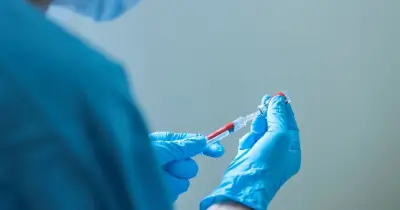
Independent Russian outlets and international observers claim 28-year-old lab technician Darya Shipilova fell gravely ill after an accident in the lab, allegedly breaking a test tube containing live pneumonic plague bacteria, before dying within days in hospital. Because pneumonic plague spreads through airborne droplets, the claims triggered immediate panic.
Authorities reportedly moved fast: nearly 200 people were placed in strict medical isolation, up to five local healthcare facilities were temporarily locked down, and a mask mandate was imposed at a nearby industrial plant. Moscow and Rospotrebnadzor deny any leak, officially describing Shipilova's death as “pneumonia of unknown etiology” and saying tests found no pathogens linked to her work.
International scrutiny and activities
The incident has sparked geopolitical outrage, with the US, via Secretary of State Marco Rubio, publicly demanding Russia “share accurate information quickly and openly”. The institute's website also reveals how active it is internationally, listing joint plague surveillance and training with Mongolia, drills and mobile lab work, and Russian-Chinese exercises responding to infectious threats.
It also advertises an upcoming event hosted at the institute on 21–22 October 2026: the 18th CIS conference on preventing the “import and spread of plague and other dangerous infectious diseases”. Biosecurity experts have long warned Soviet-era “anti-plague” institutes could be dual-use, feeding deadly natural strains into Cold War weapons networks like Biopreparat, something Russia has repeatedly faced scrutiny over in international compliance reports.
Shipilova's own published work has reportedly focused on antibiotic resistance in the plague bacterium, research that can be legitimate, but also raises fears about engineered strains that could evade treatment.