

Resident Doctors to Proceed with Six-Day Strike After Talks Collapse
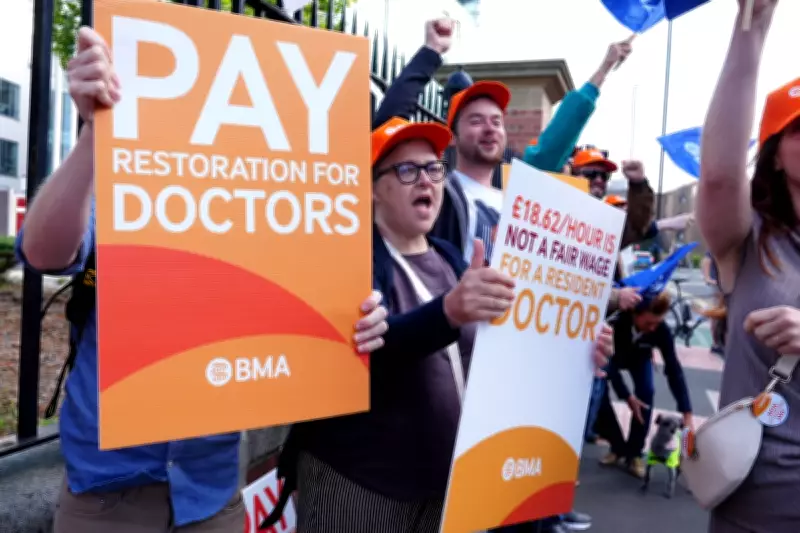
Tens of thousands of resident doctors across England are poised to initiate a substantial six-day walkout commencing on Tuesday, immediately following the Easter weekend. This decisive action follows the breakdown of critical negotiations aimed at averting the planned industrial dispute, prompting the government to retract a significant component of its proposed settlement.
Government Withdraws Key Training Place Offer
The Department of Health and Social Care has formally announced that an offer comprising 1,000 additional training positions, previously integral to the government's comprehensive package addressing pay and employment conditions, is no longer deemed "financially or operationally" viable. This withdrawal coincides with the National Health Service bracing for considerable disruption as the strike looms.
This development emerges in the wake of Prime Minister Sir Keir Starmer's recent ultimatum to the British Medical Association's resident doctors committee, granting a 48-hour window to reconsider the government's proposal, which originally included the now-rescinded NHS training posts. As the deadline elapsed, the BMA articulated a series of specific demands that the government would need to fulfil to call off the impending strike.

Disappointment and Accusations from Both Sides
A spokesperson for the Department of Health and Social Care expressed profound disappointment, stating, "It is disappointing that the BMA has decided to press ahead with strikes next week, despite conversations we have been having in recent days in a bid to protect the NHS from strikes." The spokesperson elaborated that the government had extended a generous deal intended to enhance pay, career progression, and working conditions, which would have resulted in resident doctors being, on average, 35.2% better off compared to four years ago.
However, because the BMA resident doctor committee declined to suspend the strikes and present the offer to its membership, the delivery of the 1,000 extra training places—specifically requested by the BMA—has become unfeasible. The spokesperson clarified, "These posts would have gone live this month, but as systems now need to prepare for strikes and more uncertainty, it simply won't be operationally or financially possible to launch these posts in April in time to recruit for this year." They assured that this retraction would not affect the overall number of resident doctors and reaffirmed the NHS's commitment to patient care.
BMA's Stance and Ongoing Demands
In a letter dispatched earlier on Wednesday, Dr. Jack Fletcher, chairman of the doctors' committee, contended that the current governmental offer "falls short" and "did not meet the standard required" to be presented to union members. Dr. Fletcher asserted, "We have consistently maintained that we are willing to postpone industrial action should a genuinely credible offer be provided. This remains the case now, up to and throughout any period of industrial action."
He further criticised the government's "threats" to eliminate training places from the existing offer, arguing that such actions "needlessly and avoidably inflamed the dispute." The BMA has stipulated that several critical issues must be addressed in any revised government proposal concerning jobs and pay to warrant cancellation of the industrial action. Dr. Fletcher concluded, "We remain open to any improved offer or further negotiation. We are willing to talk before, during and after any industrial action."
As the standoff persists, the primary focus for both governmental authorities and NHS leadership is squarely on mitigating disruption to safeguard patients, staff, and the integrity of the health service during this period of heightened uncertainty.






