Parents' Heartbreaking Race Against Time to Save Toddler from Childhood Dementia
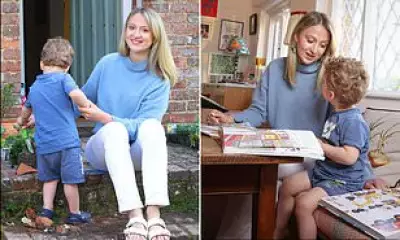
Two-year-old Leni Forrester appears to be the picture of childhood joy - a vibrant toddler who loves her dolls, sings "Wheels on the Bus," and zooms around in her toy car with infectious laughter that lights up every room. To those who meet her, she seems "just divine," a happy little girl without a care in the world.
But beneath that joyful exterior, a devastating reality unfolds. Leni has been diagnosed with Sanfilippo Syndrome, a rare genetic condition often described as childhood dementia. This heartbreaking disorder progressively robs children of their ability to walk, talk, and eat, with most affected children having a life expectancy only into their early to mid-teens.
The Devastating Diagnosis That Came After False Hope
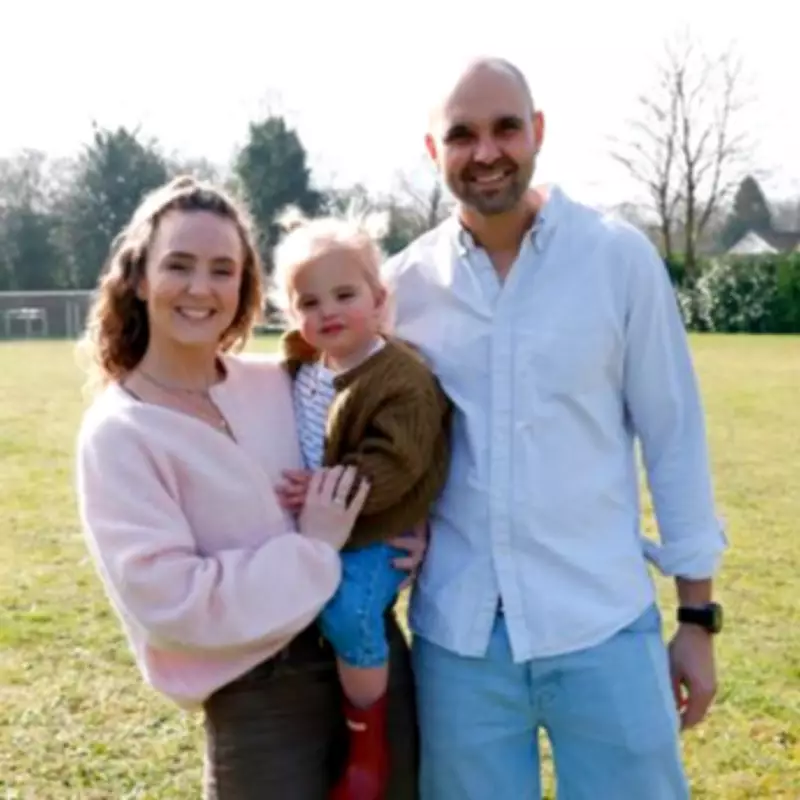
For parents Emily, 33, and Gus, 35, from Sevenoaks, Kent, the diagnosis came as a complete shock. They had no concerns about Leni's development until Emily's sister was flagged as a carrier for the NAGLU gene during routine genetic screening. Even then, a private medical test gave the family what they believed was an "all-clear" result, leading them to believe Leni was safe and encouraging them to try for a second child.

"We didn't have any concerns at all about Leni," Emily explains, describing her daughter as exceptionally happy and always laughing. The subtle signs that might have indicated something was wrong - such as Leni's bushy eyebrows, thick eyelashes, and full lips - seemed easily explained by family traits rather than symptoms of a catastrophic genetic condition.
The Agonizing Journey to Truth
The couple's journey to diagnosis was fraught with uncertainty and false hope. After Emily's sister was identified as a carrier, they visited their GP and a pediatrician, both of whom thought it "incredibly unlikely" that Leni would have Sanfilippo Syndrome. They were referred to a genetic specialist, beginning a months-long process of waiting and worrying.
Amid this uncertainty, they booked Gus for a private test that came back negative, giving them temporary relief. "We were like, 'Great, amazing, whatever is going on, worst case scenario is not possible because you're not a carrier,'" Emily recalls. They resumed trying for another baby, only to discover later that Gus's test result was incorrect - he carried a variant so rare it hadn't been logged in global databases.
When they finally met with the NHS geneticist, his concerned demeanor gave them a sinking feeling. "Both of us left that appointment and just had this sinking feeling in our stomachs," Emily says. The specialist rushed Leni's test results, and just a week before her second birthday, the devastating confirmation came: Leni had Sanfilippo Syndrome.
The Brutal Reality of Sanfilippo Syndrome
Emily explains the medical reality her daughter faces: "Leni has a fault in a single gene that produces a specific enzyme. That enzyme is responsible for breaking down a sugar molecule in her body called heparan sulphate. Essentially that sugar molecule is toxic waste and without it being broken down it builds up on various organs, but most importantly on the brain and causes irreversible brain damage."
The condition progresses incrementally, which is why most children aren't diagnosed until they're seven or eight years old, when they begin losing vital motor skills. Eventually, Leni "will lose the ability to walk, to eat by mouth, any kind of motor skills, so it causes complete loss of all cognitive and motor function. It's rapidly neurodegenerative so it'll be over a quite short space of time."
A Family's Heartbreak Compounded
Two weeks after Leni's diagnosis, the family received another devastating blow: Emily was pregnant, and subsequent testing revealed the baby also had Sanfilippo Syndrome. "We felt we had no choice but to terminate the pregnancy," Emily says, describing the agonizing decision.

Currently, Leni has up to four medical appointments weekly, prompting Emily to reduce her work schedule to three days per week. "It impacts every aspect of your life," she admits. Beyond the practical challenges, the future they imagined has been stolen. "Everything that we have envisaged like Gus walking her down the aisle, having grandchildren, her going out late at night and sneaking back in - all of these things that you envisage for your life together and your family - it's not just the child that is impacted by that, it's everyone."
The Race for Treatment Before Time Runs Out
Initially told there was "no treatment, no cure" for Leni's condition, Emily and Gus refused to accept this prognosis. Through their own research, they discovered two potentially life-saving experimental treatments. The first involves weekly enzyme replacement therapy delivered through a port in the brain, which successfully stopped symptoms in clinical trial participants at Great Ormond Street Hospital before funding ran out in 2017.
The second, even more promising option is gene replacement therapy that has shown potential as a complete cure for similar conditions. However, accessing these treatments presents enormous challenges. The gene replacement trial alone would cost £5.5 million and could help six children.
"The medicine's there, it's already been produced. It's just sat on the shelf," Emily explains with frustration. Pharmaceutical companies show little interest in developing treatments for such rare conditions due to limited profitability, despite the priceless value of a child's life.
Fighting Against Time and Isolation
Emily and Gus are now fiercely fundraising to access treatment for Leni before she shows signs of regression. They're in a literal "race against time" because for either treatment to be effective, it must reach Leni before she loses the skills she has gained in her short life.
"When it's your child's life, how can you possibly put a price on this?" Emily asks. They're working to fundraise for pre-clinical costs to advance the trial process, knowing that even gaining a few weeks could be life-changing for their daughter.
The family recently met with former Little Mix star Jesy Nelson, who invited them to a Mother's Day photoshoot to raise awareness of rare conditions. "She's trying to pull everyone along with her and shine a spotlight on the difficulties that everyone faces," Emily says of the singer, who has her own experience with children's health challenges.
Finding Strength in the Fight
Despite the overwhelming challenges, Emily and Gus find strength in their determination to save their daughter. "That is our coping mechanism, to be honest," Emily says. "We will just do whatever it takes now to get her access for this treatment."
They've also restarted their journey to grow their family through genetic testing and IVF, though the NHS process could take a year or more. "We're desperate for Leni to know her siblings and for her siblings to know her," Emily explains. "We want to have Leni have siblings that she can grow up around and that she knows before any regression sets in."
As they navigate this unimaginable journey, the Forresters hold onto hope while facing each day's challenges. "We want to spend as much time with her as possible while she is still like she is now," Emily says of their precious daughter. "Any time away from her is emotionally difficult. You know you need the time away, but at the same time I don't want to, because she's so precious as she is now."