
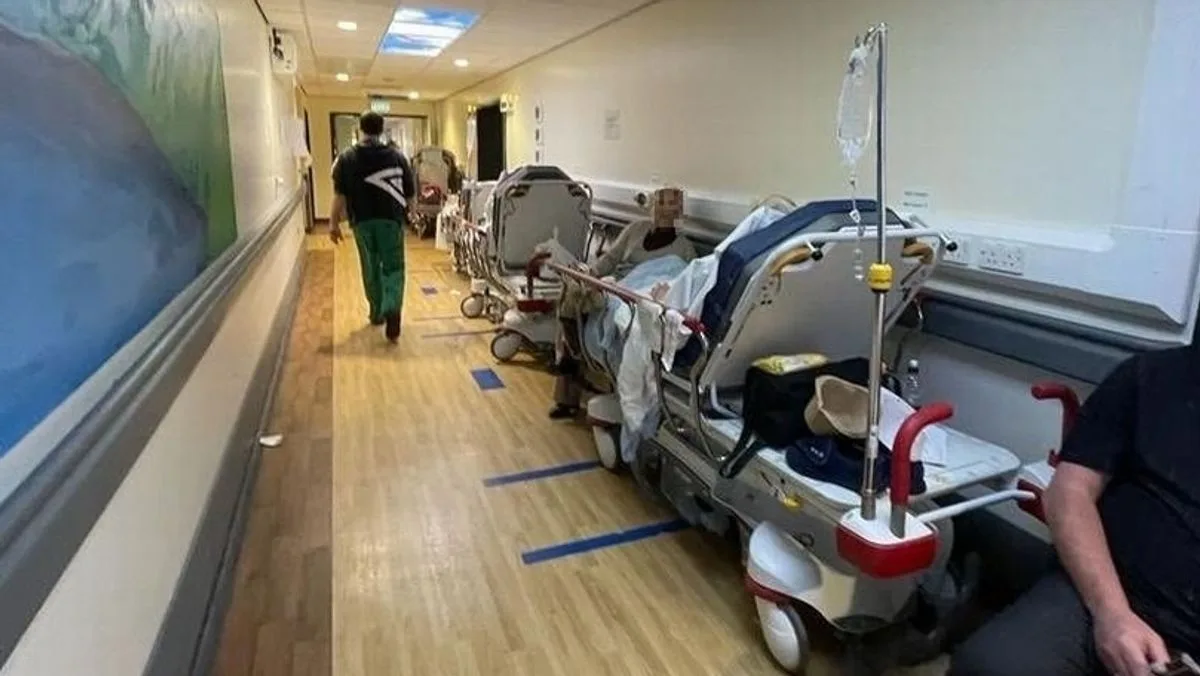
Nurses and doctors are too embarrassed to make eye contact with patients because of the hospital corridor care crisis, MPs have been told. The situation, where patients are treated in corridors, store cupboards, and other inappropriate spaces, has been described as a "national scandal" that is contributing to thousands of deaths.
Dr Ian Higginson, president of the Royal College of Emergency Medicine (RCEM), told the Health and Social Care Committee that corridor care is "actively killing patients." He cited an estimate that around 16,000 patients a year die due to long waits in emergency departments. Data shows that patients who spend more than 12 hours in A&E are more than twice as likely to die within 30 days compared to those seen within two hours.
More than half of Emergency Department Clinical Leads in England who responded to an RCEM survey said their A&E was unsafe for patients. Professor Nicola Ranger, general secretary of the Royal College of Nursing, said nurses feel ashamed and embarrassed, leading to a lack of eye contact. "That is a symptom of people just, you know, head down because they feel upset with what they're seeing," she told MPs.
Dr Higginson, who works as a consultant in A&E, said he personally experiences the phenomenon of avoiding eye contact. "Many of the staff find it very difficult to simply go out into the waiting room and face the patients who've been waiting there for so long," he said.
Long waits in A&E have worsened over the past decade. In December 2019, 2,356 patients waited more than 12 hours on a trolley for a bed; by December 2025, that figure had risen to 50,775. The Labour government and NHS England have set an interim target for March 2026: 78% of patients attending A&E to be admitted, discharged or transferred within four hours. Current data shows 73.8% are seen within that time.
The NHS has announced changes to A&E operations, including dedicated areas for patients likely to need extended care, aimed at reducing overcrowding and making long waits more bearable, particularly for the elderly.




