
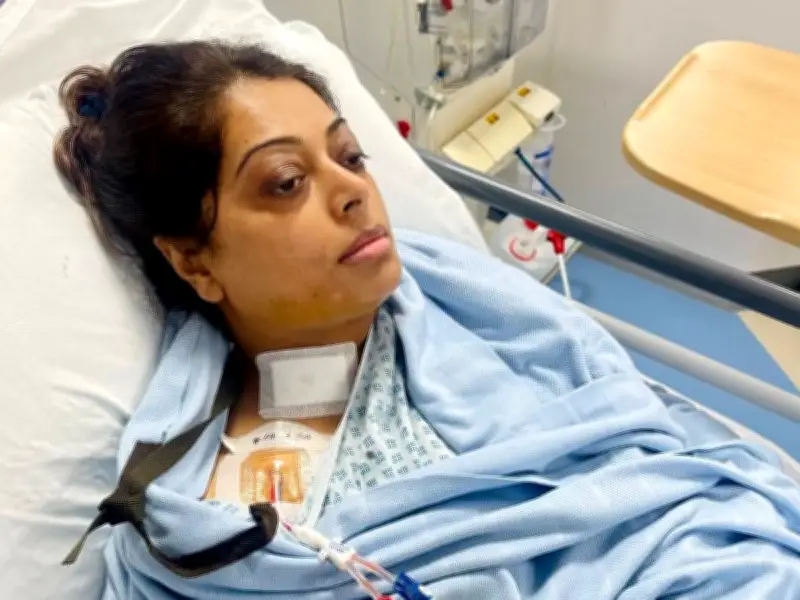
A previously fit and healthy NHS nurse has spoken out about how she is now 'trapped' on a dialysis machine just to stay alive and fears she won't see her kids grow up after a hidden blood clot caused her kidneys to fail.
From Active Lifestyle to Kidney Failure
Hafsa Begum once enjoyed an active lifestyle, regularly going hiking and travelling with her husband and their three children. That all changed when she noticed a terrifying sign that something was seriously wrong.
The NHS primary care practice nurse discovered blood in her urine, and combined with pain in her sides and heart palpitations, she knew something was gravely amiss. Hafsa, 45, wasted no time in booking an appointment with her GP, who arranged urgent blood and urine tests, which revealed that a blood clot was attacking her kidneys.
Had she waited any longer, it is likely the clot would have begun to affect her brain, lungs and heart — potentially proving fatal.
'Completely Turned My Life Upside Down'
"If I had a poor diet, poor lifestyle or underlying health problems, it would've made more sense," Hafsa, from Bradford, told creatorzine.com. "But that wasn't the case."
"It's been extremely scary and completely turned my life upside down. One day, I was a healthy and active nurse caring for other people – and the next, I was a patient."
"I went from planning family holidays and hiking to wondering whether I'd survive. I grieved the life I'd lost and struggled to accept that my future had changed so suddenly."
"Rather than making memories with my family, my life revolves around treatment now. I absolutely feel like I'm missing out."
"I miss days out and simply having the energy to enjoy time with my children. I worry about what I'm missing while they're growing up and that's one of the hardest parts in all of this."
Diagnosis and Treatment
Hafsa spotted the concerning symptoms mentioned above in May 2023. She also experienced vomiting, nausea, loss of appetite and weight loss.
At her first GP appointment, she underwent a blood test which revealed that her kidney function was declining "drastically". She was hospitalised for two months, during which numerous tests, scans and biopsies were carried out to identify the underlying cause.
Ultimately, it was confirmed that Hafsa had renal thrombosis – a blood clot forming in the vein that drains oxygen-depleted blood from the kidneys. As her condition worsened, this led to acute kidney injury (AKI); resulting in a rapid and severe deterioration in her kidney function.
Fortunately, doctors managed to stabilise Hafsa's function at 19% and she was discharged. However, in March 2024, her kidneys started failing again and, in order to keep her alive, her only choice was to undergo dialysis three times a week.
Life on Dialysis
She said: "People don't realise the impact that dialysis has on your life. It's painful, exhausting and causes headaches."
"I'm so drained by my sessions that, on those days, I can't participate in life and have to sleep to recover. My healthcare team has adjusted my treatments so many times; but my body can't get used to it."
"I always leave with side effects such as dizziness, light-headedness, tiredness and a ringing sound in my ears. I get extremely cold and can't stop shivering."
"Some days, my bones and muscles constantly ache and it's hard to get a good night's sleep. As a mum and nurse, I was always on the go."
"Now, I lose three days a week connected to a dialysis machine. That time is taken away from spending with loved ones."
"And I can't work long hours anymore, because my legs and ankles well up. I also have restrictions on what I can eat and drink, as well as where I can go."
"It's hard to enjoy a family event or a holiday on dialysis. Without dialysis, however, I would have to go onto palliative care. But although it's keeping me alive, I'm not living like I once did."
Coping and Advocacy
Hafsa has needed counselling to help her cope with her new reality and the toll the entire ordeal has taken on her life. For the time being, she's taking things one day at a time and has found ways to adjust to her daily routine.
She works part-time on her non-dialysis days to help keep the family financially stable – and to maintain her mental wellbeing.
Hafsa said: "Being able to care for patients takes my mind off my own condition until the next day, when I become the patient again. When people see me, I'm still dressed up with makeup on and smiling, so they assume I'm fine. But I'm not OK."
Hafsa has faced no shortage of hardships while undergoing dialysis. The fistula in her arm, where the treatment is commonly administered, had to be tied off following the development of a large aneurysm, meaning it is now being delivered through a central line in her chest.
This carries a significantly higher risk of infection and further blood clots, leaving Hafsa with a constant reminder of the ongoing battles she faces each day. Dialysis remains Hafsa's only life-saving option until a suitable donor can be found for a kidney transplant.
However, due to her Asian heritage, there is unfortunately a severe shortage of compatible donors. Hafsa is partnering with Kidney Research UK to raise awareness of chronic kidney disease, while hoping to find someone who could restore her 'old' life.
She is also championing improvements to dialysis units for fellow patients, such as portable air conditioning during the summer months and access to cold drinking water, which could spare those already dependent on this life-saving treatment from unnecessary suffering.
She added: "I'm just crossing my fingers and hoping it will happen soon. It would give me my freedom back."
"There needs to be more awareness and education so that people can consider organ donation. I'm sure if information was shared in more languages and with more religious groups, people would recognise the difference they could make to someone's life."
"When my transplant does happen, I have a bag packed and ready to go. Hopefully it will improve life for me and my family so we can get back to enjoying hiking together and travelling."
"I miss the peace of mind you get when you can relax in a different environment. I never thought in my wildest thoughts I'd become this unwell."
"It happened so quickly – I was in control of my life and suddenly that freedom was taken away. It's easy to overlook symptoms or explain them away – but it's so important to react when your body is telling you something isn't right."




