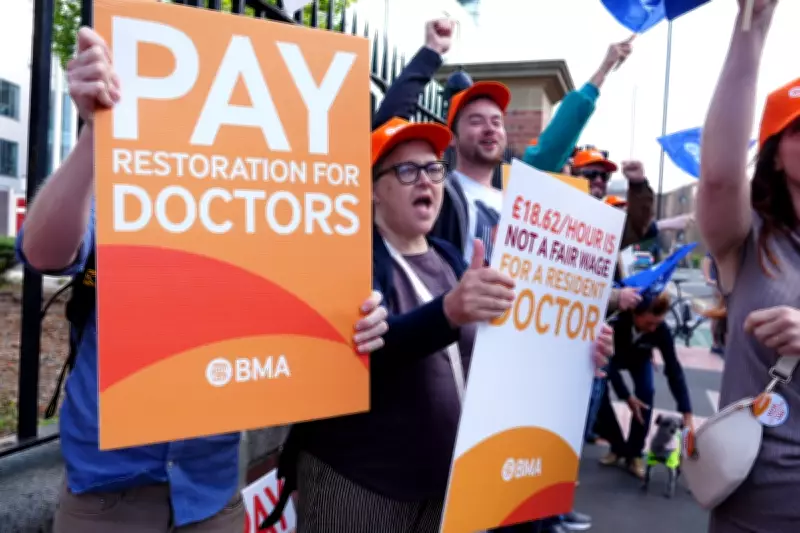
Resident doctors in England have initiated a near week-long strike, marking the 15th such industrial action since March 2023, as tensions over pay and job prospects within the National Health Service intensify. The British Medical Association announced this latest walkout, which commenced at 7am on 7 April and is scheduled to conclude at 6.59am on 13 April, following the Easter bank holiday weekend.
Core Demands and Government Response
The central issue driving the strike is the doctors' demand for a 26 per cent pay increase to restore salaries to 2008 levels, adjusted for inflation. This follows the collapse of negotiations between the government and the BMA in March. The government had proposed a package including measures to cover out-of-pocket expenses such as exam fees, accelerated pay progression, and additional specialty training positions. However, it firmly rejected the union's pay restoration stance.
Financial and Operational Impact
Health Secretary Wes Streeting issued a stark warning on Tuesday, stating that the strike action could cost the NHS approximately £300 million. He emphasised that this move not only undermines proposed pay rises and training posts but also poses a significant risk to the NHS's recovery efforts. Streeting criticised the BMA for outright rejecting the government's offer and immediately calling for strikes.

In contrast, BMA Resident Doctors Committee chair Jack Fletcher accused ministers of "effectively moving the goalposts on the deal at the last minute." He argued that reducing potential doctor posts exacerbates existing pressures on the NHS, such as corridor care and GP waiting times, which negatively impact patients. Fletcher reiterated the union's willingness to postpone industrial action if a credible offer emerges, even during the strike period.
Detailed Pay Structure and Historical Context
Resident doctors, formerly known as junior doctors, are qualified medical professionals in their early training years. Approximately one-fifth are in their first two foundation years, with the rest in core or specialty registrar training. Current salaries range from £38,831 to £44,439 for foundation trainees, rising to £73,992 for those in specialist training, including a 5.4 per cent increase from last year but excluding London weighting.
While pay has increased by nearly 30 per cent from 2023-2024 to 2025-2026, including a 22.3 per cent rise since Labour took office, the BMA contends that a 26 per cent boost is necessary to counteract inflation since 2008. With the current 5.4 per cent uplift, the union estimates it would take until 2036—12 years—to fully restore pay. Their proposal aims to raise foundation doctor pay to between £47,308 and £54,274, with specialist trainees earning up to £90,989, implemented over a negotiated timeframe.
Training Post Challenges
Beyond pay, resident doctors are advocating for reduced competition in specialty training posts. Many struggle to secure roles despite prior NHS experience, with over 30,000 applicants vying for 10,000 positions in 2025, including international candidates. The government's March offer included a pledge to create 4,000 to 4,500 additional specialty training posts over three years, with 1,000 accelerated this year to address bottlenecks.
Government's Proposed Package
In a letter to BMA members on 27 March, Streeting outlined the government's offer, which featured a reformed pay structure to facilitate more frequent raises and an average basic pay increase of 4.9 per cent. This would have resulted in resident doctors being 35.2 per cent better off than four years ago, with starting pay for new graduates nearly £12,000 higher than in 2022-2023. The lowest-paid FY1 and FY2 doctors would have seen rises of at least 6.2 per cent and 7.1 per cent, respectively, pushing average earnings above £52,000. For the most experienced resident doctors, basic pay would have reached £77,348, with average earnings exceeding £100,000.
The ongoing strike underscores a deepening rift between healthcare professionals and the government, with significant implications for NHS stability and patient care. As the industrial action unfolds, both sides remain at an impasse, leaving the future of NHS staffing and pay unresolved.