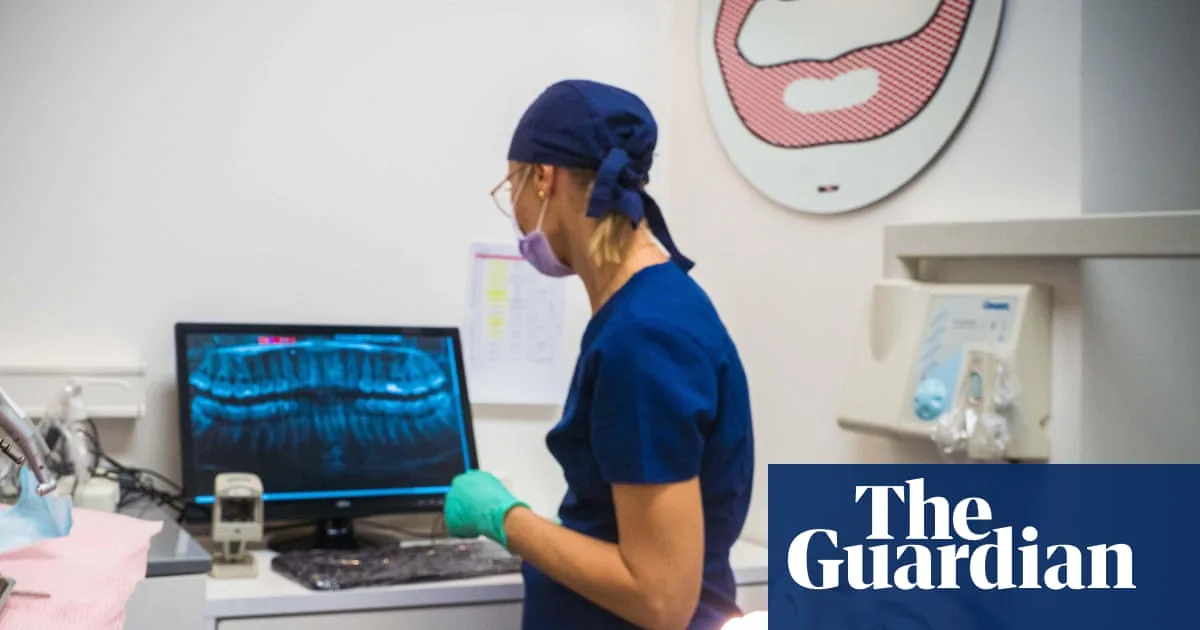
NHS Dental Crisis Forces Third of English Patients into Private Care
NHS Dental Crisis Forces Third into Private Care

NHS Dental Crisis Drives Sharp Rise in Private Care Usage

Exclusive findings from a health watchdog indicate that almost one-third of individuals in England are now resorting to private dental services, marking a significant increase from previous years. This shift is largely attributed to the ongoing scarcity of accessible NHS dental care, forcing many households, including those with limited financial means, to pay out-of-pocket for essential treatments such as fillings and extractions.

Growing Reliance on Private Dentistry

According to Healthwatch England, the proportion of people turning to private dental care surged from 22% in 2023 to 32% by late last year. This trend highlights a concerning move towards a one-tier, private-only system, where dental services become increasingly unaffordable for a growing segment of the population. The watchdog expressed particular alarm over the near-doubling of financially struggling individuals using private dentistry, rising from 14% to 27% in recent years.

Rebecca Curtayne, acting head of policy, public affairs, and research at Healthwatch England, emphasized the severity of the situation. "Our findings serve as a stark warning that for some, there's only one option: private dental care," she stated. "The most vulnerable members of society are disproportionately affected by the shortage of NHS appointments, with many low-income patients forced into unaffordable private treatments or foregoing care altogether."

Wide Pickt banner — collaborative shopping lists app for Telegram, phone mockup with grocery list

Double Penalty for Vulnerable Groups

Patients who opt for private care face a double penalty, as highlighted by the watchdog. Private dentists charge substantially more than NHS rates; for instance, a check-up costs £64 privately compared to £27.40 on the NHS. Compounding this issue, many low-income patients, pregnant women, and new mothers are missing out on free NHS dental care they are entitled to, simply because they cannot find a dentist willing to treat them under the health service.

The findings are based on a representative survey of 2,593 adults conducted in October and November of last year, informing Healthwatch's annual report on patient healthcare experiences. Curtayne urged ministers to address the access crisis by granting everyone the right to see an NHS dentist, similar to GP registration entitlements. Notably, Healthwatch, the statutory NHS patient champion, is set to be abolished as part of Wes Streeting's controversial NHS reorganisation in England.

Systemic Failures and Human Impact

Rachel Power, chief executive of the Patients Association, echoed these concerns, describing the report as "damning evidence of the state of NHS dentistry." She warned that the lack of affordable dental care not only impacts physical health but also leads to ongoing pain and significant mental and emotional distress. "Where dental care means paying privately, the NHS dental service exists in name only for many," Power added, stressing the urgency of preventing a costly, one-tier system.

In response to these challenges, the Competition and Markets Authority (CMA) recently launched an inquiry into the UK's £8.4 billion private dental market. Sarah Cardell, the CMA's chief executive, explained that while some choose private dentistry, for many it is a necessity, driven by uncertainties around costs, availability, and treatment options. The CMA's estimate of private dental usage—one in five people in the UK—is lower than Healthwatch's 32% figure for England, but the review will examine access, competition, and significant price increases, such as a 23% rise in initial consultation costs to £80 between 2022 and 2024.

Dentists and Government Responses

Dentists attribute the inaccessibility of NHS care to inadequate government funding. The British Dental Association (BDA) claims that NHS payments for certain procedures are so low that dentists operate at a loss, requiring cross-subsidisation of around £400 million annually just to break even. Eddie Crouch, chair of the BDA, asserted that "those forced into private care are there because of Treasury choices," highlighting a funding gap that pressures private pricing.

Pickt after-article banner — collaborative shopping lists app with family illustration

Recent disclosures revealed that dentists in England returned £936 million over two years due to underutilised NHS allocations. A Department of Health and Social Care spokesperson acknowledged the inherited challenges, stating, "We believe everyone should access dental care, not just those who can afford it." The government cited actions taken, including 1.8 million additional treatments in the first seven months of the year, with benefits for children and deprived groups, alongside dental contract reforms aimed at improving prevention and accessibility.




