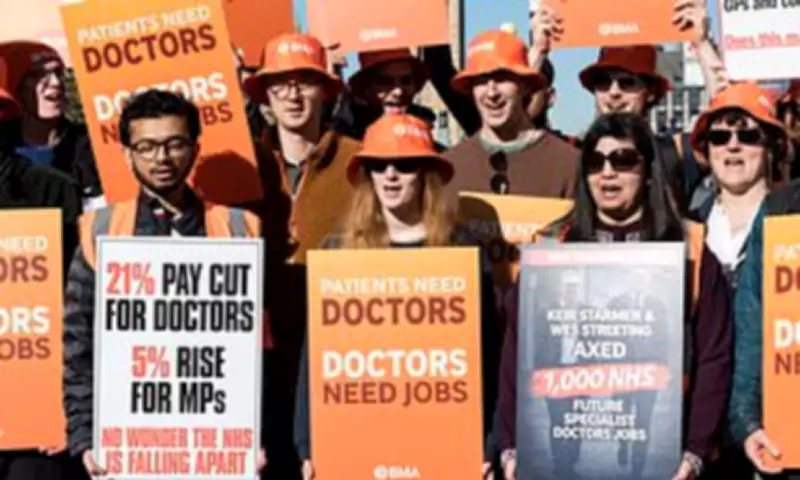
NHS Chief Accuses Doctors of Deliberately Timing Strikes to Cause Havoc
Sir Jim Mackey, the chief executive of NHS England, has declared that the ongoing resident doctor strikes have been 'deliberately timed to cause havoc'. This accusation comes as medics continue their walkout today, marking one of the longest industrial actions the NHS has faced.
Disruption and Financial Toll Mount
Resident doctors, previously known as junior doctors, began a six-day strike at 7am yesterday. They are pursuing a 26 per cent pay rise on top of the 28.9 per cent increase they have received over the past three years. Sir Jim warned that many hospitals have found it 'challenging' to fill rotas following the Easter weekend, exacerbating the strain on healthcare services.
The cumulative impact of these strikes is staggering. Doctors have now taken to picket lines on 61 days across 15 rounds of strikes, with each day costing the NHS approximately £50 million in lost activity and overtime for covering consultants. To date, the total expenditure has reached £3 billion.

Political Reactions and Pay Demands
Health Secretary Wes Streeting has highlighted the financial implications, stating that the £3 billion spent could have built 'a few' hospitals or delivered millions of appointments, potentially slashing NHS waiting lists faster. He accused the British Medical Association (BMA) of trying to 'fleece' the public with pay demands that could cost taxpayers £30 billion a year if extended to all NHS workers.
Streeting admitted that the industrial action will leave some patients 'waiting in pain or anxiety longer than is necessary' as appointments are cancelled. However, he noted that the government is not currently considering banning strikes, though it remains an option.
Conservative Leader Calls for Strike Ban
Conservative leader Kemi Badenoch has called on ministers to ban doctors from striking, accusing them of 'betraying patients'. She argues that medics' jobs are so critical they should be subject to the same restrictions as police and the military. Badenoch stated, 'We will reintroduce Minimum Service Levels across the NHS, so that patients know the NHS will always be there when they need it.'
BMA's Stance and Public Opinion
The BMA maintains that it would cost taxpayers £3 billion to deliver the pay rise they are asking for. Dr Jack Fletcher, chairman of the BMA resident doctors committee, said, 'These strikes were entirely avoidable.' He warned that treating doctors as an inconvenience could lead to an NHS lacking enough resident or consultant doctors.
New YouGov polling indicates a shift in public sentiment. The survey of 4,385 adults in Great Britain found that 55 per cent now oppose resident doctors going on strike, up from 33 per cent in April 2023. Only 37 per cent currently support the action.
Looking Ahead
Despite the challenges, Sir Jim reported that hospitals were in 'as good a place as we could hope' on the first day of the walkout. He expressed gratitude to staff for their efforts in maintaining services. The strike is set to continue for six days, with both sides remaining at an impasse over pay and job opportunities, underscoring the ongoing tensions within the UK's healthcare system.