

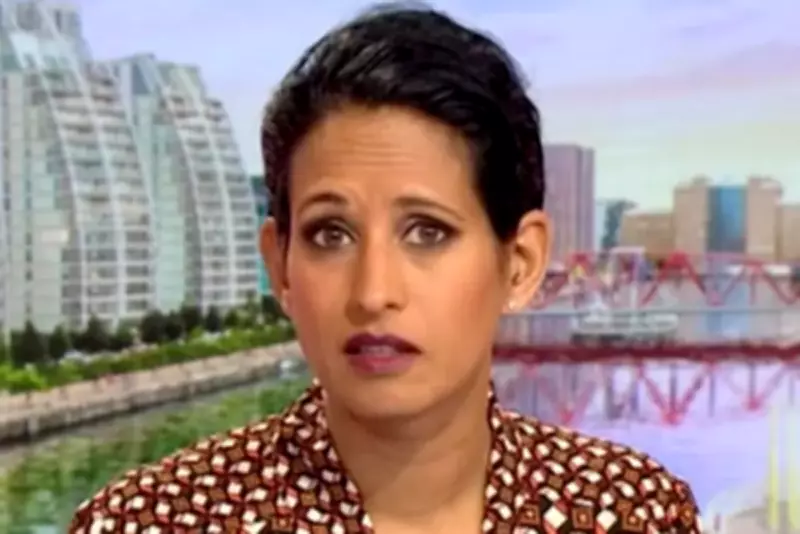
BBC Presenter Naga Munchetty Shares Harrowing Journey with Debilitating Womb Condition
BBC Breakfast host Naga Munchetty has courageously revealed her prolonged struggle with adenomyosis, an extremely painful gynaecological condition that went undiagnosed for over three decades. The 51-year-old broadcaster described how she has learned to "normalise" excruciating pain that sometimes strikes even while she's presenting live television.
'You Put It in a Box and Get On With Your Job'
In a candid interview with The Times, Munchetty explained how women frequently compartmentalise their suffering. "It can come at any time, but you put it in a box and you get on with your job—that's what most women do when they're in pain," she stated. The presenter detailed symptoms including being "curled up on the floor screaming, sweating, flooding, passing out, vomiting"—experiences she described as fundamentally debilitating.
Munchetty's condition causes her uterus to enlarge, leading to severe cramps, abdominal bloating, and heavy menstrual bleeding. Often called "the evil twin sister of endometriosis," adenomyosis affects approximately one in ten women, though experts believe many cases remain undiagnosed due to symptom variability and medical dismissal.

Decades of Misunderstood Symptoms
The broadcaster's diagnosis came only after 32 years of suffering, during which medical professionals repeatedly suggested her pain was "normal" menstruation. Munchetty recalled one particularly distressing incident where she had to leave the BBC Breakfast set mid-broadcast. "I've had to come off set to throw up because I thought I was passing out while presenting," she revealed. "I went to the toilet, threw up, cleaned it up. I managed to get a 10-minute break, got makeup redone covered in sweat, sat down and did the next hour and a half."
Munchetty suspects she "probably" also has endometriosis, a related condition where tissue grows outside the uterus. While endometriosis involves rogue tissue invading areas like the bladder, bowel, or ovaries, adenomyosis specifically causes tissue to embed within the uterine wall itself.
Understanding Adenomyosis: Symptoms, Diagnosis, and Treatment
Adenomyosis predominantly affects women aged 40-50 and those who have previously been pregnant. Although its exact cause remains unknown, University College Hospital notes that genetics and hormonal factors likely contribute. Diagnosis typically involves MRI and ultrasound scans, but the NHS acknowledges it can take "a long time, even years, to diagnose" due to varying symptom severity among patients.
Current treatment options are limited but may include:
- Medication to reduce pain and bleeding
- Hormonal interventions like contraceptive pills
- In severe cases, surgical procedures
The Wider Issue of Women's Health Dismissal
Munchetty's experience highlights a broader pattern where women's gynaecological symptoms are frequently minimised or misattributed. While awareness of endometriosis has grown recently, adenomyosis remains comparatively overlooked. Charity Tommy's suggests the condition is significantly underdiagnosed, with mild cases often missed by current clinical methods.
Munchetty joins other public figures like actor Gabrielle Union in speaking out about adenomyosis. Union previously disclosed that her condition went undiagnosed throughout her twenties, underscoring how even celebrities face similar diagnostic delays.
By sharing her story, Munchetty hopes to foster greater understanding and prompt earlier intervention for others suffering in silence. Her account serves as a powerful reminder of the need for improved medical recognition of women's chronic pain conditions.






