
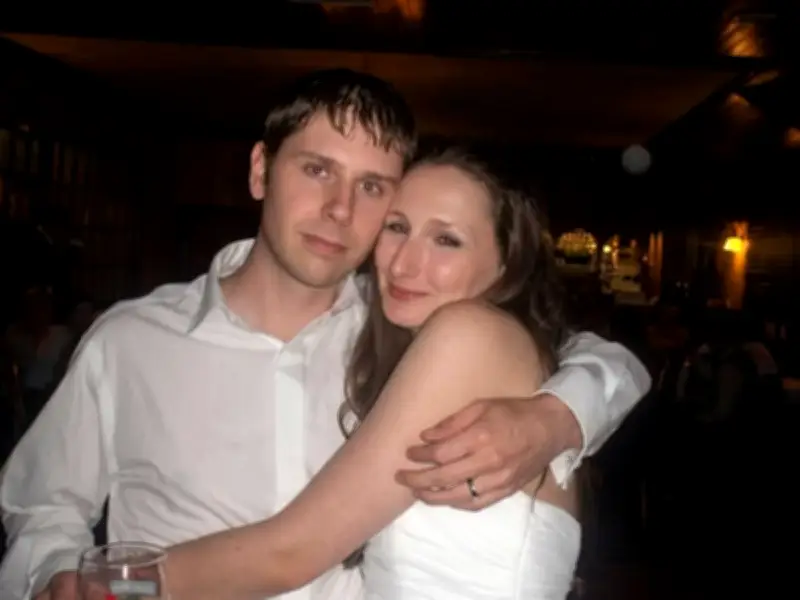
A mother-of-five died from a heart attack after an 80-minute wait for an ambulance, leaving her husband to perform CPR alone at their home. Michelle Roberts, 39, was at home in October 2024 when she felt a heartburn sensation and discomfort in her throat. She called her husband, Ben Roberts, 43, and then dialled 111 to explain her symptoms. While she was still on the line, Ben arrived home and was told an ambulance would be sent.
Husband's desperate attempts
Ben prepared the children's tea and went to check on Michelle shortly afterwards, finding her "slumped and not breathing" on the bed. He immediately began CPR. While trying to save his wife, he dialled 999 to ask when the ambulance would arrive, but says they were unable to give him a timeframe.
He continued performing CPR for almost an hour as blood began to "pour out of her eyes, ears and mouth" while his children watched in horror. Eventually, an ambulance arrived, but it was too late and Michelle was pronounced dead.
Aftermath and family impact
The Integrated Care Board (ICB) forwarded a letter to Ben after finding "handover delays" between 111 and 999. The ICB said that "despite its best efforts to gain the outcome of their review, the Luton and Dunstable Hospital did not wish to make comment in this outcome letter".
Ben, a stay-at-home father from Bedfordshire, explained: "My life has gone downhill since then - I lost my wife. I lost my £96,000-a-year job. I went back to work after two months, and social services got involved and they told me I had to quit my job as I wouldn't be able to care for my kids."
He added: "I'm on universal credit now. I'm on my own with very little help. I'm left with five children and social services won't leave me alone even though I do my best. With the little money I do get I'm using food banks to just about get enough food in the house. I'm now not fit to work basically. I want to work, but I don't think I can."
Sequence of events
Ben said that after the initial 111 call, neither he nor Michelle truly understood how serious things were. He said: "We both didn't know the seriousness of it at that point. She told me to get a bag ready for her and she asked me to go and feed the kids as she hadn't been able to get out of bed."
"As I left the room, the last thing she said to me was 'Ben, I'm scared.' I came downstairs and left the front door open for the ambulance. I started dinner and I spent about 25 to 30 minutes getting everything ready for them. Whilst I was doing this, I was checking the door, and no one was arriving."
"I went upstairs to tell her they hadn't arrived and that's when I found her slumped, not breathing. I phoned 999 straight away and they told me to give her CPR."
Ben continued performing CPR until help arrived, while his children entered the room. He recalled: "They're crying and they know what's going on now. I did CPR for nearly an hour and finally a first responder turned up and he casually walked in - there was no urgency."
"He took over and within about two or three minutes, four ambulances turned up, seven police officers, it was jam packed. But it was far too late - it was nearly two hours. I took my children to the neighbours. I sat in the kitchen for another 30 minutes and then the paramedics came downstairs and said there's been a catastrophic incident and that she'd passed away."
"The police then held me downstairs for four hours to rule out foul play - they essentially said they had to rule out that I hadn't killed her. I had to give a statement over and over again - six times. Police then left and the paramedics said to wait for the coroner - I had to wait on my own for two hours for the coroner with my wife dead in the bed."
Legal action and response
Ben has now instructed legal representation to pursue a claim against the NHS regarding the response delays. He explained: "The letter from the ICB said it was classed as a certain type of a response, and it should've been 28 minutes. When the ICB went to find out why, the hospital refused to comment or allow them access to the computer."
"I've lost my wife, lost my job, been diagnosed with PTSD, and if they were here in 20 minutes, she could have survived."
A spokesperson for the East of England Ambulance Service said: "Our thoughts remain with Mr Roberts and his family following the death of his wife, Michelle, in October 2024. We recognise that our response on that day fell below the standards patients and their families have a right to expect, and we have apologised to Mr Roberts for this."
"Following a full review by our patient safety team, we have carefully considered the circumstances surrounding this incident and the lessons that can be learned. At the time of the 999 call, the ambulance service was facing significant operational pressures, including delays in transferring patients at local hospitals. However, we recognise the impact that our delayed response had on Mr Roberts and his family."
"We remain committed to learning from incidents such as this and to improving the care we provide. Since October 2024, we have continued to work with hospital partners to reduce handover delays and improved response times to the most serious emergencies."




