

New Mother's Vision Restored Through Pioneering Plasma Exchange After Childbirth
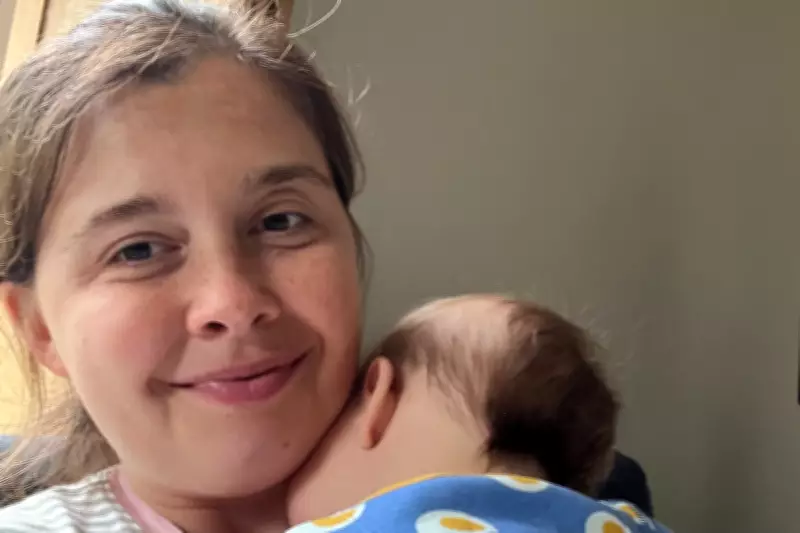
A young mother who lost her sight shortly after giving birth has had her vision dramatically restored thanks to a groundbreaking plasma donation treatment. Jessica Kent-Hazledine, a 33-year-old dentist from Cornwall, described fearing "the worst" when her eyesight began deteriorating in April last year, but now reports her vision is "so much better" following the innovative medical intervention.
The Terrifying Onset of Vision Loss
Just two weeks after welcoming her son, Ms Kent-Hazledine awoke with significantly impaired vision in her left eye, initially attributing the problem to exhaustion and sleep deprivation common among new parents. However, the condition rapidly worsened, leading to complete loss of sight in her right eye as well. This development left her "terrified" at the prospect of not being able to witness her baby's growth and development.
"I was a new mum, not getting much sleep," Ms Kent-Hazledine recalled. "But I thought I should probably get it checked out and the next thing I knew I was having an urgent MRI and blood tests. It was all very scary, I was thinking the worst."

"When my vision went in my right eye, too, I was terrified – I thought I wouldn't be able to see my baby grow up," she continued. "I wouldn't be able to see how his face changed or when he took his first steps or had his first day at school. I had been a mum for two weeks and was faced with the prospect of not being able to see my son again, it was awful."
The Revolutionary Plasma Exchange Treatment
After trying other treatments without success, medical professionals arranged a plasma exchange for Ms Kent-Hazledine through a new service operated by NHS Blood and Transplant (NHSBT) in the South West region. This innovative treatment involves removing a patient's plasma – the liquid component of blood that helps transport blood cells, nutrients and hormones throughout the body – and replacing it with donor plasma.
The procedure proved remarkably effective in stopping the antibodies in Ms Kent-Hazledine's blood from attacking and damaging the protective layer surrounding the nerve fibres in her eyes. She described the treatment as "so simple" despite its profound impact.
Ms Kent-Hazledine underwent five exchanges in total, noting that significant improvements began appearing by the third treatment. She can now see clearly out of her right eye and has regained approximately 75% of her vision in her left eye.
"By the fifth exchange, I felt pretty much back to myself, it felt like magic," she revealed. "It's been almost a year now and my sight is so much better – I still have some blurring in half of my left eye but I can look after my son and live an independent life, which I was worried I wouldn't be able to."
Groundbreaking NHS Service Expansion
The plasma exchange was performed by NHSBT's therapeutic apheresis services (TAS), which currently collaborates with four hospitals across the region. Ms Kent-Hazledine had the distinction of being the first person in Cornwall to benefit from this newly established service.
"I feel so lucky that it was arriving in the area just as I needed it – it was amazing and I'm glad that other people will get to benefit, too," she expressed gratefully.
Emma Warner, lead nurse at NHS Blood and Transplant's TAS in Plymouth who treated Ms Kent-Hazledine, emphasized the service's significance: "This vital service is giving patients access to timely, specialist care close to home. For new mum Jessica, this meant everything. She was able to receive the treatment she needed as an outpatient, staying by her baby's side instead of enduring long, stressful journeys or the prospect of being admitted far from home."
Warner added: "It makes us so happy to be able to help patients like Jessica but we couldn't do what we do without the generosity of blood and plasma donors, and I'd like to encourage everybody who is able to register to donate."

Addressing Regional Healthcare Gaps
A spokesperson for NHS England's specialised commissioning team in the South West welcomed the launch of TAS in the region, explaining: "Plasma exchange is not typically commissioned as a standalone service by NHS England, as it often sits within broader treatment pathways. However, we knew there was a gap in provision of this service in the peninsula and, following a procurement process, we commissioned NHS Blood and Transplant to fulfil this need."
A Heartfelt Plea for Donations
Ms Kent-Hazledine concluded with an emotional appeal for increased blood and plasma donations: "I'm eternally grateful to those people who donated blood and plasma – it's only thanks to them that that plasma was available and I'm able to see again. I don't think people realise just how much good donation can do – we all know blood can be used in emergencies but it can also be used to help so many people like me."
"I'd urge absolutely everybody who is eligible to go and give blood or plasma – and thank you to those who already do," she emphasized, highlighting how this simple act can transform lives in unexpected and profound ways.





