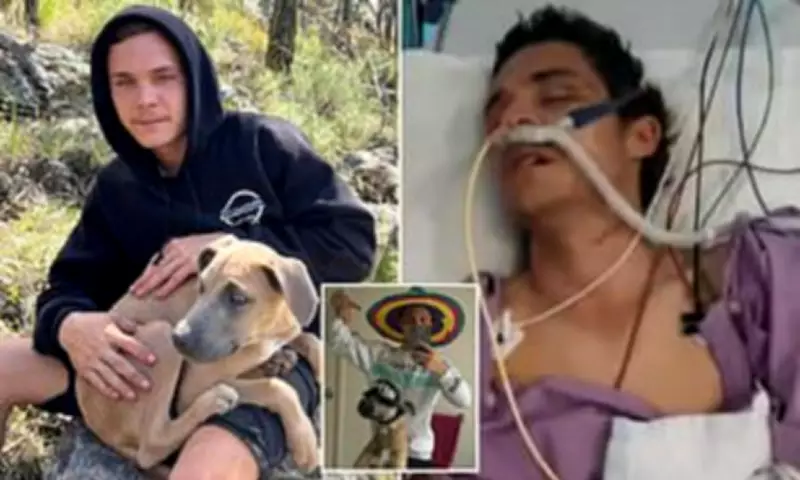
A coronial inquest has delivered a damning verdict on the medical care provided to a young tradie who died after a motorcycle crash, finding that crucial warnings about his "grossly abnormal" larynx were fatally overlooked. Kyle Gallagher, a 22-year-old roofer, lost his life due to an airway obstruction that could have been prevented if critical signs had been recognised and acted upon in his final 24 hours.
The Accident and Initial Hospitalisation
Kyle Gallagher survived a serious motorcycle accident on June 17, 2023, north of Brisbane, after losing control of his bike and colliding with a car. He was admitted to the Royal Brisbane and Women's Hospital with a brain injury and discharged himself 12 days later. His stepmother, Tegan Samorowski, revealed that due to his brain injury, Kyle did not fully comprehend he had been in an accident and repeatedly asked why he was feeling sore.
Return to Hospital and Desperate Pleas
On July 6, experiencing persistent pain, Kyle returned to hospital and was admitted to the Surgical, Treatment and Rehabilitation Service (STARS) four days later. His family was assured he would make a full recovery. However, in the days leading to his death, Kyle sent desperate messages to both parents, complaining he was struggling to breathe and not receiving adequate help.

"I need something to help me breathe," he texted his father, Matty Gallagher. "They're not giving me anything and I won't make it much longer." His worried family attempted to invoke Ryan's Rule, Queensland's patient escalation process for when concerns are not addressed, but were told Kyle had been deemed fit to make his own decisions.
Missed Critical Findings
A CT scan on July 13 revealed Kyle's larynx was "grossly abnormal," showing substantial airway narrowing and possible infection. A radiologist raised the alarm with doctors, but the Ear, Nose and Throat (ENT) team failed to identify the serious compromise of Kyle's airway, according to the coroner's findings.
The inquest determined that if the CT scan had been properly recognised and acted upon, Kyle's airway could have been secured through intubation or a tracheostomy. "Had an appropriate ENT assessment have been undertaken, on balance, Kyle would not have died," the coroner concluded.
Breakdown in Communication and Final Hours
Kyle's complaints about breathing difficulties were attributed to anxiety and his brain injury by hospital staff. The inquest found nurses checked on him regularly and acted appropriately based on the information they had, but his condition had worsened by July 14. In the early hours of that morning, Kyle rang his mother, Christina Dargusch, from his hospital bed, but she did not pick up.
Just hours later, he was found unresponsive and could not be resuscitated. It was ruled Kyle died from airway obstruction caused by a severe laryngeal condition linked to his earlier injuries from the crash. Ms Dargusch only realised her son had called the next morning, shortly after being informed of his death at STARS, part of Brisbane's Metro North Hospital.
Family's Anguish and Systemic Failures
"Why is he dead? Why?" Mr Gallagher demanded in an emotional interview. He stated Kyle had tried to contact them because "he knew he was dying." The coroner found the ENT evaluation on July 13 was inadequate, failing to sufficiently consider the CT scan findings, the radiologist's concerns, or Kyle's complaints about breathing struggles.
The inquest also identified a breakdown in communication between junior and senior doctors, which contributed to the failure to recognise the scan's seriousness. While staff at STARS did their best to treat Gallagher with the information they had, this information was unfortunately incorrect, leading to tragic consequences.
This case highlights critical issues in patient safety and medical oversight, raising questions about protocol adherence and communication within healthcare teams. The Daily Mail contacted Queensland Health for comment, underscoring the ongoing scrutiny of this preventable tragedy.