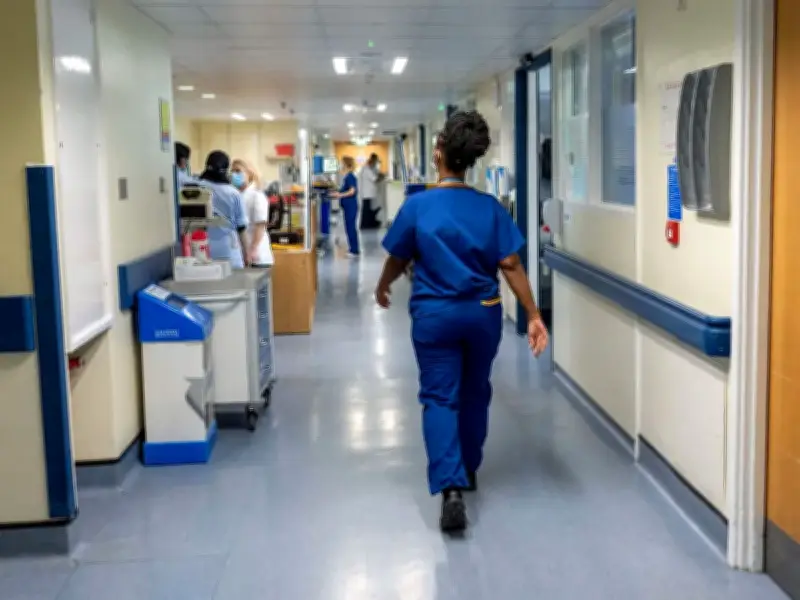
England is facing a looming maternity care crisis, with a top NHS expert warning that more units could close due to difficulties in recruiting staff.
Matthew Hopkins, The NHS Alliance's acute and ambulance director, said some hospitals would face difficulties providing the required level of obstetric cover. He predicted that maternity units seeing fewer than 2,000 births per year would "struggle" to survive because of a recruitment crisis.
Devon Hospital Suspends Births
The warning comes after the Mirror reported that mothers-to-be in Devon feared having problem births by the roadside with no one to help. A lack of consultants and obstetricians has meant births, including C-sections, as well as triage appointments to check if mother and baby have any problems, have been suspended at North Devon District Hospital in Barnstaple.

Mr Hopkins, who was previously the head of Mid and South Essex Foundation Trust, has warned "there will be other Barnstaples". He said similarly sized units elsewhere in the country could be affected, many of which face the same issues with recruitment and clinical sustainability.
Dozens of Units at Risk
An analysis by the Health Service Journal (HSJ) claimed dozens of units could face such challenges nationally, with more than 24 out of 155 consultant-led units recording fewer than 2,000 annual deliveries last year.
Mr Hopkins said issues facing smaller units were a "real problem" not just affecting Devon. He suggested some trusts with low birth numbers were keen to close some units because of similar workforce issues and clinical sustainability.
He told the HSJ: "That size makes it very difficult because they still need obstetric cover, so they've got to have the right number of consultant hours." Mr Hopkins added: "Compounding those issues is the increased intervention in childbirth. [We are aware] of units in London where 51 per cent of births are now C-sections."
Impact on Pregnant Women
This meant that "you need more theatre capacity, more beds for longer length of stay due to C-sections, more obstetricians" to safely run a unit. It means that "capacity in lots of units, even those that are over 2,000 births, are going to start to struggle", he said.
Local pregnant women in Devon are facing a journey of at least an hour and 40 minutes to a hospital in Exeter and say they feel helpless and scared. They are being offered lessons on how to give birth in a car in case they go into labour on the road.
Mr Hopkins said a major problem was a refusal by politicians to change services, as acknowledged recently by Baroness Amos in her national review. The Department of Health and Social Care (DHSC) has stressed that maternity unit closures must be temporary and not "irreversible", with any plans for service change clearly outlined.
But The NHS Alliance boss said: "Our view, which is why we're banging the drum around clinical sustainability, is that there does need to be more of a willingness to allow [long-term] changes that will improve safety…
"I am aware of one trust where a number of service reconfigurations were done a number of years ago. One of them being maternity and centralisation to one site, and six years later, the local MPs were still trying to get it reversed. So it's not surprising there is a bit of reluctance."
Mr Hopkins added: "We will work closely with the [DHSC] to come up with some solutions to this problem because I think there will be other Barnstaples."
Government Response
A DHSC spokesperson said: "This Government is determined to drive real and lasting improvements in maternity and neonatal care across the NHS, working through the National Maternity Taskforce. The new Health Secretary is chairing that Taskforce, and she has made clear that this is a personal priority for her in that new role.
"We have already recruited 12,000 new doctors since July 2024, and 2,000 more midwives, but we want to go further to ensure that maternity services across the country have the staff and facilities they need, and that every mother and baby receives the care they deserve."