The Lord Advocate is set to meet with officers investigating deaths at NHS Grampian amid claims that death certificates were forged at Aberdeen Royal Infirmary (ARI). The crisis engulfing the health board emerged earlier this month after a damning report by Healthcare Improvement Scotland (HIS) exposed “major deficiencies” within the organisation.
Days later, consultant surgeon Dr Mohammed Habib leaked a report revealing 19 avoidable deaths among 45 patients treated for liver and pancreatic surgery at the hospital. Police have now completed an “initial review” into deaths at NHS Grampian and are working alongside the Crown Office on next steps.
Whistle-blower’s lawyer raises criminal allegations
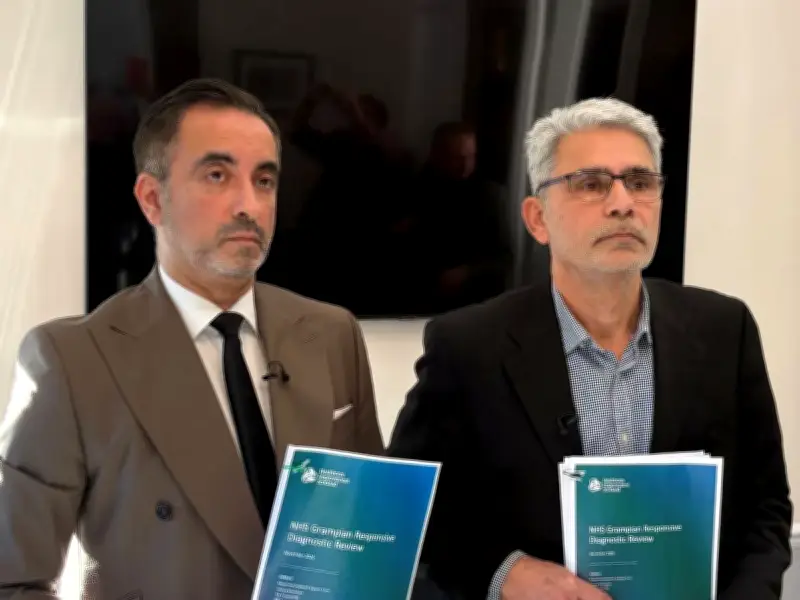
Speaking on behalf of Dr Habib, his legal representative Aamer Anwar said: “I wrote to the Lord Advocate last week on behalf of Dr. Habib, raising a catalogue of potential charges that might be brought if criminality could be established at the ARI.”
Anwar added: “Scotland’s most senior prosecutor confirmed to us on Friday the scale of the complex criminal investigation underway, whilst justice is still long time away for bereaved families, that is the very least they deserve.”
The Lord Advocate confirmed that prosecutors in the Scottish Fatalities and Investigation Unit are working through a dossier of evidence provided by Dr Habib, looking into multiple individual deaths, delivery and management of clinical services, and potential criminal conduct. She also confirmed she will meet directly with senior investigating officers in Police Scotland over the serious criminal allegations raised by Dr Habib, and seek reassurance about ongoing inquiries.
Death certificate concerns escalated
HIS raised concerns with the Crown Office after discovering a patient who died during hepatobiliary surgery at ARI may have had an incorrect cause of death recorded. The watchdog said the concerns were “immediately escalated” to NHS Grampian and the Scottish Government on the evening of November 17. By the following morning, the Procurator Fiscal, Scottish Fatalities Investigation Unit and UK General Medical Council had also been informed.
NHS Grampian chief executive Laura Skaife-Knight confirmed she was due to meet the patient’s family on Sunday afternoon. She said the meeting was to “reiterate my apologies, answer their questions and to ensure we involve them fully in the reopened Significant Adverse Event Review”.
An HIS spokesperson told the BBC: “HIS's Death Certification Review Service is in the early stages of considering other death certificates associated with hepatobiliary surgery at Aberdeen Royal Infirmary. The DCRS will continue to liaise with other bodies including the Procurator Fiscal, Scottish Fatalities Investigation Unit and the UK General Medical Council.”
Police and Crown Office respond
COPFS and police are understood to be examining information supplied by Dr Habib as they weigh up their next steps. The Crown Office confirmed it was liaising with Police Scotland and was “aware of concerns that have been raised in relation to some surgery patients at Aberdeen Royal Infirmary”. A spokesperson added: “It would not be appropriate to comment on individual allegations or cases, or on the scope or potential outcome of inquiries.”
Police Scotland said: “We completed our initial review and updated the COPFS on Thursday. We are working with COPFS on next steps.”
The latest development comes after an internal NHS Grampian report laid bare 19 avoidable deaths following liver and pancreatic surgery at ARI. The findings, contained in a September 2022 report, were leaked last week by Dr Habib, who called for a corporate homicide investigation into the health board amid claims patients had bled to death on the operating table. NHS Grampian has since published the original report alongside a redacted follow-up from November 2022, insisting it was doing so “in the interests of absolute transparency”.
The reviews examined 45 patients treated by liver and pancreatic services at ARI between 2015 and 2021. Of the 31 who died, 19 were found to have died as a result of avoidable consequences of surgery or intervention. The review, penned by Prof Stephen Wigmore, regius professor of clinical surgery at Edinburgh University, condemned decision-making in liver surgery as at times “overly aggressive”, with operations proceeding even when disease was considered inoperable. In pancreatic surgery, patients were repeatedly rushed into theatre without adequate planning or proper consideration of alternatives to surgery.
A follow-up review also exposed unacceptably high death rates in some pancreatic procedures, alongside “extremely high” blood loss during a number of liver and pancreas operations. Prof Wigmore warned surgeons were carrying out too few cases, undermining their technical experience. He initially offered support before issuing a letter in May 2023 declaring HPB services had improved and were safe.
The scandal has continued to engulf NHS Grampian after a health watchdog report two weeks ago exposed “major deficiencies” in leadership and culture. Chief medical officer Sir Gregor Smith resigned on Thursday on mental health grounds after facing questions over his role.