
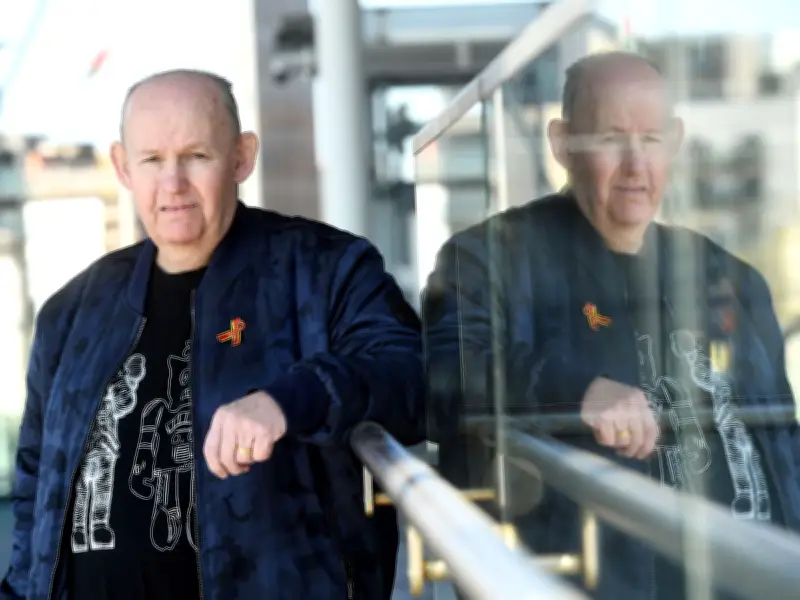
At 13, Brian Langford was diagnosed with non-Hodgkin lymphoma. He spent his teenage years undergoing treatment at Llandough Hospital in Penarth, travelling from his home in Merthyr for blood transfusions. The transfusions made him feel "normal again", and he would not have survived without them - but they were infected and devastated his life. He became one of the hundreds of Welsh victims of the infected blood scandal, described as the biggest treatment disaster in the history of the NHS.
A letter that changed everything
On October 28, 2013, Brian received a letter telling him the treatment he had as a teenager had given him Hepatitis C. He was also diagnosed with liver cancer and cirrhosis, and required an ablation - a heat treatment - to burn the cancer from his liver. In a statement he wrote about the impact, he described the three weeks of Interferon as "the worst". "I cannot put into words how dreadful it is," he said.
He had cirrhosis of the liver, heart failure and psoriatic arthritis. He was routinely in hospital, could not walk far, and could not go out. He used to enjoy concerts and watching the Swans play, but that stopped. He had to give up his job. His family were private people, but he had to live with the stigma of Hepatitis C. He was devastated at the impact on his wife and son.
Campaigning from the Senedd steps
Speaking to WalesOnline on the steps of the Senedd in May last year, at one of the many protests he attended, Brian spoke about how his condition had affected his wife and son. He voiced anger over the system letting down survivors and said he believed the government was deliberately delaying payments to reduce the total bill. His son, now 19, has only ever known his father to be ill.
"I used to be everywhere. I can't do nothing now, I can't walk on the street, I've got to stop. My son - he doesn't go anywhere because my wife has to look after me," he said.
He was lobbying politicians in Cardiff Bay that day, hoping they would press the UK Government to speed up the compensation process. He wanted that money for his son to give him some security.
A final year of decline
By the end of 2025, Brian was wheelchair-bound, with his liver cancer having spread to his bones. In a last-ditch bid to get compensation, his consultant wrote to the Cabinet Office spelling out that he had less than a year to live. Brian Langford died on January 1 this year.
Despite everything, he was one of the lucky ones: his payment had been paid months before.
A scheme still leaving people waiting
More than two years have passed since Sir Brian Langstaff's comprehensive report into the infected blood scandal was published, and 14 months since the UK and devolved governments issued a joint response. Survivors and their families in Wales are still waiting. Of the 12 recommendations, the first was that "the compensation scheme should be set up now". The government response said: "The Inquiry was unequivocal that those who have suffered as a result of this scandal must be compensated for the harm that has been inflicted upon them. The UK Government accepts this recommendation in full." It also stated: "The government recognises that people have been waiting for too long to receive compensation and for justice to be delivered on this scandal."
Campaigners say the system is too complicated and too many obstacles are placed in the way of navigating the claims process. As of June 21 this year, only 3,198 of the 4,631 living infected and bereaved partners had been enrolled into the compensation scheme.
Haemophilia Wales submission
A submission by Haemophilia Wales to a House of Lords committee in June this year sets out the problems in detail: "The evidence is clear. The government and therefore IBCA are not implementing the recommendations of Sir Brian Langstaff or Sir Robert Francis or their own expert group, and as of April 2026 have chosen to ignore much of their consultation with the infected and affected community, putting forward instead the governments commercially preferred position."
They say victims have not been given a form about what is required for a successful claim, which delays the process, and that medical specialists to help civil servants assess applications have not been recruited. Government calculations do not recognise the harm caused, they argue, and there is a "deeply inequitable disparity" between the living infected and the deceased infected: where a person has died after being infected, the value of their claim is approximately halved. Around half of claims come from the estates of victims, meaning the life lost as a result of government wrongdoing is deliberately not recognised.
The regulations also do not include the 50% uplift for people infected over 18 - only for those infected under 18. This means parents of deceased infected people over 18 are not eligible for the award. The scheme "does not recognise the lifelong psychological harm experienced by bereaved parents and siblings of those who died over the age 18 years".
Welsh numbers, Welsh government
Campaigners say around 300 people in Wales were infected with HIV and/or Hepatitis C through infected blood or blood products. Of those, only 57 have received lump sum compensation. Everyone else has to be "invited" to start their claim, which could take up to seven years.
On July 16, the Welsh Government's health minister Mabon ap Gwynfor issued a statement: "We recognise the concerns expressed by many affected beneficiaries regarding the pace at which claims are being processed and payments made. We fully recognise that no amount of compensation can undo the harm caused by this scandal. Nevertheless, it is essential that those infected and affected receive the compensation, recognition and support to which they are entitled, and the Welsh Government will continue to press for progress towards that aim."
It said it continues to "seek assurance" from the UK Government. Nick Thomas-Symonds, who had previously been the minister in charge, was not appointed to Andy Burnham's new administration, and no successor has yet been announced.
Criminal waste of money
Lynne Kelly of Haemophilia Wales said: "Everyone wanted a lump sum compensation payment as many people are elderly and want closure after over 40 years of campaigning. We have had not meaningful engagement with the UK Government, the Wales voice continues to be ignored and a huge compensation scheme which is not fit for purpose is costing the tax payer £171m a year to run and it is criminal waste of money."
"It is a job creation scheme for Cabinet Office civil servants with 500 claims managers who are currently being trained in a 'test and learn approach' has been set up by the UK Government. There will be less than 20,000 claims across the whole of the UK, they are not isolated claims as every claim is linked to either a living infected or a deceased infected person. The entire compensation scheme has been designed to prevent successful claims and re traumatise infected blood victims."
"The Infected Blood compensation scheme is not remotely based on the Infected Blood Inquiry recommendations: It is not independent of government as all eligibility criteria and tariffs have all been set by the Cabinet Office in secret without expert advice. The complexity of evidence and the burden of proof imposed by the Cabinet Office regulations means that victims are having to revisit their trauma time and time again and have to produce medical evidence which the Infected Blood Inquiry has already found no longer exists."
The UK Government was contacted for comment.




