Landmark Ruling on Covid Vaccine Compensation in India
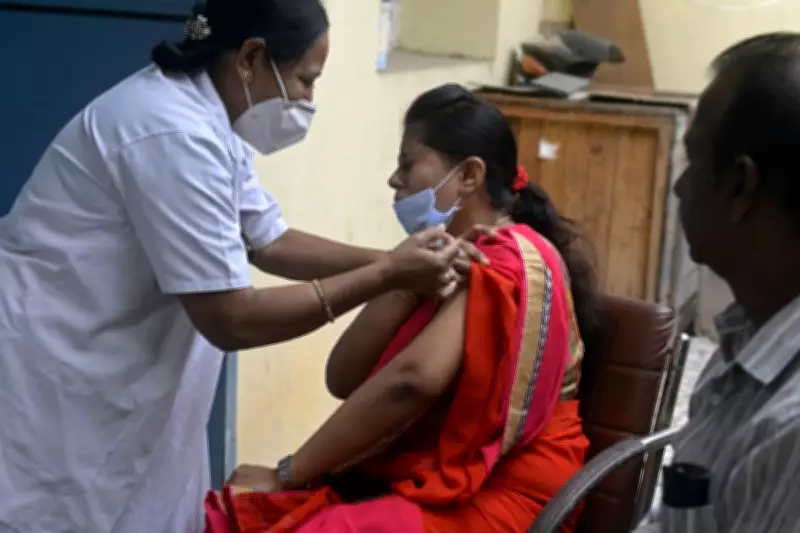
India's Supreme Court has issued a landmark directive ordering the government to establish a compensation framework for victims of rare but severe adverse effects following Covid-19 vaccination. This ruling represents a significant victory for families who have endured years of grief and legal struggle, though fundamental questions about transparency, consent, and institutional trust remain largely unresolved.
A Mother's Tragic Loss
Rachana Gangu's daughter, Rithaika Sri Omtri, was just eighteen years old when she received her first dose of Covishield, the Indian-manufactured version of the Oxford-AstraZeneca vaccine, on 29 May 2021. A few days later, Omtri developed a persistent headache, followed by tingling sensations in her fingers. Her condition deteriorated rapidly, leading to vomiting and, ultimately, a catastrophic brain haemorrhage that left her in a coma.
"Her head was constantly hurting," Gangu recalls in an interview. "She was throwing up, it wouldn't stop." By the time doctors in Hyderabad performed an MRI, it was too late. Omtri suffered a massive stroke and was declared brain dead on 20 June 2021, just weeks after vaccination.

The Statistical Reality and Personal Grief
Severe adverse events like Omtri's were exceptionally rare within India's monumental vaccination campaign. Official data presented to the court indicates that of the 2.2 billion doses administered nationwide, only 2,782 cases developed into severe illness—approximately one in 800,000. The number of fatalities linked to immunisation was even lower, at 1,171 deaths.
However, these statistics offer little solace to families consumed by loss. For Gangu and others, the struggle extended beyond grief into a protracted fight for recognition, answers, and accountability. This battle culminated in this month's Supreme Court order, which compels the Indian government to create a "no-fault" compensation system. This framework would allow patients or their families to receive financial redress without proving negligence or requiring the state to admit wrongdoing.
Judicial Observations and Unresolved Questions
Justices Vikram Nath and Sandeep Mehta noted in their ruling that India lacks a uniform, structured policy mechanism to provide redress for individuals suffering adverse effects following vaccination. They emphasised that this gap is particularly pressing given that vaccination programmes are undertaken as public health measures under state authority.
Despite this legal victory, critical issues persist. Gangu questions whether compensation alone can ever be sufficient. "Why are we hiding the facts?" she asks. "Don't people have the right to know?" Her concerns echo those of Venugopalan Govindan, who lost his twenty-year-old daughter, Karunya, a data science student and musician, after she received the vaccine.
Govindan describes navigating an "opaque system" where reporting adverse events felt like entering a black hole. Both families highlight a perceived lack of informed consent, arguing that vaccination was presented as overwhelmingly safe and necessary for education, travel, and normalcy, with minimal discussion of rare risks.
Scientific Context and Government Stance
Studies, including one published in the British Medical Journal in August 2021, confirmed that certain Covid vaccines were associated with an increased risk of rare blood-related conditions, such as thromboembolism. The research indicated a higher incidence of venous clotting and low platelets linked to the AstraZeneca vaccine.
Public health experts and pharmaceutical companies have consistently emphasised that the benefits of vaccination far outweigh the risks, noting that Covid-19 itself poses a significantly higher threat of dangerous clotting. AstraZeneca has stated that its vaccine saved over a million lives globally and prevented around 50 million Covid cases.

In court, government lawyers asserted that all vaccines approved in India underwent rigorous scrutiny by multiple expert bodies. They maintained that adverse event monitoring systems were robust and transparent, and that national studies found no direct causal link between Covid vaccines and sudden deaths. The court ultimately declined to adjudicate on scientific causation, leaving such determinations to domain experts.
The Compensation Framework and Its Limitations
The Supreme Court's directive focuses on establishing a compensation mechanism rather than assigning blame. The scheme is intended to provide financial support without constituting an admission of fault by the government or healthcare providers. The court also refused to create an independent investigative body, opting instead to rely on existing expert systems.
However, many affected families remain sceptical. Govindan describes the ruling as "too little, too late," expressing doubt that the framework will be accessible or effective for all socioeconomic backgrounds. Gangu laments the absence of stronger directives on informed consent and transparency.
The heart of the matter lies in the tension between public health messaging and individual experience. Families argue that the government's communication created an "effective compulsion," making vaccination practically mandatory for participation in public life despite being technically voluntary.
A Continuing Quest for Accountability
For Gangu, the legal battle was never primarily about financial compensation. "I couldn't stay silent," she insists. "If I don't take action, who will?" She reflects on her daughter's unfulfilled dreams—Omtri had been accepted to Georgia Tech and aspired to become an architect.
As India moves to implement the compensation framework, details regarding claim assessment, compensation amounts, and accessibility remain unclear. The ruling marks a procedural step toward accountability, but for families like Gangu's and Govindan's, the journey toward closure and trust is far from over. The pandemic-era gap between collective necessity and personal tragedy continues to resonate, underscoring enduring questions about risk communication, patient rights, and governmental responsibility in public health crises.