
The cardiology review was the third comprehensive service review in two years carried out at Cardiff and Vale university health board. Each review examined a different department in crisis.
One examined the operating theatres department, revealing drug use and "outright criminal behaviour" tolerated by management. Another focused on the sterilisation unit and made even more alarming findings of sabotage, physical violence, an alleged poisoning attempt, and "systematic failure at all levels of the organisation".
The third review, into cardiology, was carried out last July. WalesOnline had previously reported that the department had been plagued by a toxic culture for years, leaving one cardiac physiologist close to taking his own life.
Six-month fight for disclosure
After WalesOnline made a Freedom of Information request for the cardiology report, the health board blocked its release for six months and missed a legal deadline to respond to complaints. Only after WalesOnline threatened to involve a regulator did the board send a two-page summary of the findings.
The summary identified management failings, unacceptable behaviour, and inadequate training. But the health board continues to withhold details of what those things involved, supposedly to protect individuals' personal data.
That stance has been questioned because the board released the full 22 pages of the operating theatres report, which went into great detail about terrible behaviour by individuals, including a theatre manager described as "actively sabotaging" a colleague. WalesOnline has said it would accept redactions of identifying details.
Reacting to the cover-up, one health board employee said: "How can lessons be learned if the truth remains hidden?" Tory shadow health secretary Natasha Asghar called for "openness and honesty, not lengthy battles to secure information that is clearly in the public interest".
Last year, when the operating theatres report was released, the board's chief operating officer, Paul Bostock, said: "The fact we're having this conversation today is to demonstrate we want full transparency." But the report was only released after some of the most appalling details had already come to light. The sterilisation report, meanwhile, had been kept hidden for more than a year before being leaked.
Cardiology review findings
The cardiology review saw 70 employees interviewed by senior staff and resulted in HR action against "a small number of individuals whose behaviour fell outside the organisational values". The health board has refused to give any detail about that action, breaking precedent.
When the sterilisation unit misconduct was exposed, the board said five members of staff were subject to disciplinary action, two later resigned, two were redeployed into roles outside the unit, and one was dismissed.
Problems in cardiology are not new. An internal investigation in 2023 followed allegations of bullying and harassment from managers made by an advanced cardiac physiologist. The investigation found in his favour and made 20 recommendations to turn around the toxic culture and "heal rifts" involving management. Two years later, as WalesOnline reported in 2025, those recommendations had still not been implemented and one senior manager was "completely unaware" of them.
The physiologist said there was a revolving door of unhappy staff, with a string of experienced physiologists quitting and his own progression through two pay bands accelerated by that exodus. "Recruitment was then a problem as word of mouth spread throughout the cardiac physiologist community that Cardiff was a poor department," he said. "This put additional pressure on the staff who remained, many of whom were thrust into positions without adequate experience or support from senior staff."
He said he struggled to cope and endured harassment and bullying from managers, which led to suicidal thoughts and eventually his resignation. The report into his complaints found there should be a managerial restructure, something also highlighted in the service review as a priority, according to the health board's summary.
The service review additionally found problems with infrastructure, "demand and capacity", clinical incident reporting, "team culture", clinical audit completion, training, the lack of "unified vision or consistent management processes", and the lack of a quality management system, according to the summary.
Accountability questioned
One health board employee said leaders were "undermining accountability" by refusing to be fully transparent about their failings. "They are highly qualified professionals, accountable to the public and earning substantial salaries. The hospital is falling apart and the cardiology department has had a toxic culture for years. We deserve to know the facts about our healthcare."
Ms Asghar said the "deeply troubling" revelations raised further questions about the health board's culture and leadership. "There have been a series of critical reviews across different departments, and these concerns cannot be dismissed as isolated incidents. Just as concerning is the apparent reluctance to publish the findings. The Welsh Government cannot continue to stand on the sidelines. Ministers must intervene to ensure the health board addresses these longstanding leadership and governance issues, implements the recommendations without delay, and is held fully accountable for changing culture and performance."
Health board under pressure
Cardiff and Vale health board has been in level four escalation since June last year because of problems including long waits for appointments, a high level of never events, a rising financial deficit, and "cultural and leadership challenges".
The organisation has faced a near-constant stream of scandals over the last 18 months. Chief executive Suzanne Rankin recently announced her departure from her £245,000-a-year role for an NHS trust in England; her successor has not been named.
Several controversies have centred on the operating theatres department, including an unconscious patient falling from an operating table while their gallbladder was being removed, a surgical swab accidentally left at the back of a patient's throat for more than 24 hours after surgery, unauthorised visitors being invited to watch operations, and an employee avoiding suspension despite being arrested on suspicion of rape.
An inquest recently found University Hospital of Wales patient Donald Gough died after being wrongly injected with insulin following multiple failings and system breakdown. Gareth Idris Johnson, a 41-year-old father, lost his life after the hospital's maintenance problems led to him being moved to a different unit after an operation. A coroner warned of more deaths without urgent action.
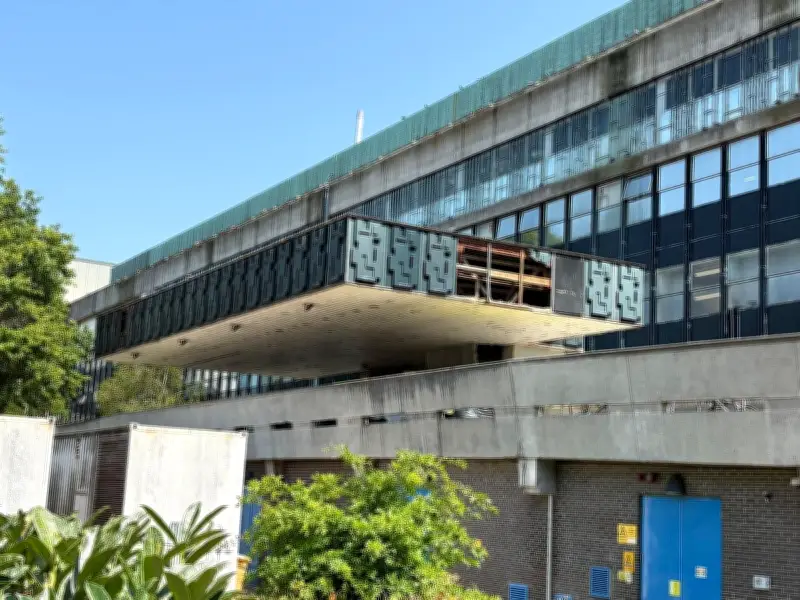
Whistleblowers have frequently spoken of the pigeon-infested state of the site. A letter from almost 300 doctors accused the health board of inaction on the hospital's problems, with staff morale at an "all-time low". The dilapidated condition is understood to have been a factor in Wales losing a vital £8m cancer facility.
One former employee, Cherrill Atkinson, said she witnessed a colleague snorting a white powder on the premises. She reported it to HR but was told they were already aware he had "confidential" issues; he later received a promotion. Another employee kept his job despite a disciplinary investigation upholding an allegation that he exposed his private parts to a young female colleague.
Board response
The Welsh Government said it will next month publish an independent assessment of the health board, which WalesOnline understands to be scathing, as part of the level four escalation.
Francesca Thomas, the board's head of corporate governance, said releasing "detailed conclusions" from the comprehensive service review would, even with names removed, pose a risk of individuals being identified, which would be an "unfair and unlawful processing of personal data". No explanation has been given for why highly specific criticisms of employees such as the theatre manager were previously released.
Rachel Gidman, the health board's executive director of people and culture, said: "Any individuals who are subject to an internal process are managed in line with our employment policies and procedures, and these matters remain strictly confidential." A government spokeswoman said it would be for the Information Commissioner's Office to consider whether the health board has adhered to FOI guidelines.
WalesOnline has invited anyone with information about the service review to contact investigations editor Conor Gogarty at conor.gogarty@walesonline.co.uk. The Samaritans can be contacted for free around the clock, 365 days a year, on 116 123.




