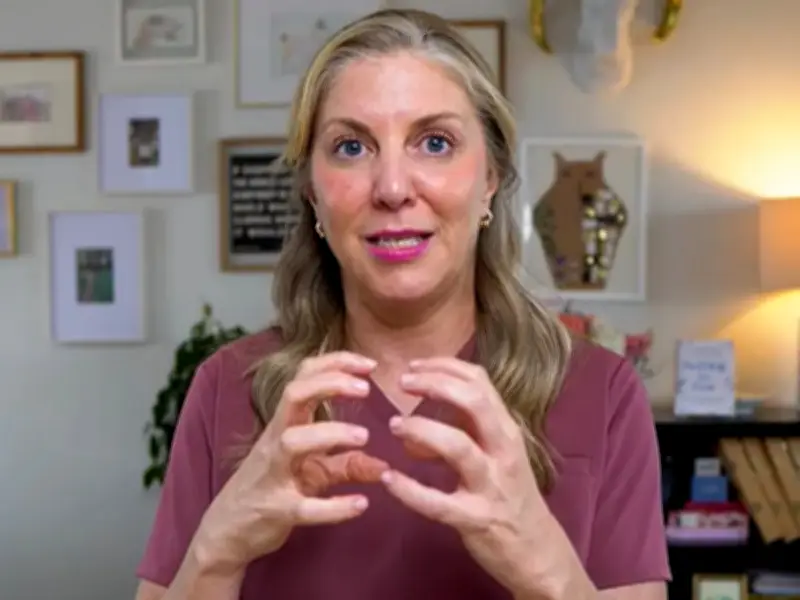
Hospice nurse Julie McFadden has raised awareness about a sudden skin change that can indicate someone is days away from death. With 16 years of experience, she discussed the condition on her YouTube channel, Hospice Nurse Julie, which has 726,000 subscribers.
What is a Kennedy ulcer?
The skin change is known as a Kennedy ulcer, which appears rapidly, often in a butterfly shape, on the sacrum or tailbone. McFadden described it as a “huge indicator” that someone is nearing death. It can be confused with a regular pressure ulcer, but the key difference is how quickly Kennedy ulcers develop.
“The Kennedy ulcer is very specific because it’s not there and then boom, it’s there, and then boom, they die,” she said. “The reason why it indicates it is the body is being like, I’m shutting down. I’m no longer perfusing the skin. The skin is shutting down.”
Signs and symptoms
McFadden explained that the ulcer acts as a “final warning” and happens when blood flow is redirected to vital organs, causing the skin to lose oxygen and break down rapidly. It is often seen in ICU and hospice patients in their final days.
“Small, round or purple lesions. And they may be painful and they may bleed a bit,” she said. “They usually appear on the lower back of the sacrum area like right above the but crack. Sometimes they are in the shape of a butterfly. They develop rapidly, unlike chronic ulcers.”
Treatment and reassurance
For treatment, McFadden said the first step is pain management, usually with low doses of morphine. She also advised cleaning the skin carefully and keeping it dry, as it becomes easily torn. She stressed that a Kennedy ulcer is not a sign of neglect, a common accusation against hospice staff, but simply a natural part of the dying process.
“I don’t want it to be an alarm bell and make everyone panic, but I also want people to know that this could indicate your loved one is getting close to the end-of-life,” she said. “To me, it’s one of the rare but powerful signs of end-of-life that can help prepare people.”