Australian Fitness Coach Documents Painful Skin Cancer Prevention Treatment
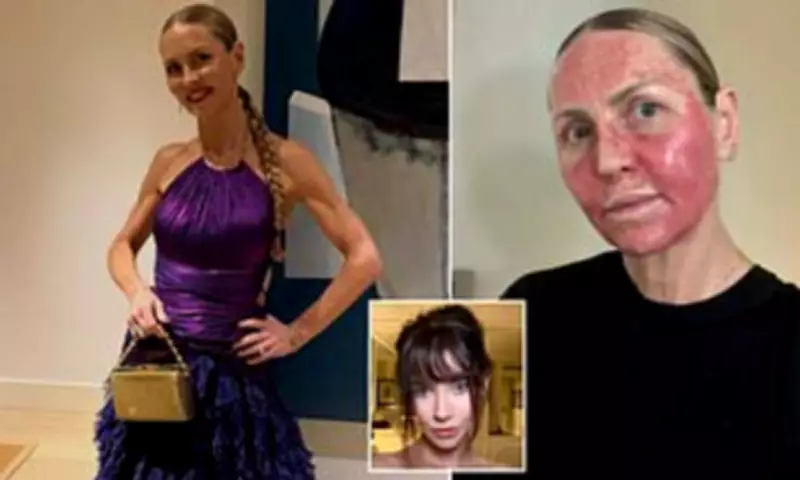
An Australian fitness coach now living in London has bravely shared the confronting reality of undergoing a preventative skin cancer treatment that left her face severely blistered, inflamed, and painfully raw for several weeks. Belinda Shipman, 53, decided to publicly document her entire 28-day course of topical chemotherapy after medical professionals discovered multiple pre-cancerous lesions across her facial skin.
From Routine Check to Life-Altering Diagnosis
Belinda initially attended what she believed would be a routine skin mapping appointment in the United Kingdom, admitting she was more interested in the clinic's longevity testing than the actual skin examination. However, shortly after her visit, she received a phone call that would completely change her perspective on skin health.
'I'd gone from being completely unaware and oblivious to sitting in front of a dermatologist telling me I had active growing skin cancers,' she revealed to the Daily Mail. 'My heart sunk. I was absolutely freaking out.'

Doctors had detected three suspicious lesions on her shoulder during the initial examination and requested she return for further monitoring. Over subsequent weeks, medical professionals photographed and analyzed these spots using specialized imaging equipment until one began growing at an alarming rate.
The Shocking Discovery and Treatment Decision
During a dermatology appointment where the rapidly growing lesion was removed for biopsy, the specialist conducted a full-body skin examination and discovered additional significant damage across Belinda's face. The dermatologist diagnosed her with multiple squamous cell carcinomas and numerous actinic keratosis lesions.
Actinic keratosis, also known as solar keratosis, represents rough skin patches caused by years of sun exposure and is considered pre-cancerous, with the potential to develop into squamous cell carcinoma if left untreated. 'I'd gone from thinking everything was fine to being told there were fast-growing skin cancers,' Belinda explained. 'I was genuinely terrified of it getting out of hand.'
Her concerns were heightened by family history, including her father's previous skin cancer scares and her niece in Australia who required surgical removal of a basal cell carcinoma from her face.
Aggressive Topical Chemotherapy Approach
Rather than removing each individual lesion through separate procedures, Belinda's dermatologist recommended a more comprehensive approach using topical chemotherapy designed to destroy damaged skin cells across entire affected areas. The prescribed cream, called Tolak, contains four percent fluorouracil and functions as a 'field treatment' targeting large sections of sun-damaged skin simultaneously.
Belinda faced a choice between treating sections of her face over several months or undergoing the complete process at once. 'I just thought, you know what, let's do it,' she stated. 'I've gone from being a really healthy person - I'm in the fitness industry, I don't even take Panadol - and suddenly I'm doing topical chemotherapy. It was a total head-spin.'
The Intense Treatment Experience
The treatment protocol required applying the cytotoxic cream every night for 28 consecutive days, but the physical reaction proved far more intense than Belinda had anticipated. As the medication began attacking abnormal cells beneath her skin's surface, her face reacted dramatically, becoming what she described as 'unbelievably painful.'
'That's when I started thinking, 'How am I going to finish this?'' she recalled. The cream works by destroying both visible and hidden damaged and pre-cancerous cells, often causing previously invisible sun damage to become inflamed and blistered during treatment.
Her dermatologist encouraged her to continue despite the severe reaction, explaining that the visible response indicated the treatment was effectively targeting the extensive sun damage. 'She told me, 'This is exactly why you're doing this. I could see when you walked in that your skin was covered in sun damage,'' Belinda remembered.

Life Disruption and Public Reaction
The visible skin reaction forced Belinda to significantly alter her daily life, with people staring at her in public disbelief. 'Some people would say, 'Oh my God, have you had a chemical peel?'' she noted. She cancelled several social engagements, including a wedding, due to the treatment's severity and had to completely avoid sun exposure because the medication made her skin extremely photosensitive.
Belinda acknowledged that years of poor sun protection habits, including tanning, sunbed use, and never wearing sunscreen, likely contributed to her extensive skin damage. 'In Australia it would be really hard because you can't go out in the sun at all,' she commented regarding the treatment's restrictions.
Motivation for Sharing and Public Response
Despite the significant discomfort, Belinda emphasized that medical professionals recommended the treatment as a crucial method to substantially reduce future skin cancer risks. Without this preventative approach, doctors warned she would likely require multiple surgical procedures in coming years. 'The chances are I would have ended up having parts of my face cut out, but this treatment hunts down the cancers you can't even see yet.'
Her decision to document the painful journey online was partly motivated by her three daughters, particularly one who enjoys sun tanning. 'I wanted them to see the reality of what sun damage can lead to,' she explained.
While receiving largely supportive responses from followers, Belinda admitted encountering some criticism from online trolls questioning her authenticity. However, she has connected with numerous individuals who have undergone or are preparing for similar treatments.
Broader Awareness and Similar Experiences
Belinda is not the only Australian public figure to share experiences with preventative skin cancer treatment. In 2023, radio host and television personality Brittany Hockley revealed she was undergoing cytotoxic cream treatment after noticing unusual spots on her skin. The then-35-year-old was diagnosed with solar keratosis, the same pre-cancerous condition affecting Belinda.
'I'm a week into my cytotoxic treatment and I feel it,' Hockley documented at the time, sharing images of red-raw, blistering skin. 'This cream pulls up all the bad spots and the areas that are inflamed, which is way more than three spots. It's scary.' Hockley explained she initially delayed skin checks but was prompted to act after seeing news coverage about a young person who died from melanoma.
Final Recommendations and Warnings
Despite the treatment's intensity, Belinda would still recommend it to others in similar medical situations while emphasizing its confronting nature. 'No one can prepare you for how intense it is. You just don't think it can possibly be that bad - but it really is.'
She concluded with a powerful message about skin cancer prevention: 'Skin cancer is dangerous, so if this stops it getting to the point where something has to be cut out, then it's worth it.'