

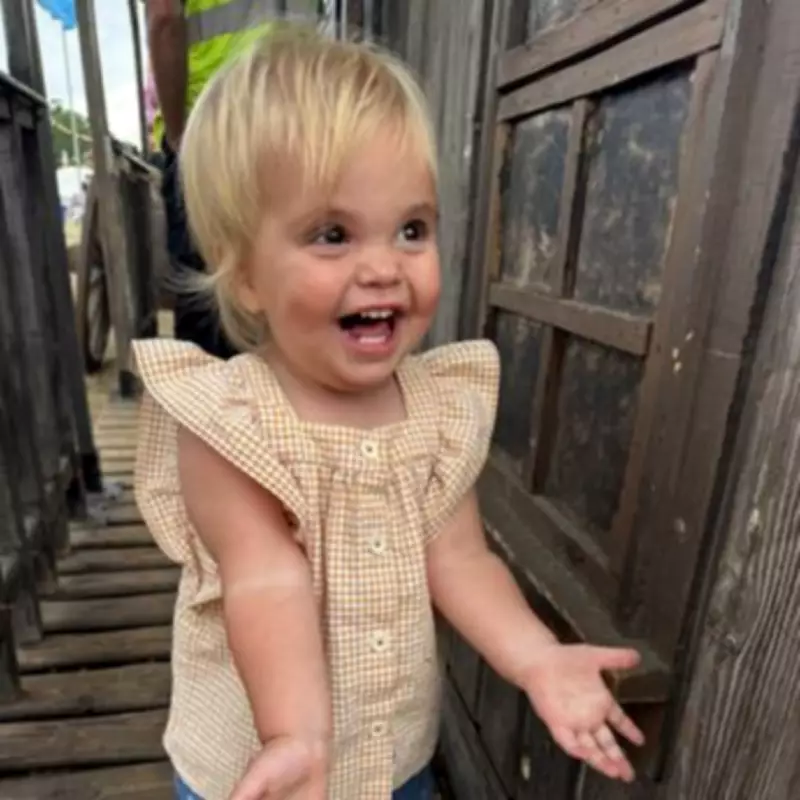
Family's Desperate Fight to Save Daughter from Childhood Dementia
In an exclusive update, the heartbreaking story of two-year-old Leni Forrester has taken a significant turn as her parents continue their relentless battle against a rare genetic condition known as childhood dementia. Little Leni, with her bright smile, faces a future where she may lose the ability to walk, talk, or eat without urgent medical intervention.
A Devastating Diagnosis
Leni Forrester has been diagnosed with Sanfilippo Syndrome, a rare genetic disorder that drastically reduces life expectancy, with affected children typically surviving only into their early to mid-teens. Her parents, Gus, 35, and Emily, 33, from Kent, were unaware of any issues until Emily's sister revealed she carried the gene responsible for the condition.
The couple underwent a lengthy diagnostic process, discovering just one week before Leni's second birthday that their daughter had the condition. Doctors delivered the crushing news that there was "no treatment, no cure" available, offering only palliative care options that Emily described as "obviously horrific."

The Search for Treatment
Refusing to accept this prognosis, Gus and Emily began their own research and discovered two promising experimental treatment options. However, these come at an extraordinary cost, creating what they describe as a "race against time" to save their daughter's life.
The family has recently achieved a major fundraising milestone, surpassing £300,000 to help cover pre-clinical costs for gene replacement therapy trials. Yet the entire clinical trial requires £5.5 million, prompting the family to increase their fundraising goal to £5,000,000. "When it's your child's life, it's like, how can we possibly put a price on this?" Emily told reporters.
Understanding Sanfilippo Syndrome
Emily explains that Leni's condition stems from a fault in a single gene that produces a specific enzyme responsible for breaking down heparan sulphate, a sugar molecule in the body. Without proper enzyme function, this molecule accumulates as toxic waste, particularly in the brain, causing irreversible damage.
Children with Sanfilippo typically don't show symptoms until ages two or three because the damage accumulates gradually. Early signs are often misdiagnosed as more common conditions like Autism or ADHD, meaning many children aren't properly diagnosed until around age eight when they begin losing motor functions.
The Urgency of Early Intervention
Because Leni was diagnosed unusually young, she represents an excellent candidate for clinical trials. Emily describes the potential treatment: "Children that receive it have gone on to develop as normal children, again, if they receive it young enough. They replace the gene completely so that the child's body produces the enzyme by itself."
The treatment's effectiveness depends entirely on timing. Once a child with Sanfilippo loses function, the damage cannot be reversed. Even advancing the trial by a few weeks before Leni experiences regression could dramatically impact her future development.
Additional Family Heartbreak
Two weeks after Leni's diagnosis, the family faced further tragedy when Emily discovered she was pregnant. They endured three agonizing months before learning through screening that their unborn child also had Sanfilippo Syndrome, leading to the difficult decision to terminate the pregnancy.
This outcome resulted from a cruel twist of fate: Gus's initial private genetic test incorrectly indicated he wasn't a carrier. It later emerged he carries an extremely rare variant not previously documented in global databases as causing Sanfilippo.
The couple, desperate for Leni to have siblings, has now begun the lengthy process of pursuing IVF with bespoke genetic testing, unwilling to "roll the dice" with natural conception given their genetic circumstances.
Emily describes this period as filled with "emotional turmoil" and emphasizes she cannot mentally endure such heartbreak again. The family continues their fundraising campaign while advocating for greater awareness of this devastating childhood condition.






