Family Accuses Canada's Assisted Dying Laws of 'Killing the Disabled and Vulnerable'
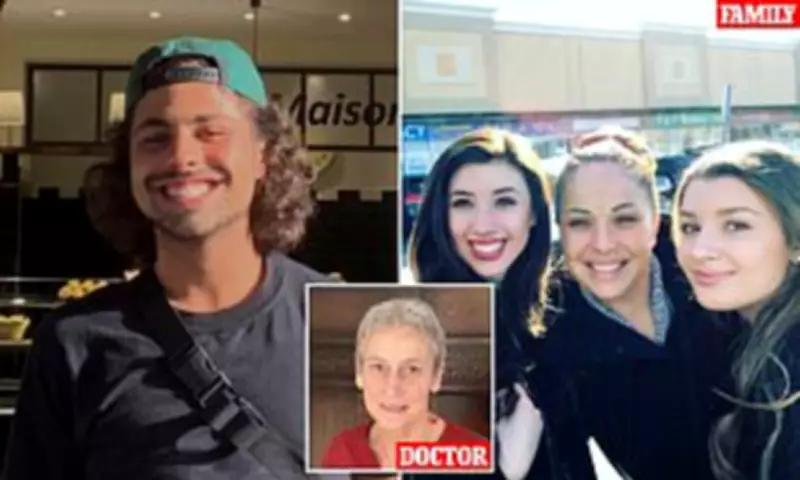
A grieving family in Canada has launched a fierce condemnation of the country's Medical Assistance in Dying (MAID) program, accusing the legislation of effectively "killing the disabled and vulnerable." This outcry follows the death of their 26-year-old son, Kiano Vafaeian, who died by assisted suicide in December, a case that has ignited a heated debate about safeguards and ethics.
Tragic Case of Kiano Vafaeian
Kiano Vafaeian, a blind man living with Type 1 diabetes, struggled with seasonal depression and mental health issues stemming from a severe car accident at age 17. His mother, Margaret Marsilla of Ontario, described how his depression often worsened during winter months. For years, the family managed to prevent him from accessing MAID, but in late 2023, Dr. Ellen Wiebe, a MAID provider in British Columbia, approved his request for assisted death.
The family only learned about the approval days later, sparking allegations that Dr. Wiebe had been "coaching" Vafaeian on how to qualify under Track 2 of the MAID program. Track 2 applies to patients whose natural deaths are not deemed "reasonably imminent," a category expanded in 2021 to include chronic illnesses and disabilities.

Allegations of Inadequate Safeguards
Marsilla told Fox News Digital that she believes Dr. Wiebe guided her son on deteriorating his condition to meet eligibility criteria. "We believe that she was coaching him on how to deteriorate his body and what she can possibly approve him for," Marsilla stated. She emphasized that Vafaeian's medical records did not support claims of "severe peripheral neuropathy" listed as an antecedent cause on his death certificate.
The family's ordeal began in 2022 when Vafaeian, after losing vision in one eye, became "obsessed" with MAID. He was initially approved that year, scheduling a procedure in Toronto, but his mother intervened by discovering an email and publicly opposing it on social media. This led to a postponement, and Vafaeian showed improvement in 2023, even moving back with his family.
Systemic Concerns and Legislative Efforts
Marsilla now campaigns to reverse the Track 2 modification and supports Bill C-218, which aims to restrict MAID for individuals whose sole condition is mental illness. She argues that the current system allows doctors to approve and carry out euthanasia for Track 2 patients in just 90 days, questioning its safety. "How is that safe for patients?" she added, advocating for mandatory family notifications and comprehensive treatment options.
Vafaeian's final months saw him moving into a Toronto condo with a caregiver in September 2024, expressing optimism about a "new chapter." However, by December, he traveled to Vancouver and informed his mother of his scheduled assisted suicide. Dr. Wiebe proceeded with the procedure after other doctors had rejected his requests.
Broader Implications and Doctor's Perspective
Dr. Wiebe, who divides her practice between MAID and reproductive care, described assisted suicide as "the best work I've ever done" in an interview with the Free Press. She emphasized her commitment to human rights, stating she has helped over 500 patients die while delivering more than 1,000 babies. When asked about eligibility, she mentioned having "long, fascinating conversations" with patients about their quality of life.
Canada reports one of the highest rates of medically assisted deaths globally, with 5.1% of all deaths in 2024, totaling 16,499 cases. This case coincides with New York becoming the 13th U.S. state to legalize physician-assisted suicide for terminally ill adults, highlighting a growing international trend.
Marsilla's social media posts recount her son's story, calling the situation "disgusting on every level." She wrote, "This is not healthcare. This is a failure of ethics, accountability, and humanity." The family continues to seek accountability, hoping to prevent similar tragedies and reform what they see as a flawed system that prioritizes death over care for vulnerable individuals.