Former NHS Chief Executive Sounds Alarm Over Assisted Dying Legislation
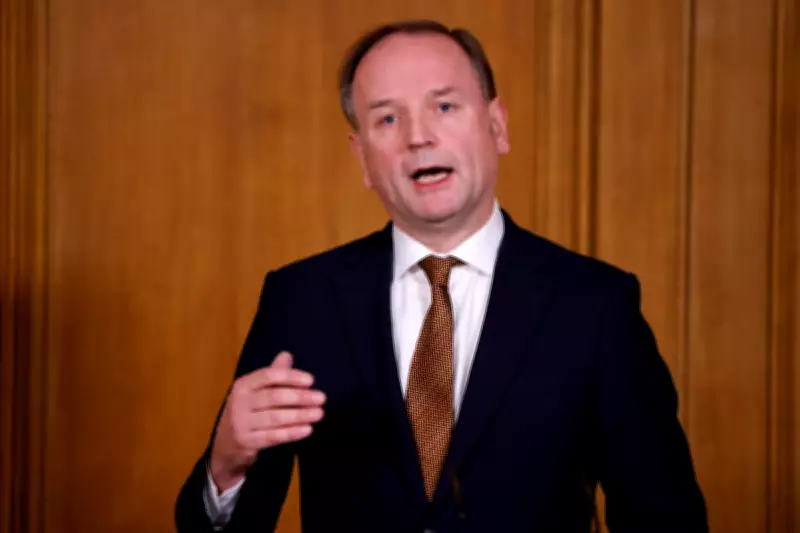
Lord Stevens of Birmingham, the former chief executive of NHS England, has issued a stark warning that the proposed assisted dying legislation contains what he describes as a "Trojan horse clause" that could enable fundamental changes to the National Health Service "by the back door." Speaking during committee stage debates in the House of Lords, Lord Stevens expressed deep concerns about the Terminally Ill Adults (End of Life) Bill, which would establish a process within the NHS for terminally ill patients with six months or less to live to seek an assisted death.
The Controversial Clause at the Heart of the Debate
Lord Stevens specifically highlighted a clause within the Bill that grants ministers the power to make regulations "for any provision that can be made by an Act of Parliament, the only constraint being that they may not amend the Act itself." He argued that this wording is exceptionally rare, having previously appeared only in Brexit-related legislation, and represents a dangerous precedent. "I would regard this as a Trojan horse clause for fundamental change to the National Health Service by the back door," Lord Stevens stated emphatically. He maintained that assisted dying should not fall within the current remit of the NHS and, if introduced at all, should be established as a completely separate service.
Crossbench Peer Proposes Amendments for Separation
Lord Stevens voiced support for amendments proposed by fellow crossbench peer Baroness Finlay of Llandaff, a professor of palliative medicine and former president of the British Medical Association. Baroness Finlay's amendments aim to ensure that any health or social care professional involvement in assisted dying services is distinct from their regular employment, with mandatory employer notification. She stressed that this must be "a separate service that must not jeopardise the care of other patients," echoing concerns from medical bodies like the Royal College of General Practitioners, which insists any assisted dying service should be "a stand-alone service" and not considered core GP work.

"These amendments would create a clear, streamlined service with greater transparency and with clear, defined oversight that is more easily monitored," Baroness Finlay explained. She added that they respond directly to requests from major medical colleges, including the Royal College of Physicians and the Royal College of Psychiatrists, who advocate for a distinctly separate assisted death service to prevent deprioritisation of core general practice and palliative care.
Divergent Views on Integration Versus Separation
The debate revealed sharp divisions among peers regarding the relationship between assisted dying and existing healthcare services. Leading psychiatrist Baroness Murphy warned that separating assisted dying could lead to the "isolation" of dying individuals during decision-making. She argued that it should be integrated into palliative care, stating, "It should be part of the palliative care provided to them... we should not separate them off, we are there to support them during this process."
In contrast, Conservative former minister Lord Deben rejected the notion that assisted dying is part of palliative care, describing it as a "wholly separate thing." He expressed fears that assisted dying might become a "cheaper alternative" for terminally ill patients, emphasising that palliative care and assisted dying must remain distinct choices.
Bill Sponsor Emphasises Practical Patient Access
Labour peer Lord Falconer of Thoroton, the sponsor of the Bill in the Lords, responded to the concerns by focusing on patient accessibility. "I'm absolutely sure that Lord Stevens is not wanting the patient to have to embark upon a very complex bureaucratic procedure," he said. Lord Falconer argued that the key question is whether terminally ill patients can access assisted dying through a "practical and safe way" that does not impose undue burdens, rather than the precise separation from NHS services. He suggested that Baroness Finlay's proposal might be "too separate from the care of the patient," and later contended that both assisted dying and palliative care share the goal of providing "a good death."

Baroness Finlay countered, highlighting that the issue of separation extends beyond funding to encompass professional conduct and service integration, noting it remains "unanswered." The ongoing discussions underscore the complex ethical, practical, and structural challenges surrounding the proposed legislation, with significant implications for the future of healthcare in the UK.