

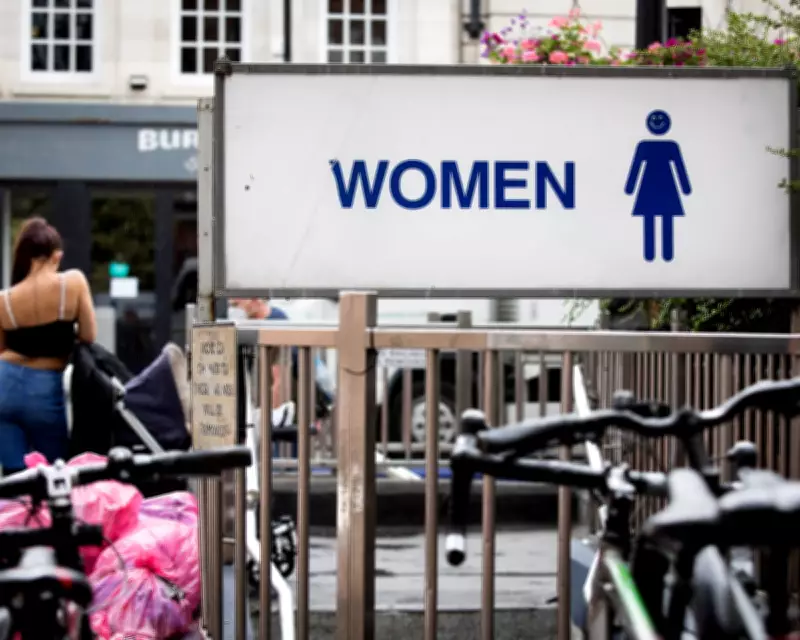
England's Public Toilet Crisis: A 14% Decline Over a Decade
A new report has exposed a severe shortage of public toilets in England, with numbers falling by 14% in the last ten years. This decline has created vast areas known as "toilet deserts," where access to facilities is extremely limited, posing risks to public health and damaging the vitality of high streets.
Stark Regional Disparities in Provision
The analysis, conducted by the Royal Society for Public Health (RSPH), highlights a "significant shortfall" in England's public toilet infrastructure. Currently, there is just one public toilet for every 15,481 people in England. This ratio is markedly worse than in other parts of the UK. In Scotland, the figure stands at 8,500 people per toilet, while Wales fares better with 6,748 people per facility.
The findings are based on 221 freedom of information responses from 309 English councils, showing a clear downward trend since 2016. The RSPH warns that this lack of provision leads to increased public urination, creating unhygienic conditions and unpleasant environments. Moreover, research suggests that some individuals avoid going out altogether due to the scarcity of toilets, which could negatively impact footfall on high streets.

Health and Social Implications
William Roberts, chief executive of the RSPH, emphasised the universal need for accessible public toilets. "Access to public toilets is a universal need that we all have, and we shouldn't shy away from talking about it," he stated. "One public toilet per 15,000 people simply isn't good enough and, without action, that figure will keep rising as we lose more facilities."
He further explained that for many people, including the elderly, those with disabilities, or medical conditions, the absence of toilets can deter them from leaving their homes. Some may even restrict fluid intake to avoid the need to use a toilet, which can have serious health consequences. "The effects also go far beyond the individual. Having an insufficient number of public toilets has inevitable unsanitary consequences, creating unpleasant environments that degrade our public realm," Roberts added.
Calls for Action and Funding Challenges
The RSPH is advocating for new strategic authorities to have a statutory duty to ensure sufficient public toilets, supported by funding from central government. They also propose regulations requiring developers to include public toilets in any non-residential developments. Currently, local councils are responsible for determining toilet needs in their areas, but they face significant financial pressures.
A spokesperson for the Local Government Association noted that vulnerable groups, such as older people, people with disabilities, and those sleeping rough, are disproportionately affected by the shortage. "Funding pressures have caused councils to rethink provision. The maintenance of a public toilet could cost a council £25,000 a year," they said, highlighting issues like vandalism and antisocial behaviour that drive up costs. Many councils have turned to community toilet schemes with local businesses, but gaps persist, especially with high street closures.
In response, a Ministry of Housing, Communities and Local Government spokesperson pointed to over £78 billion made available for council finances, allowing local leaders to decide how best to allocate resources for public services like toilets.






