

Fertility Expert Details Egg Freezing Process and Considerations
British singer Rita Ora has recently shared her personal experience with egg freezing, revealing she underwent the procedure twice in her 20s. The 35-year-old television personality, known for chart-topping hits including "Hot Right Now" and "I Will Never Let You Down," completed two rounds of egg preservation at ages 24 and 27.
Speaking candidly to Women's Health UK, Ora explained: "A doctor informed me it represented an optimal time to preserve eggs of the highest quality. This guidance proved invaluable, as I now observe many friends in their mid-30s grappling with fertility decisions. When the moment arrives for me, it will simply represent an expansion of possibilities."
Understanding the Egg Freezing Procedure
Mr Wael Saab, senior medical director and fertility consultant at The Centre for Reproductive and Genetic Health, has provided comprehensive insights into what the egg freezing process entails. "When a woman presents for egg freezing, our initial step involves taking a detailed medical history to ensure she is medically suitable and identify any contraindications that might affect treatment," Saab explains.

"Subsequently, we assess ovarian reserve to determine how many eggs remain in the ovaries, which informs our approach to ovarian stimulation."
Patients then undergo a series of subcutaneous abdominal injections over 10 to 12 days to stimulate the ovaries. "During this period, we monitor the response to hormonal treatment every other day through approximately three to four ultrasound scans," Saab continues.
"Once we are satisfied with follicular growth and stimulation response, we administer a specific 'trigger shot' injection. Approximately 36-38 hours later, we retrieve the eggs, typically around day 13 or 14 of the menstrual cycle to mimic natural ovulation timing."
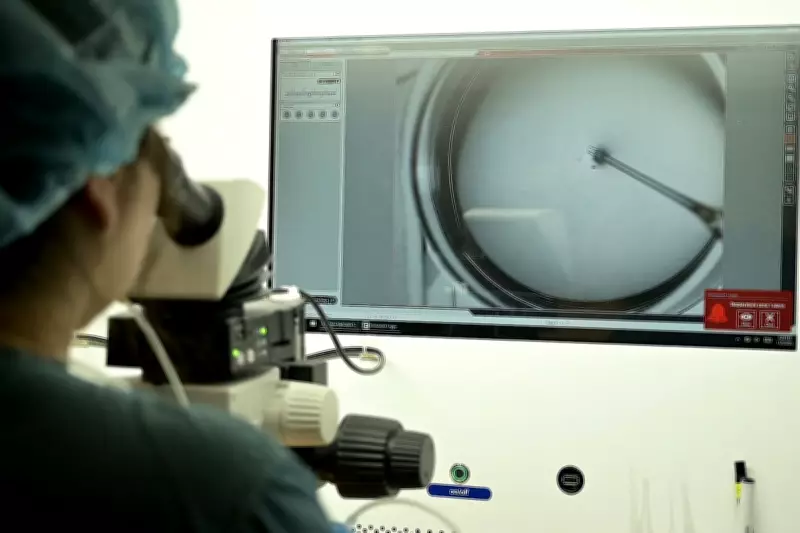
The egg retrieval procedure itself takes about 15 minutes under sedation. "A needle is guided through the vaginal wall to the ovaries to collect the eggs," Saab details. "Patients then rest at the clinic for roughly half an hour before discharge, at which point we inform them how many eggs were successfully collected."
Preparation and Storage Considerations
"Before treatment commences, we advise women to maintain a healthy lifestyle," Saab emphasizes. "This includes minimizing alcohol and caffeine consumption, taking appropriate vitamins, optimizing body mass index where possible, and reducing stress levels during the treatment period."
Regarding storage duration, Saab notes: "Regulations vary internationally, but in the United Kingdom, eggs can be frozen for 55 years initially, with renewals available in 10-year increments. Historically, women were expected to plan their lives around fertility windows, but egg freezing now allows fertility planning to adapt to women's life circumstances."
However, Saab stresses that egg freezing should be viewed as a backup plan rather than a guarantee. "When women decide to pursue pregnancy, those in stable heterosexual relationships typically attempt conception naturally first. If natural attempts prove unsuccessful, or if women find themselves without a partner or wishing to use donor sperm, the frozen eggs are thawed and inseminated to create embryos for transfer."
"Some eggs may not survive the thawing process, but those that do generally behave similarly to fresh eggs in terms of viability," he adds.
Optimal Timing and Success Rates
"Time represents an unforgiving factor in fertility," Saab cautions. "As women age, both the quantity and chromosomal quality of their eggs deteriorate. Generally, the optimal window for egg freezing falls around age 35 or younger."
"Age constitutes the most critical determinant because when women return to use their frozen eggs, the age of the eggs at freezing dictates success rates rather than the woman's chronological age at the time of treatment."
Regarding success probabilities, Saab explains: "Rates vary between clinics, but the likelihood of a single frozen egg resulting in a live birth when frozen at age 35 or younger approximates 7-8 percent." The Human Fertilisation and Embryology Authority recommends patients review success rates for fresh IVF cycles using their own eggs within their age bracket.

Financial Costs and Associated Risks
"Egg freezing typically involves a fixed cost covering medications, scans, screenings, and annual storage fees," Saab outlines. According to HFEA data, the average expense for egg collection and freezing stands at £3,350, with medications adding £500-£1,500. Storage costs range between £125 and £350 annually, while thawing eggs and transferring embryos to the womb averages £2,500.
The HFEA estimates the complete process from freezing through thawing typically costs £7,000-£8,000 on average.
"Common side effects during treatment include bloating and fatigue, but hormonal and surgical risks also exist," Saab notes. "These encompass blood clotting, inadequate treatment response, infection, bleeding, and ovarian hyper-stimulation syndrome."
Dispelling Common Misconceptions
"Having practiced fertility medicine for two decades, the most frequent misconception I encounter is that egg freezing might influence menopause timing," Saab reveals. "Many patients inquire whether freezing twenty eggs could advance menopause by twenty months. The answer is definitively no."
"Another common question concerns whether the procedure alters natural fertility trajectories, which similarly represents a misunderstanding. We consistently emphasize that egg freezing serves as a backup option, as many women never require use of their frozen eggs."





