Dancing with Parkinson's: How Ballet Transformed My Life and Health
Fourteen years ago, a neurologist delivered a life-altering diagnosis to Ian Temple: "You have Parkinson's." The words, spoken with calm certainty, marked the beginning of a journey filled with fear and uncertainty. Parkinson's, a progressive neurological disease with no cure, was something Temple had associated with older individuals, not a single man in his early 50s still dreaming of romance, adventure, and reinvention.
What terrified Temple most was not the physical symptoms like tremors or stiffness, but the imagined future. He feared a partner who might sign up for care rather than love, leading him to hide his condition. As a gay man who grew up when being out was dangerous and later lived with HIV, he was familiar with the choreography of concealment—measuring rooms, deciding who was safe, and disclosing carefully. Initially, slight shuffles or slower movements could be brushed off as stress, but hiding came at a cost, shrinking his world and allowing Parkinson's to thrive in isolation.
The Turning Point: A Quiet Decision
The moment that changed everything was not dramatic or epiphanic; it was a quiet decision made at his kitchen table. Temple put his name on a waiting list for Dance for Parkinson's classes with the English National Ballet. This step wasn't entirely out of the blue, as he had previously worked for the Royal Opera House, making the disciplined, creative world of dance feel familiar and like a potential homecoming.

When the offer of a place came, Temple nearly didn't go. He was still in denial and feared meeting other people with Parkinson's, imagining it would force him to confront an unwelcome future. However, once he stepped into the studio, something profound shifted. The people he had feared were not symbols of decline but courageous fellow warriors. He was greeted not as a patient but as a dancer, with live music and volunteers who looked him in the eye, creating an environment that felt more like art than therapy.
Physical and Emotional Transformation
The impact on Temple's health was surprising. Parkinson's often locks the body down with stiffness, hesitation, and moments when feet feel glued to the floor. Dance, in contrast, invites movement, encourages balance, and demands rhythm. Week by week, Temple noticed subtle changes: his steps became more confident, his posture lifted, and the freezing episodes began to loosen their grip.
But the real transformation wasn't physical. Dance changed how Temple viewed the disease itself. Instead of seeing Parkinson's solely as something taking ability away, he began to see what was still possible. In the studio, surrounded by music and other dancers, he rediscovered a sense of joy and agency. Dance hasn't cured his Parkinson's—nothing can—but it has reminded his body and spirit that he is still capable of movement, expression, and grace. His arms could still carve shapes through the air, and his feet, often reluctant, occasionally left the ground, feeling almost miraculous.
Beyond the Studio: Embracing Visibility
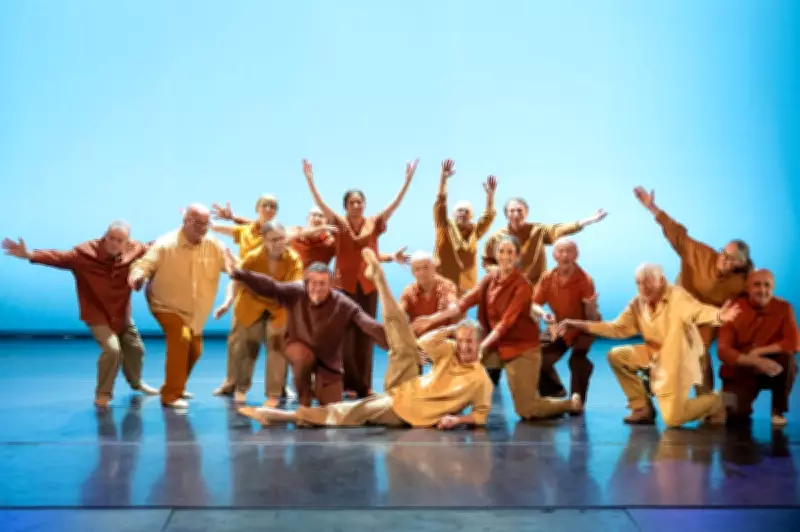
The studio became a sanctuary where Parkinson's retreated. For an hour, Temple wasn't a diagnosis; he was part of a company, working with choreographers, learning sequences, and being challenged and included. Over coffee and biscuits after class, friendships formed, creating a community that was the opposite of hiding. Dance demanded that Temple be visible, take up space, and allow his altered body to be seen not as shameful but as capable of beauty.
This courage spilled beyond the studio. In 2023, Temple joined his first Pride march with Parkinson's UK, and last year, he participated in the Let's Dance campaign, an initiative spearheaded by Angela Rippon and Arlene Phillips to encourage those who wouldn't usually dance to try it. Through the Dance for Parkinson's programme, he has had the privilege of working with award-winning choreographers like Arielle Smith and Harry Theadora Foster.
The true triumph, Temple discovered, was not perfect steps but presence—standing tall and declaring that Parkinson's is not just about decline and loss, but also resilience, creativity, and connection. This journey has reshaped his identity, proving that even in the face of a progressive disease, there is room for joy, movement, and a renewed sense of self.