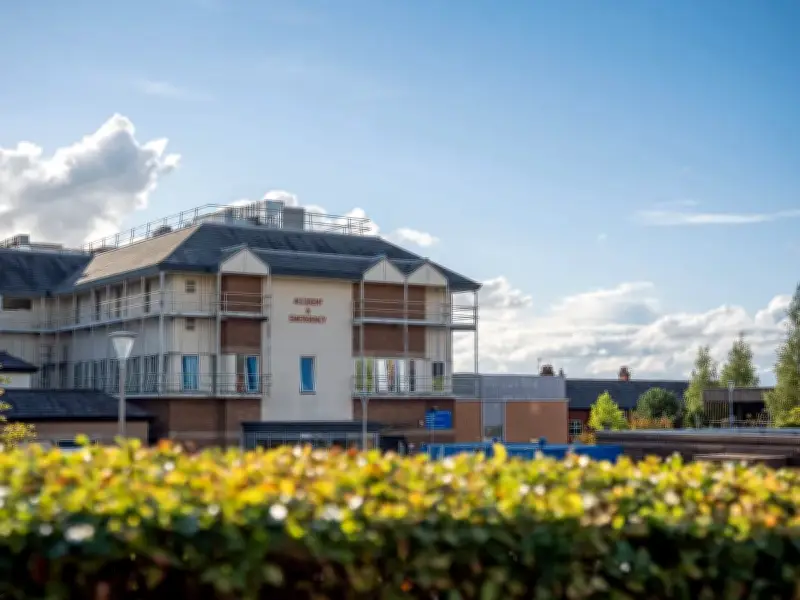
A coroner has called for urgent action from a Greater Manchester hospital trust after an inquest heard a nurse stopped carrying out vital neurological checks on a patient before he died. Barry Davies, from Oldham, suffered a serious brain bleed after falling while walking to his GP surgery. During an inquest held at Rochdale Coroner's Court earlier this year, senior coroner Joanne Kearsley found that the 84-year-old died as a result of injuries sustained following an accidental fall.
Care concerns raised at Royal Oldham Hospital
Ms Kearsley also raised concerns about Mr Davies' care at Royal Oldham Hospital - and said she believed action should be taken to prevent future deaths. Mr Davies fell on October 20, 2025, while walking to his GP surgery and was taken to the hospital's Emergency Department, where a CT scan showed he had suffered a bleed on his brain and he was admitted. His condition deteriorated two days later.
A further CT scan on October 23 showed "significant progression" of the bleed - and a neurosurgical team deemed Mr Davies unsuitable for surgical intervention and he was placed on palliative care. He died on October 29.

Prevention of Future Deaths report findings
A Prevention of Future Deaths report issued after the inquest states that staff did not carry out regular checks to monitor Mr Davies' condition as often as they should have before he deteriorated. It also found that these checks were stopped while he was awaiting a second CT scan.
The Northern Care Alliance (NCA) said it was "deeply saddened" by the circumstances surrounding Mr Davies' death and offered his family its "sincere and heartfelt condolences". It said the concerns raised by the coroner were "both important and concerning".
Trust response and new care plan
The NHS Trust said a new care plan for head injuries has since been developed, with guidance on when observation frequency should be increased and when concerns should be escalated. The 'Neurological Observation Care Plan' is due to be rolled out across the trust by August 30. It also said "reflective learning" has been carried out with the medical and nursing staff involved in Mr Davies' care, which has since been shared more widely across the hospital.
The report comes as the NCA is already facing scrutiny over patient safety and pressures across its hospitals. The Trust manages hospitals in Salford, Bury, Oldham and Rochdale, treating more than a million patients. The Trust's own reports found dozens of patients have died or come to harm due to treatment delays and staffing errors. Lengthy delays at NCA hospitals were linked with '28 deaths' and 56 issues of 'severe harm', while problems diagnosing illness led to ten deaths last year. There were also 12,000 cases of delayed treatment last year within the Trust, with bosses claiming "persistently high" levels of sick leave are a major issue.
Further actions promised
In response to an investigation by the Independent about patient safety concerns within the Trust, the NCA said it had changed the way it runs the organisation, putting more clinicians into leadership positions and giving them a direct role in making decisions and driving improvements. They said: "Like many NHS organisations, we're facing challenges. We're clear about what those challenges are and recognise the concerns colleagues have raised. We are working to address those concerns and will continue to listen when colleagues tell us we haven't got something right, so that we can keep learning and improving."
"We have clear processes to investigate incidents and learning from these is an area we need to prioritise. By doing this, we can drive forward improvements and maintain our focus on safety. We'll continue to work with our partners, including our local authorities and Integrated Care Board, as part of our ongoing commitment to making improvements."

Responding to the call for action from the coroner to prevent future deaths, the Trust said it has also updated its Head Injury Policy so that decisions to stop neurological observations must be made through a multidisciplinary team approach and clearly recorded in clinical notes. It said a new head injury admission form has also been developed and a local procedure for head injury patients admitted to one of its Urgent Care wards was also being developed. Monthly audits have also been introduced to check that neurological observations and care plans are being completed correctly, the Trust added.
The NCA continued: "We hope this provides assurance that we have carefully considered the findings from the inquest and have taken meaningful action. We remain committed to ensuring that the care we provide is safe, responsive, and centred on the needs of our patients and their families. Once again, I would like to extend my deepest condolences to Mr Davies' family. We are very sorry for their loss, and we will continue to learn from this tragic event to improve the care we provide to others."