

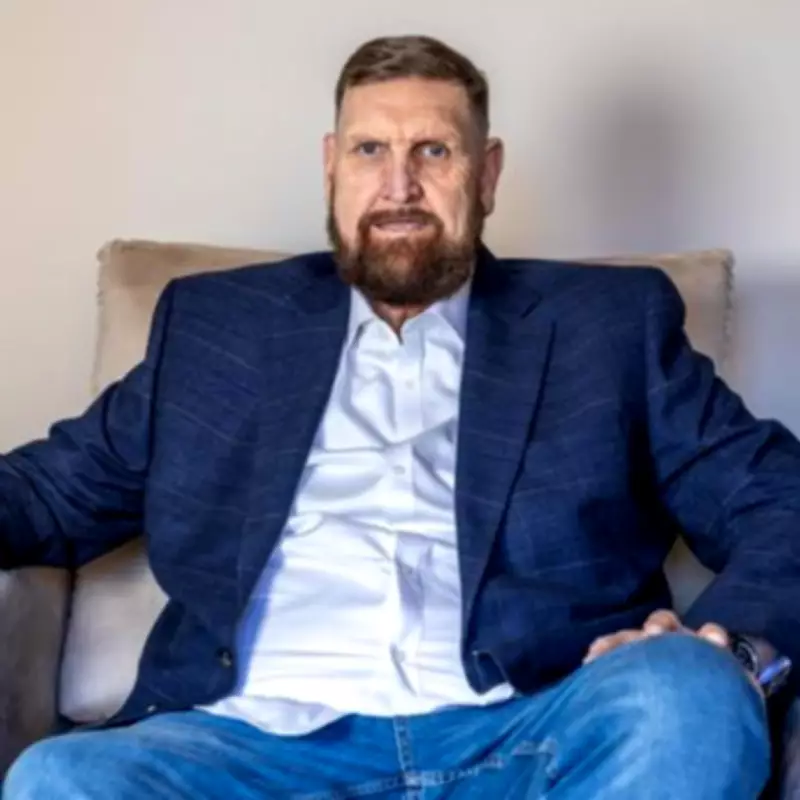
From Near-Death to New Life: How a Coma Transformed a Former Addict
Gram Seed, now 61 years old, carries the physical reminders of his turbulent past on his body—knife scars across his chest, a dismembered chin, and missing fingers. Yet, these marks tell only part of a story that has evolved from one of despair to one of profound hope. The former football hooligan, once addicted to crack cocaine and heroin, faced the brink of death when doctors considered switching off his life support. However, a miraculous recovery from a six-day coma, following total organ collapse, sparked a transformation that has seen him dedicate his life to rescuing others from the darkness that once consumed him.
A Descent into Chaos
Gram's journey into crime began innocuously as a "mischievous" child on a council estate in Middlesbrough. What started as petty theft—stealing from washing lines and corner shops—escalated rapidly. By age 13, he was involved with a gang, balancing daytime activities like boxing and rugby with nighttime robberies and assaults. A pivotal moment occurred after visiting his grandmother in the hospital, a key parental figure in his life. "I remember thinking I was sick of crying," he recalls. "I just went cold. I didn't care about people anymore."
At 16, Gram was placed in a detention centre for breaking into schools and youth clubs, but instead of rehabilitation, he encountered a system focused on discipline and punishment. "There was no help," he says. "It was all about running fences and wearing uniforms." Released only to be imprisoned again, this time linked to football violence, his life became a relentless cycle of crime, incarceration, and instability. He endured multiple stabbings, attacks at matches, and permanent injuries, including losing part of a finger and his chin.

The Depths of Addiction
By the early 1990s, Gram's life had unraveled completely. His family had distanced themselves, his grandmother had passed away, and he lost his home. Drifting between houses before ending up on the streets, addiction took a firm hold. "I was taking heroin and crack cocaine. I was robbing for it all," he admits. In February 1993, sitting on a bench in Middlesbrough, he resigned himself to death. "I decided I was going to die there," he says. "Live there, die there."
For years, he barely ate, his body deteriorating under the weight of drugs, alcohol, and neglect. On August 9, 1996, Gram collapsed on that same bench. Rushed to hospital with organ failure, pneumonia, hypothermia, and severe malnutrition, doctors gave him little chance of survival as he slipped into a six-day coma. When medical staff asked his mother to sign papers to switch off his life support, she hesitated for hours—a delay during which members of a Christian group, who knew Gram from the streets, prayed by his bedside.
Visions of Transformation
While unconscious, Gram experienced vivid, surreal visions that he believes fundamentally rewired his brain. "At first, I was in a room and everything was brilliant white and there was two people cleaning up and a fan blowing air on me," he describes. "Then, I went from there to a mountain. I was dripping with wax and then a big sound came and it put me in this water, that was pure, beautiful water and then I woke up." Upon awakening, he declared immediately, "I'm never going to drink or take drugs again."
Gram was certain that his life had changed for good. Just weeks after leaving the hospital, he found himself looking out at the same streets where he once lived, watching others trapped in addiction. "I wanted to cry," he says. "But it was tears of 'I want to help them'." He began attending courses and committed to his faith later that year. By November 1996, he was back on the bench where he once expected to die, but this time, sharing a message of hope. "I didn’t know how to pray or read the Bible," he says. "But I knew something was real."

A Life of Service and Redemption
After taking an Alpha course, which introduces people to the basics of Christianity, Gram embarked on a path of service. He has since developed anti-bullying initiatives in schools, facilitated workshops for those with substance abuse issues, supported chaplaincy services in adult and youth custodial settings, contributed to faith-based rehabilitation programmes, and served as the official chaplain for nine years at a secure training centre for young offenders.
Gram's personal life also flourished. He met his wife, Natasha, while attending a church in London, and they married in 1999, going on to have two sons, Caleb and Boaz. He describes their upbringing as "black and white" compared to his own, with neither son involved in crime or drugs, and both attending university. Natasha now runs a charity supporting vulnerable women, while Gram continues his mentoring work with people from all walks of life, from those sleeping rough to successful professionals.
"I’m just a big arrow pointing in a different direction," he explains. "I like to help people get found." Reflecting on his legacy, he recalls a poignant moment: "Someone once shouted to me outside a prison—'Gram, you're hope on legs'. That's how I’d like to be remembered."





