Chinese Breakthrough Could Revolutionise Organ Transplant Timelines
Chinese scientists have achieved a significant medical breakthrough with a new tissue preservation method that could extend the viability of transplant organs from mere hours to several days. This development represents a potential paradigm shift in transplant medicine, addressing one of the most critical limitations in organ transplantation worldwide.
The Current Limitations of Organ Preservation
Currently, organ transplants remain the only effective treatment for numerous end-stage diseases affecting vital organs including the heart, liver, and kidneys. However, the moment an organ is removed from a donor, it immediately begins to deteriorate as cells are deprived of oxygen and toxic compounds accumulate within tissues.
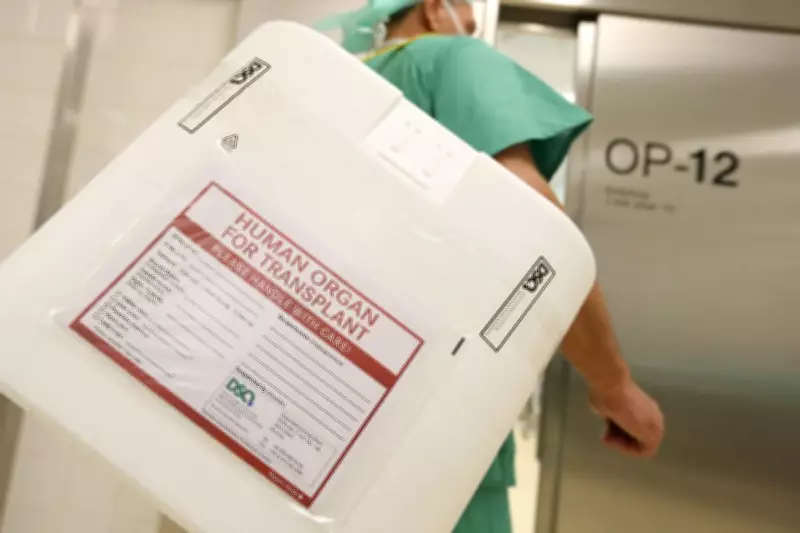
To combat this rapid degradation, hospitals typically place organs destined for transplantation in ice-cold preservation solutions. Despite these measures, organs can only survive for extremely limited periods. For instance, hearts can currently be preserved for a maximum of approximately six hours after removal from donors, while kidneys maintain viability for up to twenty-four hours.

Evolution of Preservation Technology
In recent years, medical researchers have moved beyond simple ice preservation to develop machine perfusion systems that mimic blood circulation while organs remain outside the body. These systems, however, come with significant limitations of their own.
While colder storage temperatures generally preserve organs longer, existing machine perfusion systems typically operate at temperatures above freezing. As the Chinese research team explains in their study published in the Journal of Medical Devices, "Currently, machine perfusion devices for organs above 0°C are available, but those for subzero temperatures and suitable for multiple organs remain underdeveloped."
The Multithermic Machine Perfusion System
The groundbreaking research from China's State Key Laboratory of Cryogenic Science and Technology introduces a revolutionary Multithermic Machine Perfusion System, abbreviated as MTMP. This innovative system operates across a comprehensive temperature spectrum, including subzero conditions below 0°C.
Scientists developed the MTMP system to enable "programmable and precise regulation over a wide temperature range from normothermia (37°C), hypothermia (4°C) to supercooling (less than 0°C)." The device demonstrates exceptional control over critical parameters including temperature, pressure, and flow rate.
Remarkable Experimental Results
Researchers conducted extensive experiments demonstrating that their new system could preserve rat hearts, rabbit kidneys, and pig kidneys in liquid nitrogen at minus 150°C for seven full days before successfully reviving and transplanting them. This represents a dramatic extension compared to current preservation capabilities.
For vital organs like the heart, extending viability windows could fundamentally transform transplant waiting lists. The study notes that "if just half of the currently discarded transplant hearts in the US could be preserved and used, we could clear the entire US waiting list for organ transplants within two to three years."
Potential Impact on Transplant Medicine
The researchers emphasize that "extending the low-temperature preservation time of the heart to 24 hours would provide patients with a larger time window, which may save more lives." This expanded timeframe would allow for more complex logistical arrangements, better matching of donors and recipients, and potentially higher success rates for transplant procedures.
According to the scientific team, this new system addresses critical gaps in organ preservation technology and provides a "foundation for extending preservation duration" that could benefit countless patients awaiting life-saving transplants globally.