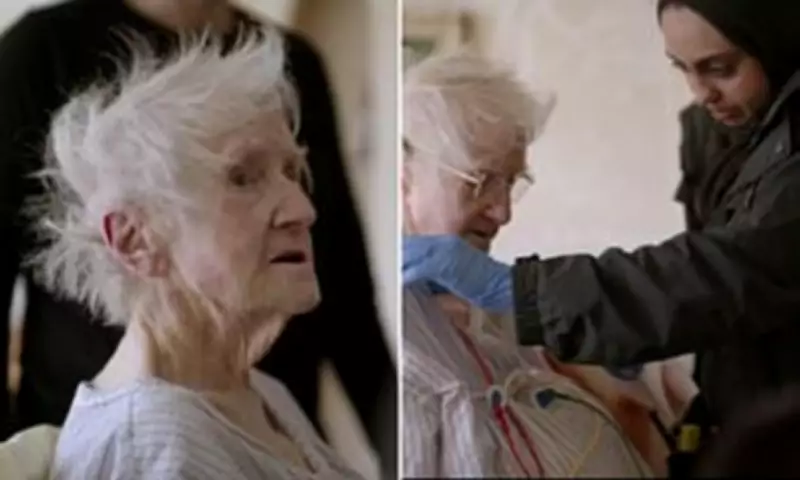
BBC Ambulance Documentary Reveals Distressing Five-Hour Wait for Elderly Patient
Audiences watching the BBC's behind-the-scenes documentary series, Ambulance, were left deeply shocked by scenes depicting a 94-year-old woman forced to lie on the floor for five hours before receiving emergency assistance. The episode, which aired on BBC One, narrated by former Doctor Who star Christopher Eccleston, provided a raw look into the daily struggles and immense pressures faced by ambulance services across the United Kingdom.
Critical Incident Highlights Systemic Failures
The harrowing incident involved an elderly patient named Audrey, who had fallen from her bed in the early hours of the morning. She remained on the floor, complaining of hip pain, until her carer discovered her at 5 a.m. Despite being prioritised as a Category 2 emergency by call handlers, it took a staggering five hours for paramedics Nagina and Mo to arrive at her home in Leeds. During this period, the Yorkshire Ambulance Service crew was overwhelmed, handling approximately 300 calls in a single shift, including multiple high-priority emergencies.
One such emergency involved a man threatening to jump from a window and douse police with petrol, requiring ambulance staff to stand by for nearly two hours until the situation was de-escalated without injuries. Meanwhile, paramedic John responded to a Category 1 cardiac arrest call, one of nine received within an hour, while crew members Jen and Elliott attended another patient found not breathing. These concurrent crises starkly illustrated the stretched resources and impossible triage decisions confronting emergency responders.

Public Outrage and Social Media Backlash
Viewers expressed profound dismay and anger on social media platform X, formerly Twitter, condemning the delays and systemic underfunding. One user lamented, "All those services wasted on the guy acting up... where this 94-year-old on the floor having to wait 5 hours." Another criticised governmental priorities, stating, "It's disgusting how the Government can fund wars but not provide enough resources for timely emergency care." Despite the outrage, many praised the dedication of ambulance staff, with one comment highlighting, "Huge respect to our colleagues in the Ambulance Service... they respond with professionalism, compassion, and calm under pressure."
Broader Context of NHS and Ambulance Service Strain
This episode is not an isolated case but part of a broader pattern of crisis within the NHS and ambulance services. Previous instalments of Ambulance revealed alarming statistics, such as Scarborough having only five ambulances to serve a population of 108,000, leading to wait times of up to 45 minutes for life-threatening Category 1 calls. An on-screen graphic emphasised that residents in coastal and rural Yorkshire wait 45% longer for emergency care compared to urban areas, underscoring geographic disparities in healthcare access.
Additionally, the series has documented other severe challenges, including physical assaults on paramedics. In one episode, a paramedic was punched in the face by an aggressive patient, prompting viewer fury over the abuse faced by healthcare workers. Control room staff also endure harassment from abusive callers, which blocks emergency lines and diverts resources from genuine life-threatening cases. Team leader Abi expressed her frustration, noting, "When I see my entire team receiving abuse... it is really difficult to see. No one deserves that."
Systemic Issues and Calls for Reform
The documentary series has ignited a national conversation about the sustainability of emergency services. Critics argue that chronic underfunding, staffing shortages, and increasing demand have pushed ambulance crews to breaking point. Viewers have called for urgent political action, with one remarking, "We should be rioting over this dereliction of duty by our politicians." The show's portrayal of real-life emergencies serves as a powerful indictment of current policies, highlighting the human cost of systemic failures in the NHS.

Ambulance continues to air on BBC One and is available for streaming on iPlayer, offering an unflinching look at the heroes on the front lines and the urgent need for investment and support in the UK's emergency healthcare infrastructure.