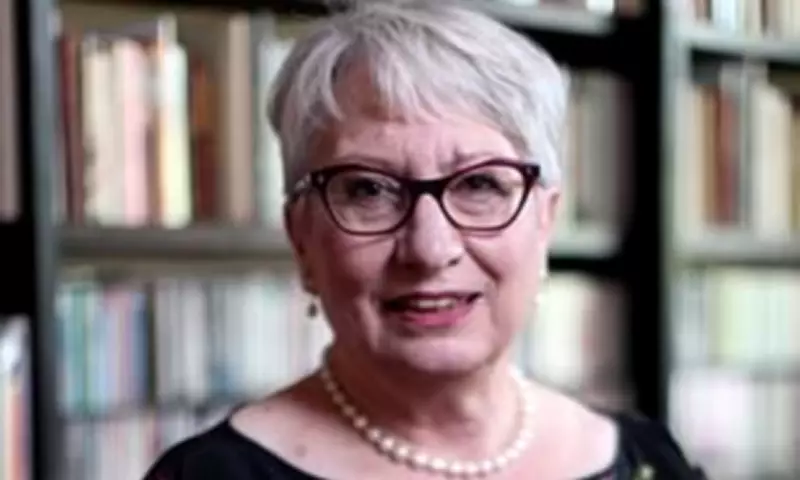
Autism has become 'glamorised' in contemporary society, with some individuals viewing a diagnosis as 'desirable', according to one of the world's foremost experts on the disorder. Dame Uta Frith, a pioneering researcher whose work fundamentally shaped modern understanding of autism, has issued a stark warning about the expansion of diagnostic criteria.
The Spectrum Concept Has Collapsed
Dame Uta Frith, now Emeritus Professor of Cognitive Development at University College London's Institute of Cognitive Neuroscience, argues that the drive for inclusivity has stretched the autism spectrum concept to breaking point. The 84-year-old academic told the Sunday Times that the framework has reached 'collapse' and become 'meaningless' as a medical diagnosis.
'I think the spectrum has come to its collapse,' Dame Uta stated unequivocally. 'The spectrum has become so accommodating that I fear that it has now been stretched so far that it has become meaningless and is no longer useful as a medical diagnosis.'

Tripling of School Diagnoses
The warning comes amid alarming statistics about autism diagnosis rates in education. According to the Institute for Fiscal Studies, the number of school children assessed as having complex needs due to autism has almost tripled over the past decade. This dramatic increase accounts for 40 per cent of the total rise in education, health and care plans (EHCPs), with some local councils reportedly facing near-bankruptcy from the associated costs.
Critics of current practices argue that overdiagnosis lies behind the soaring bills for special educational needs and disabilities support systems. This financial pressure has prompted government ministers to promise substantial reforms to the current framework.
Government Review Ordered
Health Secretary Wes Streeting has responded to growing concerns by ordering an independent review into rising demand for mental health, ADHD and autism services. The review, scheduled to report later this year, follows controversial comments from Mr Streeting about potential overdiagnosis of conditions.
The Health Secretary initially suggested mental health conditions were being over-diagnosed and too many people were being 'written off', though he later backtracked, describing his comments as 'divisive' and acknowledging they 'failed to capture the complexity of this problem'.
Two Distinct Groups Emerging
Dame Uta, who is credited with establishing that autism originates in brain development rather than resulting from cold parenting, identifies two distinct groups within current autism diagnoses. The first group, meeting 'strict' clinical criteria involving impaired social communication, interaction difficulties, and repetitive behaviours, has remained relatively stable in numbers.
However, a second group has grown dramatically - often comprising younger women with milder issues who are verbally fluent but experience high anxiety in social situations and display hypersensitivity. Dame Uta believes this expansion has eliminated any 'common denominator' between those diagnosed with autism spectrum disorder.
Contrasting Attitudes Toward Diagnosis
The renowned German-born neuroscientist highlighted how attitudes toward autism diagnosis differ markedly from other conditions. 'Being autistic has become glamorised, and a diagnosis has become somewhat desirable,' she observed, contrasting this with societal attitudes toward conditions like schizophrenia.
Dame Uta emphasised that she does not seek to diminish the debilitating effects of traits such as noise aversion or social awkwardness. However, she argues that including these within the autism spectrum disorder framework can prove counter-productive for both research and support allocation.
Call for Diagnostic Reform
To ensure research and support resources reach those most in need, Dame Uta now advocates replacing the existing spectrum model with more precise subcategories. Her proposed framework would distinguish between strict clinical autism, Asperger's syndrome, and conditions such as hypersensitivity that currently fall under the broad autism umbrella.

The academic expressed satisfaction that the current 'dire' system is undergoing re-examination, telling TES magazine she was 'very happy' about the renewed scrutiny. As diagnostic rates continue to climb and support systems strain under financial pressure, her intervention adds significant weight to calls for fundamental reform in how society understands and responds to autism.