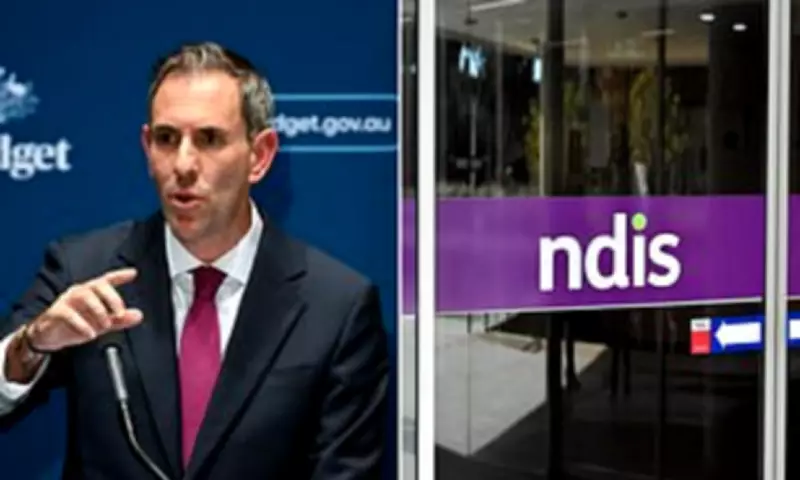
The Albanese government has confirmed that more than 160,000 individuals will be removed from the National Disability Insurance Scheme (NDIS) as the program's expenses spiral out of control. In April, the government announced changes to eligibility rules aimed at reducing the number of Australians on the scheme from 760,000 to 600,000 by 2030.
The NDIS, which is projected to cost approximately $49 billion this financial year, has become more expensive than Medicare. To alleviate pressure on the scheme, the government plans to redirect children with autism who have low to moderate support needs to the Thriving Kids program.
In his Budget speech on Tuesday, Treasurer Jim Chalmers allocated $2 billion to fund the Thriving Kids program, with matching contributions from states and territories. An additional $3 billion over five years has been set aside for Foundational Supports outside the NDIS, also matched by states and territories. The goal is to rebuild community support systems for people with disabilities, thereby reducing reliance on the NDIS.

The overall reforms announced in the Budget are expected to save $37.8 billion over the next four years, slowing but not halting cost increases. The government hopes that increased scrutiny, including strict eligibility requirements through standardised assessments, tighter plan reassessments, and enhanced oversight of providers and payments, will curb rising costs and prevent fraud.
The National Disability Insurance Agency (NDIA) will receive $49.4 million over four years to manage plan management, support coordination, and home and living supports for Supported Independent Living participants. Additionally, $200 million over three years will be invested in an Inclusive Communities Fund to rebuild community organisations' capacity for genuine participation activities.