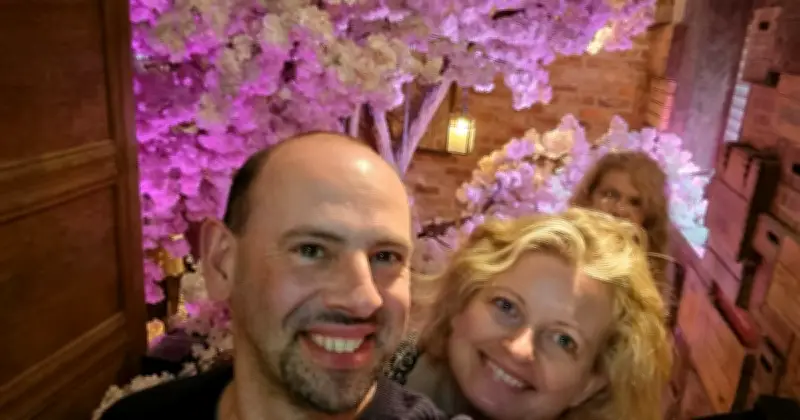
Three women have shared their experiences of being diagnosed with incurable secondary breast cancer, as new research highlights the emotional toll of the disease. Samantha Pryke, 47, from Matlock, Derbys, was told for nearly two years that her symptoms were likely linked to perimenopause, chronic fatigue, or the pressures of midlife. A civil servant and single mother of two teenagers, she found herself increasingly exhausted, with everyday tasks feeling overwhelming. She had none of the routine warning signs of breast cancer – no lump, no visible changes – because a tumour was growing hidden behind her sternum, undetectable through self-examination. By the time it was identified, she was diagnosed with de novo secondary breast cancer, an incurable form that had already spread.
Invisible disease, huge impact
“There’s no point expending precious energy on ‘why me’, it’s more about asking: how can I make myself live as well as I can?” she says. “I want people to understand that secondary breast cancer doesn’t look the same for everyone. Many of us don’t fit the stereotypes people expect. The disease can be invisible, but the impact on everyday life is huge.”
Jodi Jess, 49, from Dorchester, Dorset, was first diagnosed with primary breast cancer in 2018 after finding a small lump in her armpit. Following a mastectomy, chemotherapy, and hormone therapy, she believed her cancer journey was complete. But last year, after complaining of a shoulder strain and rib pain when breathing, a CT scan at A&E showed the cancer had spread to her liver, spine, pelvis and ribs. She was told the disease was incurable, with treatment focused on extending and maintaining quality of life.
Living with a new normal
Despite her diagnosis, Jodi has continued to take on endurance events, including half marathons, full marathons in Paris and Rome, and hiking challenges in the Lake District. She says: “By setting ambitious goals it helps me to focus beyond my illness and has redefined my approach to living, focusing on making the most of each three-month period between scans.”
“It’s about finding my new normal and never giving up hope. People need to hear there can still be a life to live. I am still in the gym four to five times a week at 6am keeping fit. Yes I have to listen to my body more and that may mean the odd nap in the afternoon but aside from this nothing has changed. I don’t wait for the good times… I want to make them happen.”
Under-discussed and misunderstood
Secondary (metastatic) breast cancer affects around 61,000 people in the UK, but remains under-recognised and under-discussed. An estimated 1,000 women die from the disease every month. Research by the charity Make 2nds Count, for Breast Cancer Awareness Month and Secondary (Metastatic) Breast Cancer Awareness Day on October 13, reveals that 85% of women with the disease feel pressure to appear positive, and one in five prioritise how they feel day-to-day rather than making long-term plans.
Nearly a third (32%) say the most misunderstood fact is that secondary breast cancer is not curable. Only 37% feel confident talking to family about their experience, and only a third feel confident talking to friends. Nearly one in five said their work and careers had been impacted by their diagnosis.
The charity’s “My Life, My Way” campaign features women living with secondary breast cancer and aims to challenge assumptions about living well with the disease. Sam Dixon, CEO of Make 2nds Count, says: “Too often, people living with secondary (metastatic) breast cancer feel invisible and misunderstood. While treatment advances are helping people live longer, many continue to face significant physical, emotional and practical challenges the public rarely see.”
“Secondary (metastatic) breast cancer doesn’t always present in the way people expect, and the reality of an incurable diagnosis is often far more complex than many realise. Our campaign gives patients the opportunity to define what living well means to them. We want to increase understanding and show there is no one way to navigate life with this disease.”
She adds: “When 85% of people tell us they feel pressure to appear positive, and only around a third feel very confident talking openly about their experiences, it’s clear there is still much more work to do.”
Finding strength through a horse
Sally Laverick, 56, who lives in the New Forest, Hants, was diagnosed with secondary breast cancer last year. After major surgery to rebuild her arm and hip with titanium implants following cancer spreading to her bones, she faced months of recovery. She describes her horse as “therapy” – a constant presence that helps her focus on the moment, find calm and reconnect with joy.
“I genuinely thought it was a death sentence when I was told the cancer had come back, but my oncologist explained that while they couldn’t cure it, they could treat and manage it,” she explains. “That conversation gave me hope at a time when I desperately needed it. I’d always been career-focused and worked hard, but after my secondary diagnosis, I realised there was more to life.”
“My priority became recovering, making memories and finding joy wherever I could, which for me meant spending time with my horse, Dexter, and working at my small equine reiki practice. Dexter has been my therapy throughout all of this. Being around horses gets me outside, keeps me focused on the present, and gives me something positive to look forward to. Even on difficult days, being with him lifts my spirits.”