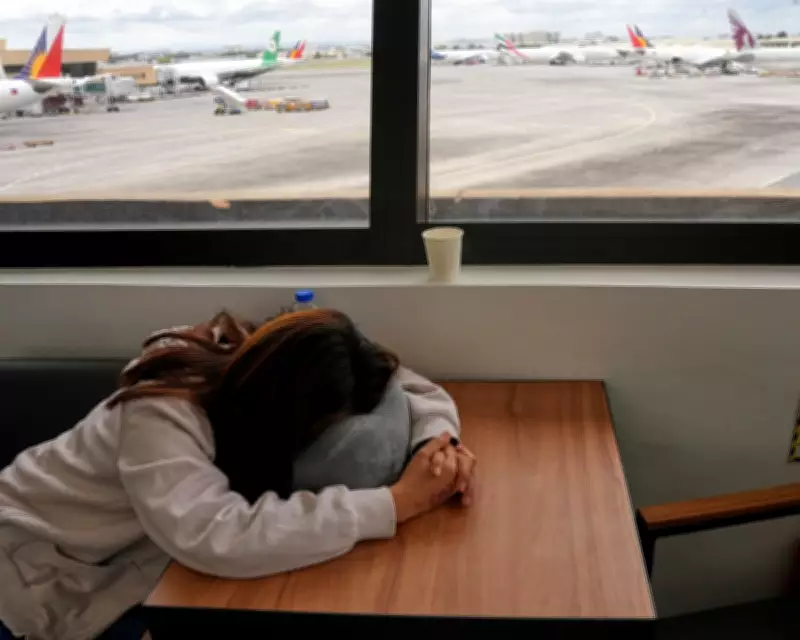
In recent weeks, therapy rooms have witnessed a significant influx of clients grappling with war-related anxiety, as global events such as attacks involving the United States and Israel against Iran have heightened fears of a potential world war. Dr Ahona Guha, a clinical and forensic psychologist, notes that many individuals feel they are at a perilous tipping point in history, with a pervasive sense of doom overshadowing daily life.
The Psychological Impact of Global Uncertainty
People are responding to this anxiety in varied ways. Some adopt a sanguine approach, shrugging off concerns by accepting their lack of control over global matters, while others become consumed by worry, compulsively checking news updates. Dr Guha herself has experienced a similar awareness, acknowledging that the global order has shifted irrevocably, leading to uncertainty that mirrors her clients' descriptions.
From Simple Decisions to Weighty Questions
Previously straightforward decisions, such as planning holidays or making household purchases, now feel laden with impossible questions. Concerns include whether borders will remain open, airspaces will be safe, and if spending money on non-essentials is wise amid a looming global economic contraction. This angst transcends simple situational anxiety, evolving into a realistic response to a world transformed by multiple crises.

Understanding Globalised Trauma
The best descriptor for this phenomenon is globalised trauma, where large-scale events like war and genocide resonate across entire societies. While those directly affected by violence suffer the most, witnesses can also experience strong negative responses, including depression and dread. At its core, this trauma stems from a collapse in the belief that the future will be predictable, safe, and within our control.
Confronting the Fear of Death
Our understanding of the world relies on predictability and safety, but current events force many to confront the deepest human terror: the fear of death. Existential psychologists argue that much anxiety, from health worries to phobias, arises from this innate fear. Terror management theory suggests we cope by investing in concepts of immortality, such as through religion or legacies, and by boosting self-esteem to rationalise away mortality.
However, losing control and witnessing harm, as in war, brings this knowledge to the forefront, stripping away our psychological defences. This activated fear is compounded by other concerns, such as rising interest rates, fuel costs, food insecurity, and drastic lifestyle changes, making it challenging for the human brain to process unpredictability.
Strategies for Managing Existential Anxiety
Managing this form of existential anxiety is complex, with no simple cognitive reframes or breath techniques offering a quick fix. Dr Guha emphasises the importance of normalising emotions by naming them as existential anxiety, rather than ignoring the issue and fixating on minor details. After identification, taking deep breaths and sitting with the reality of a changing world is crucial.
Acceptance and Preparation
This process involves accepting eventual mortality, acknowledging that life includes both physical and emotional pain, and re-evaluating our relationship with freedom and certainty. Instead of rushing back to "life as normal" to soothe anxiety, it is essential to recognise that the world has changed irrevocably from the safe, certain order many in the West once expected.
Practical steps can help: orienting ourselves with psychological flexibility towards potential sudden changes, maintaining realistic thinking (e.g., while geopolitical situations are perilous, nuclear war may not be imminent), rethinking actions and goals, committing to values-based living despite circumstances, and strengthening local communities for self-sustainability.
Dr Ahona Guha, based in Melbourne, is an expert in trauma and author of works on complex trauma and life skills for a broken world, offering insights into navigating these challenging times.