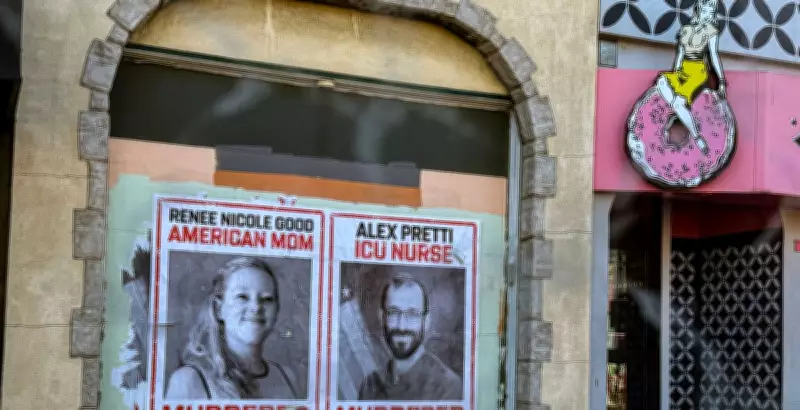
The pervasive exposure to violent videos depicting Immigration and Customs Enforcement (ICE) arrests and shootings through mobile devices is having profound effects on collective mental health worldwide. As footage of incidents like the deaths of Minneapolis residents Alex Pretti and Renee Nicole Good circulates globally, the traditional boundaries between direct participants and distant observers are dissolving, creating a new psychological landscape of shared trauma.
The Phenomenon of Affective Witnessing Through Mobile Media
Every single day, individuals encounter loss, grief, and death through their smartphones and tablets. The critical distance that once separated the mourner from the witness has collapsed entirely in the digital age. Scholars identify this experience as "affective witnessing," a process intensified by the proliferation of social media platforms, body camera technology, and pervasive surveillance media.
When viral footage of tragic events spreads across networks, the emotional boundaries between the original recording witness and the viewing audience merge significantly. Viewers physically feel the grief depicted in their own bodies, becoming extended witnesses to trauma they did not directly experience. While all witnessing carries affective qualities that linger in minds and hearts, mobile media witnessing possesses particular intensity because our devices reside in intimate spaces like pockets, making psychological distance nearly impossible to maintain.

Political Grief and Systemic Injustice Visibility
Cultural studies expert Judith Butler emphasizes that grief surrounding violence extends beyond personal dimensions into social, cultural, and political realms. When grief enters public domains through social media channels, existing inequalities become magnified dramatically. Certain losses gain more visibility and are deemed more "grievable" than others within public consciousness.
Recent years have witnessed the emergence of what death researcher Darcy Harris terms "political grief" through social media platforms. This concept encompasses collective loss and mourning experienced by communities confronting systemic injustice, including non-death related circumstances. Political grief manifests as emotional, psychological, and spiritual distress arising from specific events, policies, and ideologies. All violent ICE incidents reported across the United States are deeply embedded within this global sense of political grief, prompting unsettling questions about societal futures.
Historical Evolution of Mobile Media in Political Movements
From its earliest technological iterations, mobile media has played crucial roles in making political grief visible while providing frameworks for collective action. Beginning with 2G networks, mobile communication facilitated "people power" political revolutions worldwide. A prominent example occurred in 2001 when text messaging mobilized Philippine protesters demanding President Joseph Estrada's removal from office.
More recently, footage documenting the 2020 murder of George Floyd by Minneapolis police officers created global ramifications. Cultural scholars Andrew Brooks and Michael Richardson note that the affected body of the witness who filmed that video represents both the event's intensity and the witness's embodied experience, establishing profound connection between the two. They describe this as "embodied affective witnessing," where victims, firsthand witnesses, and online audiences all become implicated participants.
Simultaneously, mobile media can function as state weaponry when deployed as surveillance technology, creating complex ethical dimensions around witnessing and documentation.
Developing Digital Grief Literacy Strategies
As the distance between mourners and witnesses continues vanishing in digital spaces, developing "grief literacy" becomes essential. Psychologist Lauren Breen and colleagues define this as identifying and normalizing respectful conversations about grief, mourning, and loss that connect to hope and social change possibilities.
Within contexts involving distressing ICE footage, practical grief literacy applications might include:

- Pausing deliberately before resharing graphic material while considering potential impacts on vulnerable viewers
- Seeking out safe digital and physical spaces for processing political grief collectively
- Channeling emotional distress into tangible real-world actions like contacting political representatives or supporting affected families directly
Understanding that individuals grieve differently remains paramount. Research conducted over two years examining how everyday Australians explore grief, loss, and mourning via mobile media reveals diverse coping mechanisms. Interviews with mourners and field experts uncovered stories ranging from personal bereavement to collective non-death losses including ecological grief and political grief manifestations.
Individual and Collective Responsibility in Digital Trauma
Many research participants developed personalized social media strategies to cope with loss across personal and collective scales. Some individuals chose not to share violent footage due to wellbeing concerns, respect for victims' dignity, or skepticism about resharing's positive real-world impacts. Others engaged in thoughtful sharing practices to create spaces for understanding, hope, and activism development.
However, navigating these complex emotional landscapes should not fall entirely on individuals. Ultimately, societies require improved media grief literacy alongside frameworks for holding nuanced public discussions addressing how grief might be managed effectively at both individual and collective levels. The intimate relationship between mobile devices and their users demands new approaches to processing the unprecedented visual access to systemic violence that now characterizes modern digital life.
About the authors: Larissa Hjorth serves as Professor of Mobile Media and Games at RMIT University while Katrin Gerber works as Research Fellow in End-of-life and Grief Studies at the same institution.