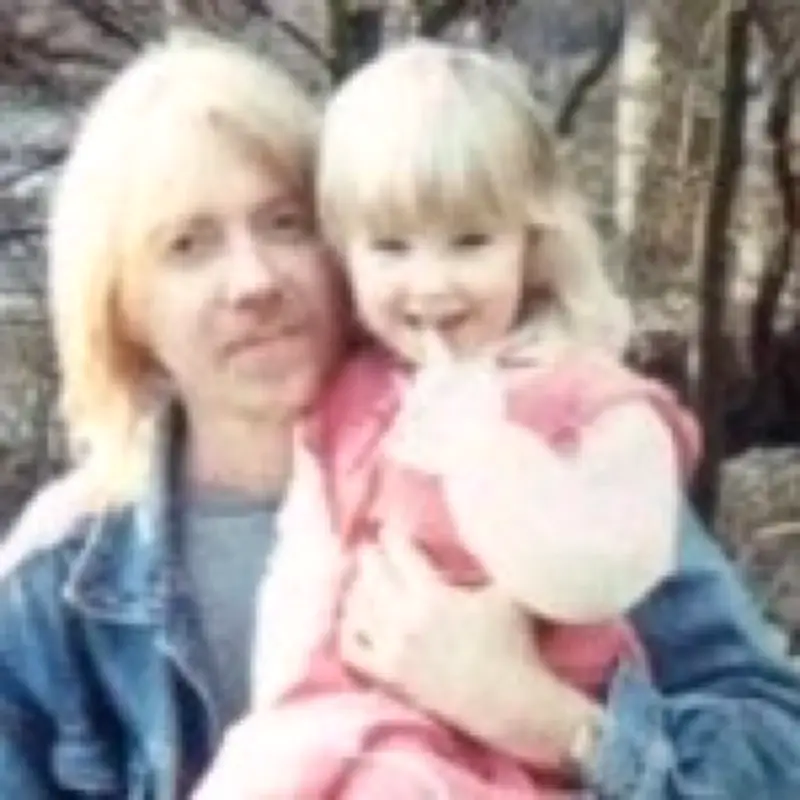
When Ellie MacDonald started school, children teased her for not having a father. She made up a story that her dad had climbed a ladder to see heaven because he wanted to know what it looked like. It was her way of explaining why her father, Neil, had suddenly disappeared a year earlier in April 1989, when she was just four.
No one discussed that her father had died by suicide. 'There was so much stigma about suicide, and nobody talk about it,' she says. 'I grew up so confused.'
Growing Up in Confusion
Ellie, now 41 and living in Leeds, was told of the close bond she had with her dad before his death. She remembers dancing and laughing together, walking to the park, and the 80s rock music he played for her. Much of her childhood was spent piecing together what had happened. 'I just remember growing up asking what I had done, and if I had been bad. Was that why he left? I blamed myself. I grew up confused, angry, and sad.'
As a teenager, Ellie had distressing flashbacks. She recalled an image of her mother sitting at a petrol station crying. Her mother explained it was the day she bought the wreath for Neil's funeral. A schoolgirl once told Ellie that her dad was in hell because of what he'd done. 'It's why to this day I hate when people say, “commit suicide” – like it is a crime,' she says.
A Difficult Childhood
Ellie struggled with low self-esteem, anger, anxiety, and depression. She pushed people away, unconsciously fearing they would disappear like her dad. At 15, she got her first boyfriend and began to feel body-confident. Three years later, she left Leeds to study psychology at the University of Huddersfield because she wanted to help people.
After university, Ellie forged a career in PR and marketing, eventually setting up her own successful PR agency. But underneath, she was still battling anxiety and depression. 'I needed emotional support, but the stigma surrounding my dad's death meant it was lacking.'
Finding Purpose
In 2021, during a severe episode of depression, Ellie represented a client doing suicide prevention work. Learning that suicide is the biggest cause of death for men under 50 made her determined to act. She founded HelloHope, a suicide prevention organisation. 'Hope is my favourite word. Everyone who has died by suicide has lost hope. But we – people who aren't struggling with suicidal thoughts – have the power to give hope to those who have lost theirs. Most suicides are preventable.'
HelloHope includes a suicide prevention platform, and its awards ceremony, the Hope Awards, won the national Amazon Charity innovation award. Ellie has been listed as a top 100 women in social enterprise in the UK and has trained thousands in suicide prevention. 'The onus shouldn't be on the person struggling to ask for help. I want to empower ordinary people to reach out. We've got to look out for one another.'
Reflecting on all she has achieved, Ellie adds: 'I think my dad would be proud of me. I'm determined to help people who struggled like he did.'