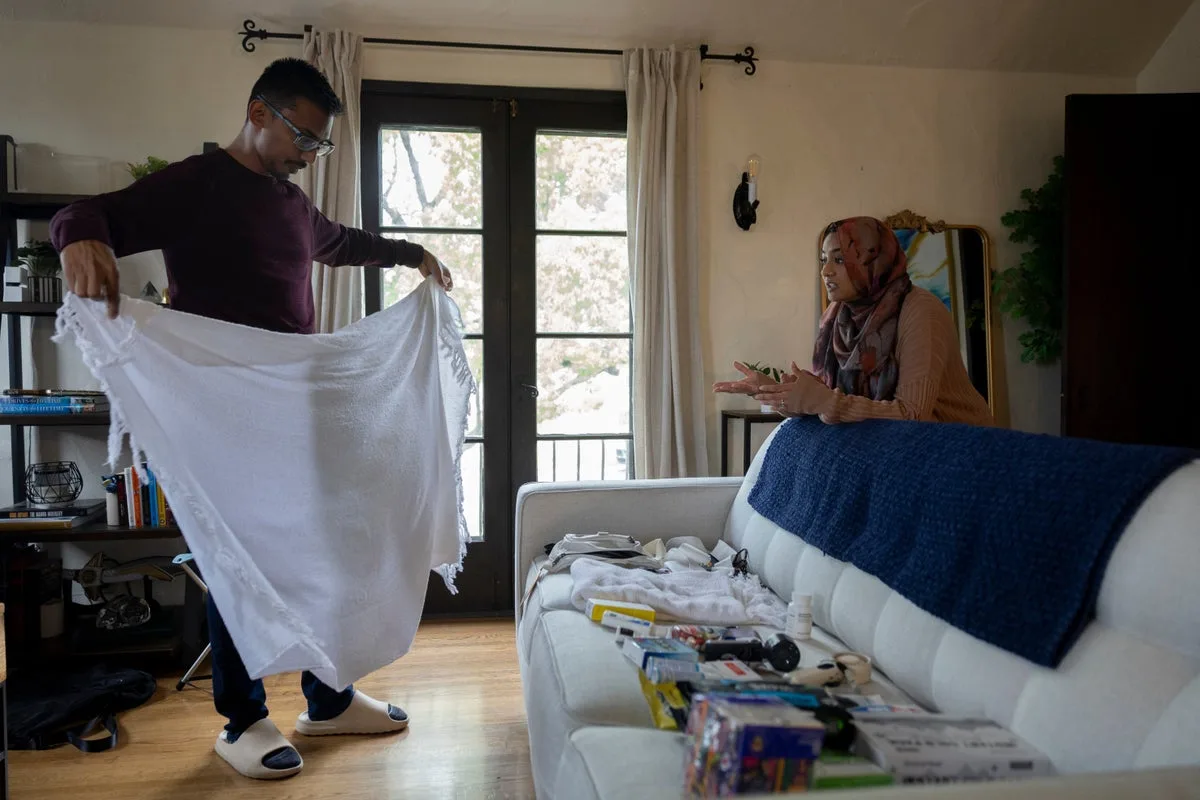
Faisal Rashid and his wife jumped out of bed at 3 a.m. in February to secure spots for this year’s Hajj before packages sold out. The moment they learned they had places in the annual Islamic pilgrimage to Mecca was so emotional that recalling it still brings them to tears. “It was a very, very joyful experience,” said Rashid, a doctoral candidate and Los Angeles Police Department reserve officer. “My wife was already crying, praying. We were very grateful that this happened.”
A lot has changed since then: the Iran war erupted and widened before a tenuous ceasefire was reached. But the couple’s resolve to perform the pilgrimage has not. They are among US Muslims joining a sea of pilgrims converging on Saudi Arabia for a Hajj that this year approaches against a backdrop of regional tensions and uncertainty about the conflict. The Hajj officially starts on Monday.
Hajj is a religious obligation for Muslims who are physically and financially able, and can be the spiritual experience of a lifetime. Some Muslims spend years saving money and waiting for a permit. “It’s not something you just get,” said Rashid. “It’s something that if God invites you, then you’re able to go.” His father asked how the war affected their plans; an aunt wondered if he could get a refund if things escalated. He figured others had endured far worse to make the journey.

Ahmed Sufyan, a surgeon in Michigan, has been concerned about potential flight disruptions on his way back. His round trip includes stops in Gulf countries embroiled in the war, which started on Feb. 28 with joint US-Israeli attacks on Iran and drew retaliatory strikes. “There is some uncertainty with the war,” he said. “That does add a level of concern.” But if this were for vacation, he couldn’t have justified it. Hajj is different. “I feel really lucky that I have this opportunity,” he said.
Following the eruption of the war, the US Embassy in Riyadh in April advised Americans to reconsider participating in this year’s Hajj, citing the “security situation and intermittent travel disruptions.” Despite this, pilgrims like Rashid remain steadfast. “In Islam we’re taught that you’re supposed to do your very best effort but then let go of the things that you don’t have control over,” he said. “I need to let go and feel that God is the best of planners.”