A Doctor's Warning: Are Mental Health Labels Doing More Harm Than Good?
As a practising general practitioner with over two decades of experience, I have witnessed firsthand the profound impact of mental health labelling and diagnosis. While our current approach has undeniably brought benefits, such as destigmatising emotional distress and encouraging help-seeking, I am increasingly concerned that it may be causing more harm than good. The human brain has remained largely unchanged for 300,000 years, and mental suffering has been a constant companion throughout history, as evidenced by ancient epics like The Ramayana, which describe characters exhibiting symptoms akin to modern post-traumatic stress disorder (PTSD) and generalised anxiety disorder.
The Blurring Line Between Health and Illness
According to modern psychiatric definitions, the 21st century is experiencing an epidemic of mental illness, with surveys indicating that two-thirds of young people in the UK feel they have had a mental disorder. We are broadening the criteria for what constitutes illness while simultaneously lowering diagnostic thresholds. This trend is not inherently negative if it alleviates suffering, but mounting evidence suggests it may be exacerbating societal distress. In many non-western cultures, low mood, anxiety, and delusional states are viewed as spiritual or relational issues rather than psychiatric pathologies, often leading to more successful integration of mental crises into life narratives.
In the United States, mental distress is commonly classified using the Diagnostic and Statistical Manual of Mental Disorders (DSM), now in its fifth edition, while the UK and Europe favour the International Classification of Diseases (ICD), currently on its 11th revision. Both systems have expanded significantly in recent decades, pathologising an increasing array of distressing emotions. These frameworks are culturally specific models that serve as instruments to navigate life's challenges; however, as mental ill-health statistics worsen, it is clear they are failing to meet their intended purpose.

The Human Touch in Clinical Practice
In my role as a GP, where 30-40% of appointments involve mental health concerns, I have learned that effective care requires flexibility and empathy. Early in my career, mentors like Dr M demonstrated the power of kindness, silence, and redemptive conversations, fostering healing through human connection. In contrast, Dr Q approached consultations with a technical, protocol-driven mindset, often leaving patients unhappier. I fear our mental healthcare models are increasingly tailored to clinicians like Dr Q, prioritising tick-box protocols and online questionnaires over the humanity and curiosity essential for genuine healing.
I encounter individuals whose lives are blighted by anxiety, depression, trauma, or addiction, prompting daily reflections on consciousness and meaningful existence. Some patients, in their 80s, trace their unhappiness to neglect experienced nearly a century ago, while others use behaviours like overeating or alcoholism to fill emotional voids. Conscious experience is a dynamic flow, influenced by memory, anticipation, and perception, and it can be nudged towards health through guided support.
The Perils of Rigid Labelling
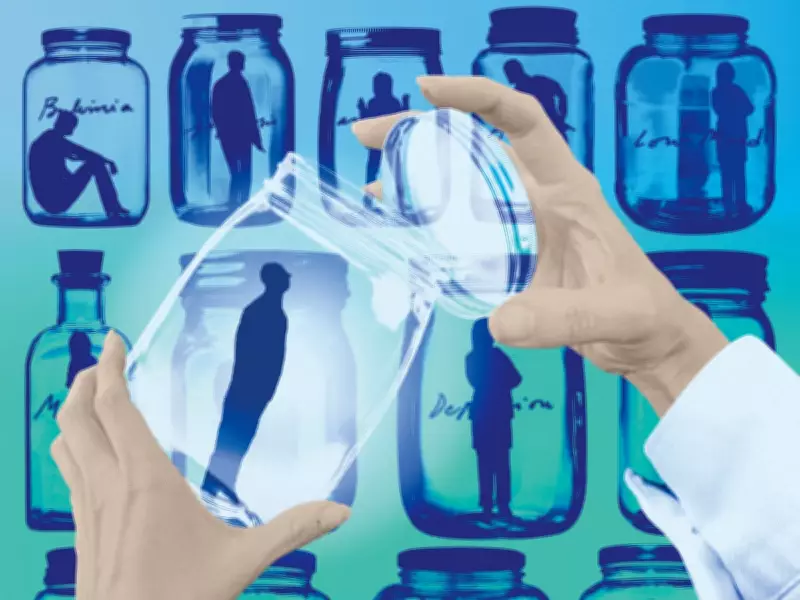
With the expansion of the DSM and ICD, it has become routine to attribute mental suffering to discrete disorders. Many patients now believe these labels are based on hard neurological evidence, conferring a fixed fate. However, there is growing disquiet, as people realise these terms were devised in committee rooms by western medics, not gleaned from laboratory science. Medical labels can become self-fulfilling spells, potentially cursing as often as they cure. Today's alarming mental health statistics may reflect overdue recognition of widespread illness or a pathologising trend that categorises normal human experiences as clinical disorders.

As a GP, I adhere to the principle of "do no harm," and I worry that enthusiastic labelling may ultimately be detrimental. Historical perspectives show that frameworks for understanding mental suffering evolve; for instance, the word "emotion" gained its current meaning only in the 1830s. Different cultures, such as those in Ethiopia or Sri Lanka, often achieve better outcomes by viewing mental derangements through spiritual or community lenses rather than psychiatric ones.
Towards a More Compassionate Approach
In my clinical practice, I have abandoned rigid categories in favour of acknowledging the innumerable states of mind unique to each individual. I speak in terms of distress and suffering rather than labels, recognising that mental life flows in streams, not chunks. From Sherrington's "enchanted loom" analogy to modern connectome theories, our understanding of the brain has shifted with technological advances, yet we still lack clarity on how mood is governed at the neural level. The serotonin theory of depression, for example, has been debunked by recent research, highlighting the limitations of biochemical explanations.
The best psychiatry focuses on strengths rather than weaknesses, appreciating that traits like anxiety or obsessiveness can be beneficial in moderation. By holding labels more lightly, we might foster a society more accepting of difference, less stigmatising, and more open to recovery. Our minds are dynamic and adaptive, capable of change and resilience. To reverse the mental-illness epidemic, we need less rigid classification and more curiosity, kindness, humility, and hope.