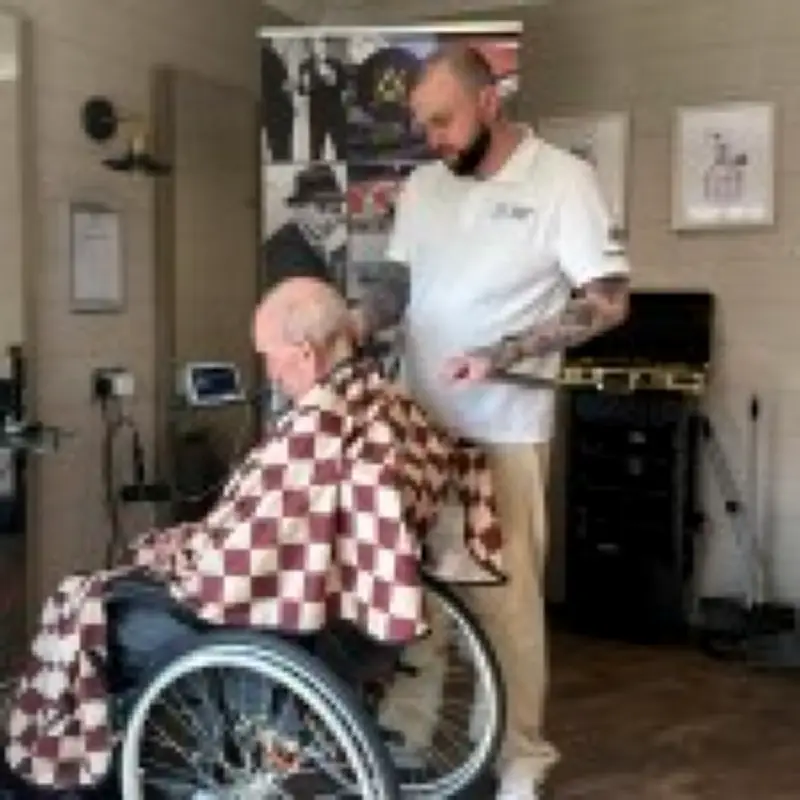
Tom Roberts, 29, from Birmingham, started Dementia Friendly Barbers seven years ago after his nan Lil passed away from dementia at 98. Initially shocked by the neglected state of residents—unshaved beards, messy hair, food trapped in facial hair—he quickly adapted his barbering skills to serve this vulnerable population.
From Shock to Service
Roberts, who has worked in hairdressing since age 15, recalls the early challenges: 'You want to be thorough and give them a good service, but it was scary at first. There were people repeating themselves, others being aggressive, or standing up midway through a haircut to walk out.' Despite these hurdles, he found unexpected joy in the interactions. 'From the beginning, I just loved the interaction and the appreciation, the stories and listening to the gents about what they’ve gone through throughout their lives,' he told Metro.
Building a Barbershop Experience
Today, Dementia Friendly Barbers employs 16 specially trained barbers who visit 200 care homes across the UK, serving men up to age 110, most of whom have neurological decline. The service recreates a nostalgic barbershop atmosphere with vintage car pictures, old film star photos, and music from Elvis and Frank Sinatra. At one Berkley care home, a dedicated barbershop resembles a mix of man-cave and 1960s salon. Barbers use hot towels, offer close shaves (or electric shaves when safer), and finish with moisturiser, face massage, and aftershave.

Community and Mental Health
Co-owner Cordell Cabey, 34, emphasizes the social benefits: 'It creates a little bit of a community of men each month, they sit together, drink non-alcoholic beer and play dominoes while they’re waiting for their haircuts. It’s good for their mental health.' The pop-up barbershops foster new friendships and a sense of belonging.
Emotional Challenges
Roberts acknowledges the heartbreak of watching clients deteriorate. He remembers Alfie, a Welsh gentleman with whom he formed a strong bond. 'I’ve never had a granddad and we had this strong bond. I’d look forward to going to see him, but then I just watched him slowly deteriorate to the point where he couldn’t walk, he was in a wheelchair and then he couldn’t talk, he couldn’t remember anything. After that, I’d go to his bedroom and give him a haircut and a shave, until he passed away. That is the most challenging part of the job for me. It does get really sad,' he says.
Advice for Families
Roberts and Cabey offer guidance through their free Memovo platform, which includes brain training games, videos, and tips on grooming loved ones with dementia at home. Roberts advises against asking specific questions about age or career, as it can distress those who forget. Instead, he uses scents and massage to bring them back to the present moment.
Unexpected Joys
Despite the sadness, Roberts finds perks in the job, including learning from residents' life stories. 'We see ourselves as very fortunate to be able to pick the brains of people that have lived such extraordinary lives. I think it’s one of the real perks of the job. You start to view life differently,' he says. He also notes that romance thrives in care homes, with residents finding new love or friendships. 'You’d think that sex doesn’t happen in care homes, but it’s extremely prevalent,' he laughs. 'And there’s loads of love stories. We always ask what the secret to a happy marriage. They usually say patience, perseverance – and separate beds.'
Metro Lifeline 2026
Metro is supporting Alzheimer's Society for its 2026 Lifeline campaign. On June 13-14, 2026, trekkers hiked the Cotswolds Way to raise funds. Last year, donations enabled 34,000 Companion Calls, 6 million service accesses, and 71,000 calls to the Dementia Support Line.