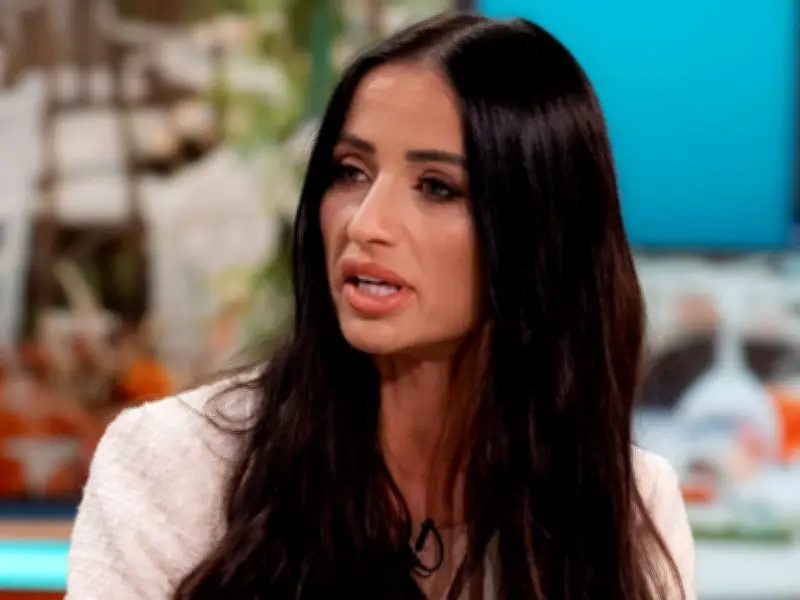
Chantelle Houghton has revealed she was “starving herself to death” during a battle with disordered eating. The former Celebrity Big Brother star consumed just 400 calories per day and could fit into her then 12-year-old daughter’s clothes.
The 42-year-old now says she took dieting to dangerous levels, leaving her riddled with pain and no energy. Her struggles saw those closest to Chantelle concerned, with her brother claiming she looked as though she “were dying”.
Body Was 'Shutting Down'
“I had no energy, I’d wake up in the morning, and my whole body would be in pain,” Chantelle said. “It felt like my bones were hurting, and I was so weak I couldn’t even walk my dog for very long.”

Speaking to The Sun, she continued: “My body was shutting down, crying out for nourishment. I knew I was slowly killing myself through not eating; I was starving myself to death.”
Cruel Social Media Comments
Cruel social media users sent vile tweets saying she looked as though she was consuming drugs. “People were saying I was a crackhead. I remember my brother looking at me one day and saying, ‘Chantelle, if I didn’t know you, I’d think you were dying.’” Chantelle admits she questioned whether she was “going to die for this” and asked: “Am I going to kill myself?”
Long Struggle with Body Dysmorphia
Chantelle has struggled with body dysmorphia for more than two decades, as well as previously battling bulimia. At one point, she managed to slip into her daughter’s clothes, which brought her joy. She later purchased a tracksuit from the Marks & Spencer children’s department, which left her feeling “incredible”.
While eating disorders are most commonly associated with teenagers, Beat reports that 15 per cent of calls to their helpline are now coming from women aged between 40 and 59.
Coping Mechanism and Turning Point
The star now recognises that she suffered from disordered eating, but it felt like a coping mechanism. While in a “bad place” or going through challenges beyond her control, Chantelle admits that her weight was the only thing she could control. She turned her life around in 2024 while moving home, before acknowledging that she needed to make a change for her daughter, now 14.
Research from King’s College London shows that individual-level barriers, including internalised shame, prevent people from reaching out for support. Participants also pointed out systematic barriers, including restrictive service eligibility criteria such as BMI thresholds and limited service provision for certain diagnoses of eating disorders.