A Mother's Instinct Amidst Rare Pregnancy Complications
Every parent believes their child is unique, but for Maddicyn Brokenshire, her son Ollyver truly embodies rarity. The 38-year-old mother, alongside her husband Daniel Brokenshire, 30, from Timaru, New Zealand, experienced overwhelming joy upon learning they were expecting their first child. However, that joy swiftly turned to anxiety when doctors raised concerns about potential pregnancy complications.
Initial Diagnosis and Uncertainty
During a routine hospital visit, medical professionals informed Brokenshire that she had experienced a subchorionic hemorrhage. This condition involves bleeding between the uterine wall and the gestational sac during early pregnancy, occurring in approximately one percent of pregnancies and typically resolving independently. Common symptoms include vaginal bleeding and mild cramping, though scientific research remains inconclusive regarding its potential to cause further complications.
'When we first found out, it was incredibly overwhelming,' Brokenshire revealed to the Daily Mail, expressing fears about the impact on the fetus. 'There was a lot of uncertainty and the initial prognosis wasn't very clear.' The couple faced immense fear, not knowing what to expect, and focused on taking things one step at a time.

Worsening Prognosis at the 20-Week Scan
The situation intensified during Brokenshire's 20-week ultrasound scan. Doctors identified that her unborn son, Ollyver, was battling amniotic bands—fibrous strands of tissue detached from the inner amniotic sac. These bands can float freely or, in more severe cases, wrap around developing limbs, digits, or other body parts, restricting growth. The latter scenario is known as Amniotic Band Syndrome (ABS), a rare condition affecting just one in 15,000 births, resulting from damage to the placenta's inner layer during pregnancy.
Initially, medical staff believed the bands were floating and might not cause issues. However, Brokenshire, a former nurse, trusted her instincts and conducted extensive research on ABS, harboring a haunting suspicion that her baby would face complications.
Emergency Hospitalization and Birth
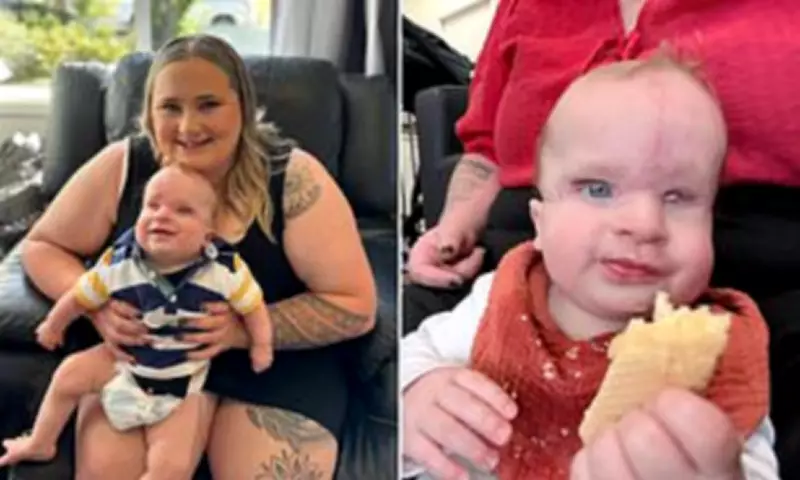
At 33 weeks pregnant, Brokenshire was urgently admitted to a larger, better-equipped hospital in Christchurch. 'That's where they discovered that he was suffering,' she recalled. 'The amniotic bands were attached. He had an indentation on his nose bridge and his right eye orbit was smaller than the other. They didn't know how severe it was going to be.'
Just one week later, when her water broke, the couple learned the bands remained attached to Ollyver. He was delivered via cesarean section at Christchurch Hospital but was not breathing initially, requiring resuscitation. Thankfully, he recovered, though he faced significant health challenges due to the severity of ABS, which caused deformities and loss of function.
Health Challenges and Surgical Interventions
The newborn was born with an open wound on the back of his head due to Aplasia Cutis Congenita (ACC), a condition where skin fails to fully form before birth. 'It can happen anywhere on the body but in Ollyver's case, it is on his scalp where his hair grows,' Brokenshire explained.
Additionally, Ollyver's eyelids did not develop properly, leaving him fully blind in his right eye and in need of a future prosthetic. At eight months old, he has undergone multiple surgeries to release the amniotic bands and surgically create eyelids. 'Surgeons attempted to correct his ability to close his eyes by pinning and suturing the eyelid higher,' Brokenshire said. 'But it wasn't successful, so they will continue to adjust this over time.'
Resilience and Milestones
Despite these setbacks, Ollyver continues to hit developmental milestones. His mother joyfully reports that he is crawling and constantly on the move. 'Neurologically, Ollyver has been incredibly lucky,' Brokenshire noted. 'His brain was not affected. He is meeting all of his milestones and is even ahead in some areas.'

Although Ollyver may face challenges with balance and depth perception, the family has already enlisted support services to assist him. Brokenshire proudly describes her son as 'such a strong, resilient little boy,' celebrating his accomplishments and unwavering spirit throughout this challenging journey.