
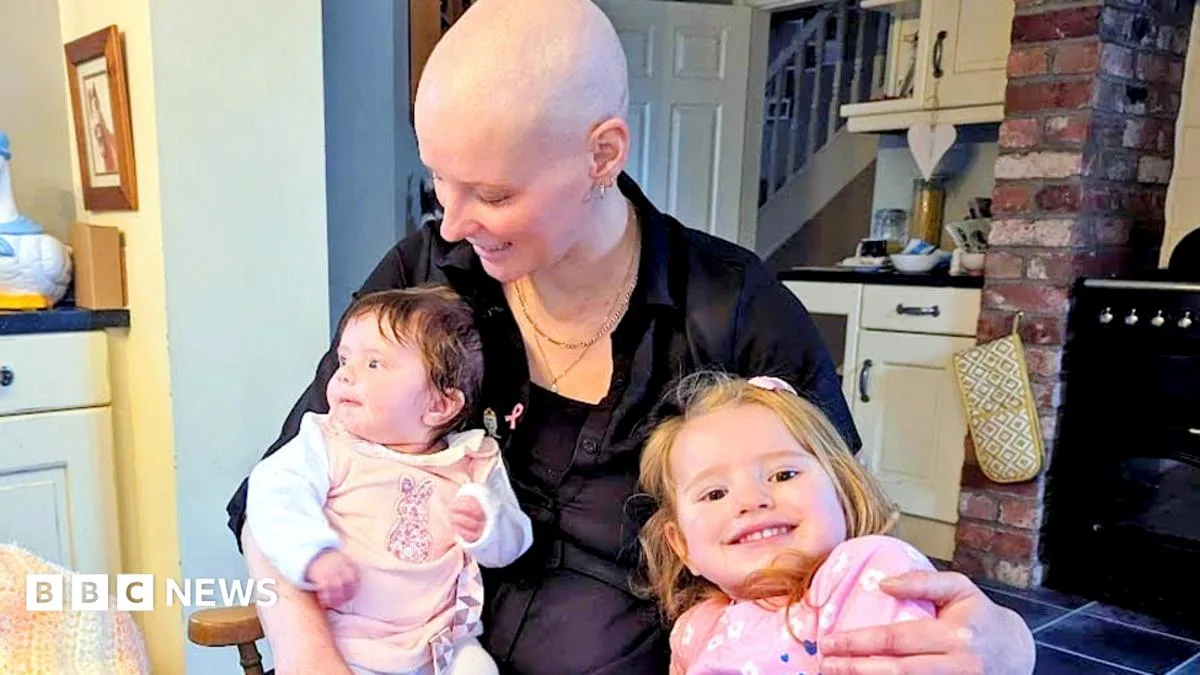
A Lincolnshire mother has spoken of her devastation after a terminal cancer diagnosis, discovered during a pregnancy scan, has robbed her of the chance to see her baby daughter grow up. Louise Beevers, 40, from Willingham by Stow near Gainsborough, found a pea-sized lump in her breast in early 2023, but was told it was likely pregnancy-related. By May, the lump had grown into two masses, and she was diagnosed with breast cancer at just over four months pregnant.
Louise underwent a radical mastectomy and lymph node clearance, but weeks after giving birth to baby Suzy, while undergoing chemotherapy, she was told the cancer had spread to her lungs and was incurable. 'No one healthcare professional can put a time on how long I've got left,' she said. 'I need to put plans in place for my children – special birthdays, life events. I want to write letters to them so they can open them if I'm not here.'
Experts warn that cancer symptoms in pregnant women are often mistaken for pregnancy-related issues, leading to delayed diagnosis. Professor Richard Simcock, chief medical officer for Macmillan Cancer Support, said: 'The majority of abnormalities in the breast are benign, but it's impossible to tell that just by an examination. We encourage people to be assessed fully and properly, usually by a breast specialist with imaging.'
Pete Wallroth, whose wife Mair died from cancer diagnosed during pregnancy, set up the charity Mummy's Star. He said the dismissal of symptoms early on is 'by far and away the single biggest issue with cancer and pregnancy.' He added: 'If a person is presenting with what would otherwise be a red flag symptom, irrelevant of their pregnancy, then it should be getting investigated straight away.'
Cancer in pregnancy is rare, with around one in 1,000 breast cancer cases occurring during pregnancy. Data from the British Medical Journal shows the average risk of dying from breast cancer within five years has fallen from 14% to 5% since the 1990s, largely due to early diagnosis. Professor Simcock stressed that if symptoms persist, patients should be 'empowered to return and ask for a referral.'




