A woman claims she was left lying on a hospital floor in agony for seven hours after nearly collapsing while doing her shopping.
Tammi Radcliffe nearly passed out from the sudden 'excruciating' stomach pain while grabbing her groceries in ASDA. The 31-year-old called an ambulance and was given IV paracetamol and taken to Royal Preston Hospital, Lancashire, on Saturday and arrived at around 4pm.
Begging for Help in the Corridor
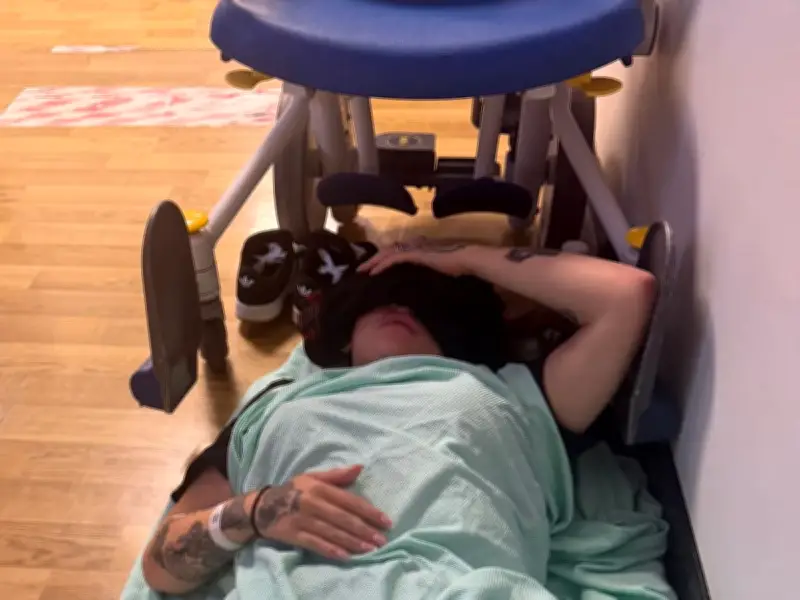
Tammi was initially triaged but then left in the waiting room without seeing a doctor and says she was forced to lie on the floor crying in pain as there were no beds. She said her temperature rocketed to 39 degrees but she wasn't given stronger medication to relieve her fever until almost 9pm.
Seven hours after she arrived, she saw a doctor who could not diagnose her but prescribed her IV antibiotics. Tammi said she eventually received the antibiotics at 2.30am which were administered via her cannula while she was laying on the hospital corridor floor.
Patient Describes Unbearable Pain
Tammi, an administrator from South Lakes, Cumbria, said: “I've never felt pain like that in my life and I'm the kind of a person to downplay things, and I'm definitely one to mask my pain in public. But there was no hiding it, I was uncontrollable, just crying and doubled over in pain in the waiting room begging for pain relief.”
Tammi said she initially thought the pain was trapped wind and would go away on her own. She said: “I'd had cramps all morning but I just passed it off as trapped wind. I thought I’d go to ASDA to get myself some paracetamol and some Rennies or Windies or something, but as I was walking around, the pain just became so severe. I started to lose my vision, the light faded and I felt super lightheaded - like I was about to pass out.”
Husband's Concerns
The ambulance took Tammi to the Royal Preston Hospital, where her worried husband Corey, 36, met her. Corey, a tour manager from Cumbria, said: “I asked for more pain medication at least six times in the space of two hours and sometimes they didn’t even acknowledge us asking. I was asking for her to be reassessed and re-triaged but all we got in response was that she had already been triaged so go and sit down because she is where she needs to be.
“Tammi was so exhausted and unwell that she ended up lying on the floor of the A&E department under a wheelchair to block out the bright hospital lights. We were there for hours before her temperature was actually checked. By then it had reached 39 degrees and she was shaking. It was then that more morphine did actually arrive, but hours later I had to ask them to check her temperature again as it could have gone higher and she could have ended up having a fit or anything like that, there was a complete lack of observations done.”
Hospital Responds
At 11pm, Tammi finally saw a doctor and was prescribed antibiotics, but didn’t receive these until 2.30am the following morning. The IV antibiotics were administered via a cannula while Tammi was laying on the floor. Corey said: “It wasn’t abnormally busy, there were definitely spare seats to sit on and it wasn’t a huge waiting room, so I don't know why they took so long.”
Tammi was moved to the gynaecology ward at around 3am, but to a treatment room, and ended up leaving the hospital on August 16 with no diagnosis. Tammi said: “Doctors weren't 100% sure what was causing my pain because they have to do swabs and an ultrasound scan. We haven't actually got any formal diagnosis currently, and we had to wait four days for the scan which is pretty hard considering it's an emergency situation.” Tammi is still suffering extreme abdominal and pelvic pain but managing it with pain relief.
A Lancashire Teaching Hospitals spokesperson said: “We would always encourage any patients or relatives who have concerns about their care to raise these with the clinical teams treating them at the time so, where possible, these can be resolved in real time. Where this is not possible, or where patients feel their concerns were not addressed, we would encourage them to get in touch with our Patient Experience and PALS team so that we can fully explore what happened and why and adopt any potential learning. In this instance, we are in direct contact with the family and are sorry that they have concerns about some aspects of the care received. We will fully investigate the issues the family have raised through our formal complaints process and respond directly back to them.”