
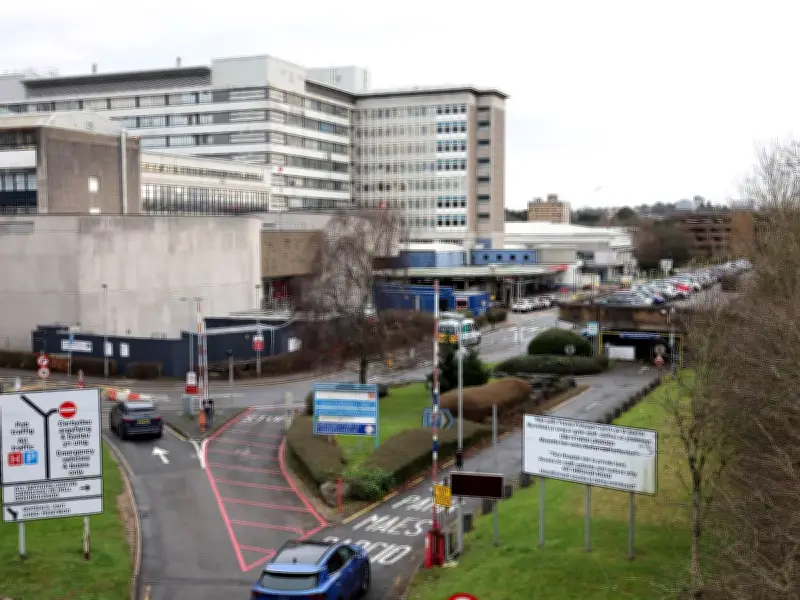
The full details of an independent investigation into Cardiff and Vale University Health Board have been published, revealing severe operational and leadership failings. The report highlights power outages in critical care, low staff morale, senior staff bickering, and poor behaviour not being tackled.
Key findings of the investigation
During the investigation, staff cited low morale, the poor condition of buildings, concerns not being taken seriously, and bickering among top-level executives. The Welsh Government stepped in and placed the health board, which runs the University Hospital of Wales, in level four intervention - one below special measures.
The report found a reluctance from managers to address poor behaviour, a lack of confidence that escalating issues would be addressed, and how a lack of digitalisation has led to missed diagnoses. The two independent advisors who produced the report also heard morale frequently described as the "worst it has ever been" and found that the last two years had seen an "excessive" number of Never Events - serious incidents that are wholly preventable.
Building and infrastructure issues
The investigation highlighted how staff said the poor condition of the health board's buildings was compromising their ability to deliver safe care. In 12 months, there were four power outages in critical care, flooding in the outpatient department, and cancelled appointments as a result. This was attributed to over 10 years of underinvestment in maintenance and the upgrading of buildings.
Many staff members have never worked in another hospital or healthcare system, meaning they only have one point of reference. Staff repeatedly said the health board and Wales were behind the rest of the United Kingdom in several areas, such as the use of advanced practice, adopting different models of care, tolerating poor behaviours, and embracing change.
Financial and systemic concerns
Managers and medical staff repeatedly said the NHS Wales Joint Commissioning Committee (JCC) was not appropriately financially supporting national services that take place in the health board. Since Covid-19, the health board has been fulfilling an increased number of services transferred from other health boards and not subsequently returned, meaning it has continued delivering services with perceived inadequate financial remuneration.
The pandemic also led to many people retiring, which meant others were rapidly promoted despite inexperience, and a subsequent skills gap is still evident. There is a reluctance from managers to apply HR policy in tackling poor behaviour or conduct for fear of grievance, leading to limited confidence that escalation of issues would be addressed.
Culture and morale
There is a pervasive culture of learned helplessness and a lack of pace and urgency even when confronted with serious issues. Staff reported feeling demoralised and demotivated, with a need for hope, positive direction, and a renewed sense of purpose. Morale was frequently reported as the "worst it has ever been."
Frequent reports of the executive team 'bickering' in front of other senior leaders mean many managers perceive the team to be split in two rather than being a team. The report also noted poor team dynamics overall, leading to competition for resources.
Never events and digitalisation
In the last two years, there has been an excessive number of Never Events reported within the board. Afterwards, there is an absence of these being used for learning and to take corrective action to prevent further Never Events. The "Digitalisation of the NHS in Wales lags behind comparable national health care systems elsewhere," with evidence of at least one manual process where a piece of paper posted under a door resulted in a patient lost to follow-up with a missed reported diagnostic test.
Official responses
Chris Bown, Interim Chief Executive of Cardiff and Vale University Health Board, said: "We take the findings of the report extremely seriously and recognise that there are a number of areas requiring improvement - these must be addressed at pace. Whilst work is already underway in a number of the areas identified, we recognise that more needs to be done."
Mabon ap Gwynfor MS, Cabinet Minister for Health and Care, said the concerns raised were unacceptable and need to be urgently addressed. He continued: "The report is clear that the health board's challenges are systemic and long-standing, requiring organisational reset, a single recovery plan, stronger accountability, assurance and cultural change. Under this new Welsh Government, we will not allow such issues to continue, and we will robustly hold the health board to account for its performance. I expect the health board to work closely with NHS Wales Performance and Improvement to develop and deliver a single organisation-wide improvement plan that responds to the recommendations, addresses the underlying causes of concern, and sets out clear actions, milestones and strengthened accountability arrangements aligned to the escalation framework and de-escalation criteria."




