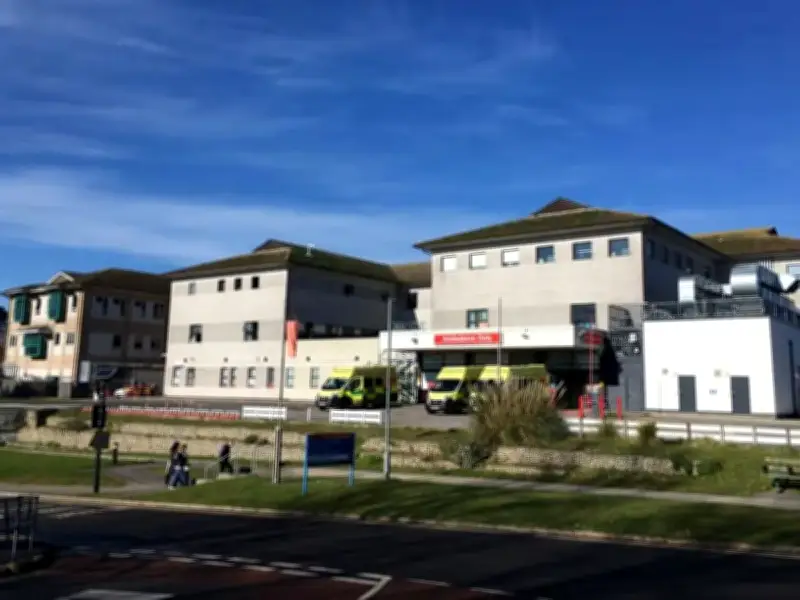
A one-year-old girl died at Royal Cornwall Hospital after turning pale and drifting in and out of consciousness at home in Newquay. Trixie Morvoren, known as Trixie Mo, was taken to the paediatric assessment unit, where staff struggled to insert a cannula so blood samples and intravenous treatment could be administered. She died on April 29 last year after she could not be resuscitated, an inquest heard.
Parents criticise lack of urgency
Parents Ashleigh and James Cooke believe ultrasound-guided cannulation should have taken place from the outset when staff knew Trixie Mo's history of cannulation difficulty and cardiac issues. They told the inquest in Truro that senior consultants should have taken care of Trixie Mo rather than her being seen by registrars.
Rachel Nicholls, the consultant paediatrician who looked after Trixie Mo, told the hearing that registrars rather than consultants are the cannulation experts as they do it routinely, which is why she asked them to do it. She also said using ultrasound-guided cannulation is a skill not every nurse or registrar has but is something the Royal Cornwall Hospitals Trust, which runs Treliske at Truro, is working to change and improve.
Rare 'mermaid birth'
Ashleigh said Trixie Mo had an en caul birth or veiled birth, which happens when a baby is born completely enclosed inside an unruptured amniotic sac. En caul births occur in one in roughly 80,000 births. They are known as 'mermaid births', hence the middle name Ashleigh and James gave Trixie - Morvoren - which means mermaid in Cornish.
Ashleigh, who had been almost eight months pregnant with her third child at the time of Trixie Mo's death, told the inquest how Trixie had thrown herself into every aspect of life, how Crazy Frog was her favourite song, how much she loved theatre and puppet shows and riding around her village on her ride-on car.
"Trixie Mo brought a big smile on people's faces," Ashleigh said. "Fish and chips was her favourite food and she would steal yours from your plate if you let her. She was developing a cheeky smile and had an infectious laugh."
"She had lots of friends at nursery and at the groups she went to. Her older sister Phoebe was so proud of Trixie and was always protective of her. We had so many hopes for her."
Ashleigh added: "No word big enough can describe how much we love her. We miss her so deeply every single day. The world is brighter because she was in it."
Heart condition and hospital care
Born with Down syndrome, Trixie Mo was diagnosed with a congenital heart defect that required surgery in Bristol by the time she was six months old. The inquest heard there were complications to the procedure, but after four days in intensive care Trixie Mo pulled through and her physical development came on leaps and bounds after that.
"She was thriving," Ashleigh said. It is because of her heart condition that James and Ashleigh were even more concerned when their baby girl ended up in hospital a few months short of her second birthday.
Ashleigh told the inquest that "everyone seemed very chilled" when they took their baby to hospital. "I was baffled that no-one seemed that concerned," she said. "Why wasn't more effort made to give her supplementary oxygen? Everyone seemed so casual. There never seemed to be any sense of urgency."
The inquest heard several attempts were made to insert a cannula and take blood, and small 'crackle-like' sounds were found in her chest - which Dr Nicholls said could have been from an infection. "That's when a specialist cardiologist should have been involved and urgency should have begun," Ashleigh told the inquest.
Dr Nicholls also said difficulty cannulating Trixie Mo made it difficult to find the cause of her illness and tackle it. She added: "We continued to try and find a solution with the anaesthetist coming to help. We continued to work to that goal but it was difficult and couldn't be achieved."
"We had a child who was warm and looked like they were not continually deteriorating. I was not expecting the collapse in health that she suffered. I was shocked to hear she had such a collapse."
Fellow consultant paediatrician Veronica Nijloveanu, who took over from Dr Nicholls later that day, said Trixie Mo's death had been an "extremely rare scenario". She told the hearing that Trixie Mo had had a successful complex cardiac surgery in Bristol the year before and all resuscitation processes on the day were followed thoroughly. She added: "We don't understand what happened."
Katy Huxstep, a consultant paediatrician at RCH, said looking forward, communication with patients and parents about treatment and procedures need to be improved. The inquest is expected to conclude on Wednesday.